
menu

Tree Impact & Structural Repair in Chicago – 24/7 Emergency Response Before More Damage Spreads

When a tree crushes your roof, minutes matter. Patriot Roofing Chicago dispatches emergency crews across Chicagoland within 60 minutes to prevent water intrusion, structural collapse, and insurance complications before the next storm hits.

Slider Image 1
Slider Image 2
Slider Image 3
Slider Image 4
Slider Image 5
Slider Image 7
Slider Image 8
Slider Image 9
Slider Image 10
Slider Image 11

A Fallen Tree Isn't Just Roof Damage. It's a Structural Crisis.

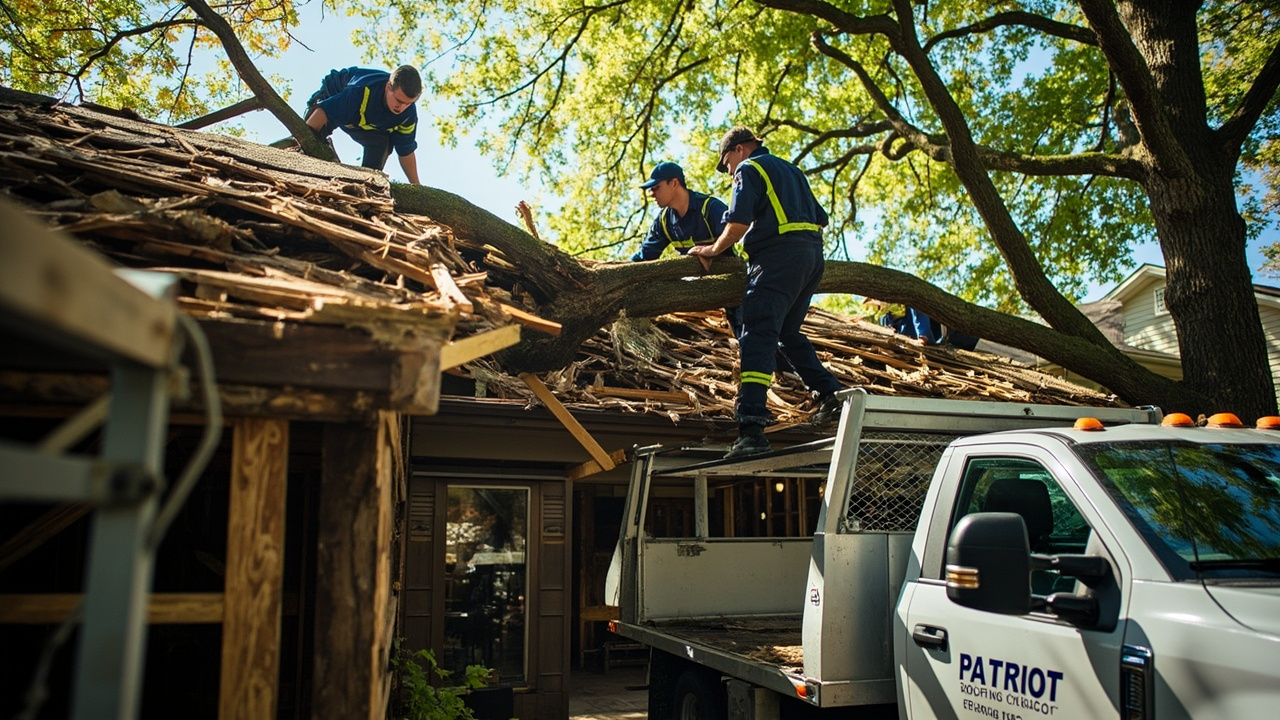
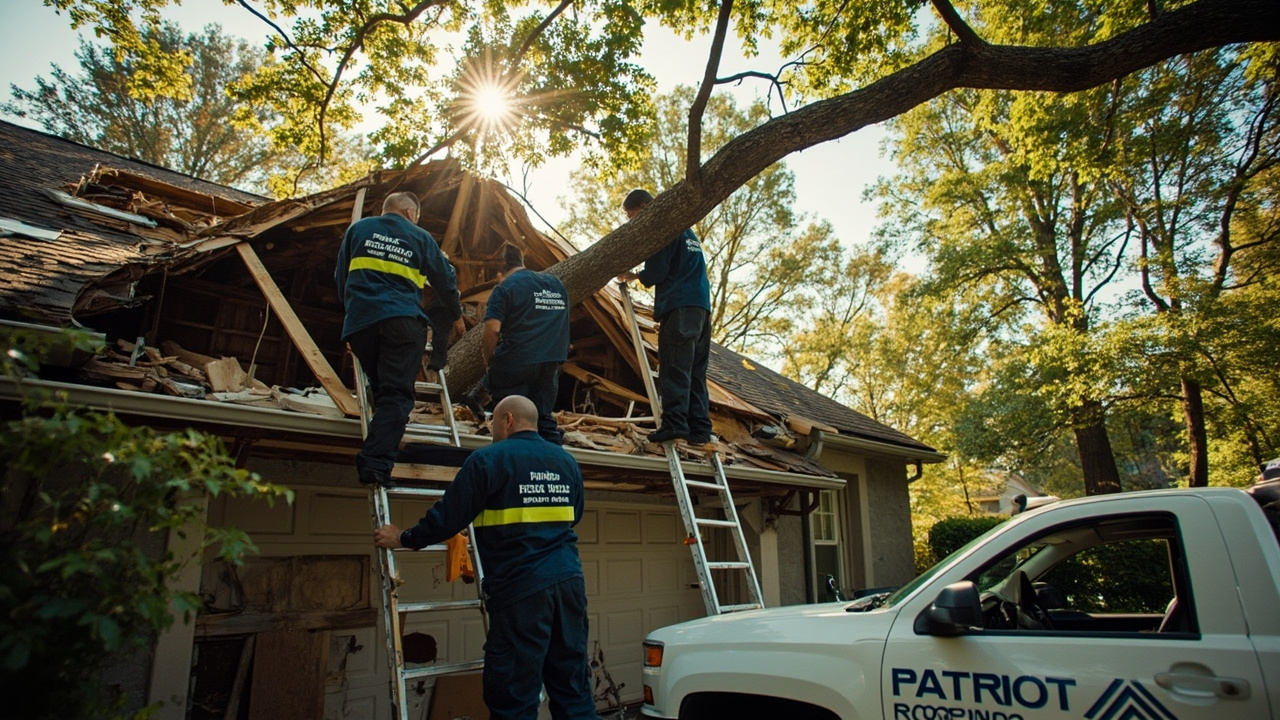
Chicago's violent summer storms and wet, heavy snow create the perfect conditions for tree impact disasters. When a 50-foot oak or maple crashes through your roof, the damage extends far beyond shingles. You are looking at compromised roof decking, cracked rafters, crushed trusses, and immediate water intrusion into insulation and drywall. Every hour that passes increases the risk of mold growth, electrical hazards, and secondary structural failure.

The freeze-thaw cycles common to Cook County make emergency tree damage roof repair even more critical. Water that seeps into structural lumber during a spring storm can freeze overnight, expanding cracks and splitting load-bearing timbers. By morning, a repairable puncture becomes a major structural repair. If the tree is still resting on your roof, the shifting weight can buckle wall framing and compromise foundation load paths.

Chicago building code requires immediate stabilization when structural members are exposed or damaged. You cannot wait for a standard repair estimate. Fallen tree structural roof repair demands emergency tarping, debris removal, structural shoring, and rapid assessment to determine if the building is safe to occupy. Insurance adjusters need documentation within 24 hours, and open exposure voids your coverage if you delay mitigation. This is not a repair you schedule for next week. This is an emergency tree restoration situation where speed determines both safety and cost.

A Fallen Tree Isn't Just Roof Damage. It's a Structural Crisis.
How We Stabilize Tree Impact Damage and Restore Structural Integrity

How We Stabilize Tree Impact Damage and Restore Structural Integrity

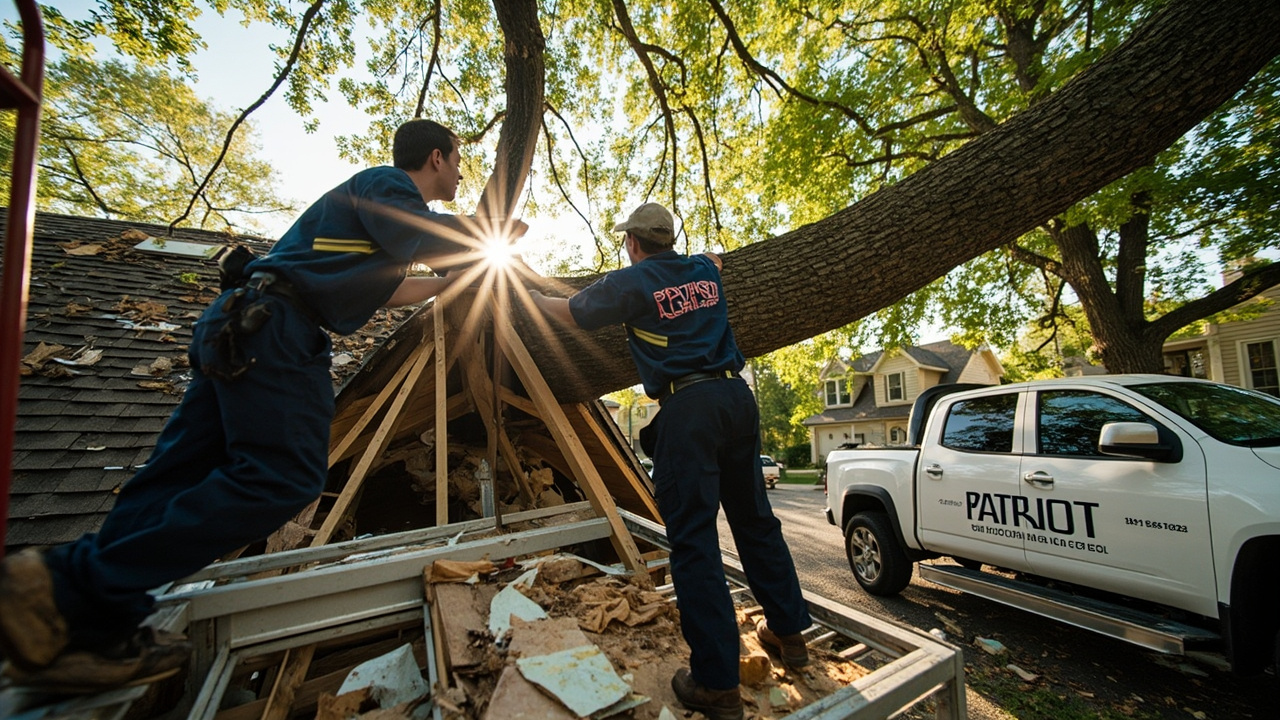
Patriot Roofing Chicago treats every tree impact roofing services call as a structural emergency, not a cosmetic repair. Our crews arrive with emergency tarping systems, structural bracing, and moisture meters to immediately stop secondary damage. We do not touch the tree until we assess the load distribution. Moving a fallen tree incorrectly can trigger a progressive collapse of already weakened framing.

First, we establish temporary weather protection using reinforced polyethylene sheeting anchored to undamaged roof structure, not just thrown over the hole. This prevents rain from saturating ceiling joists and wiring. Next, we document every angle of damage for your insurance claim, photographing crushed flashing, fractured sheathing, and any penetration into living space. We tag compromised rafters and measure deflection in roof planes to determine if temporary shoring is required before tree removal.

Once the tree is safely extracted, we open the damaged area to expose the full extent of structural compromise. Surface damage means nothing if the ridge beam is cracked or if a truss chord is fractured. We replace rotted or split roof decking with CDX plywood, sister cracked rafters with matching dimensional lumber, and reinstall code-compliant underlayment before any shingles go down. If the impact damaged chimney flashing or penetrated HVAC ductwork, we coordinate those trades immediately to prevent moisture migration and air leakage. The repair roof crushed by tree process is methodical, sequenced, and driven by structural priority, not cosmetic speed.

What Happens When You Call for Emergency Tree Damage Repair

Tree Impact & Structural Repair in Chicago – 24/7 Emergency Response Before More Damage Spreads
01

Immediate Dispatch and Stabilization

We dispatch an emergency crew to your Chicago property within 60 minutes of your call. The team brings tarping materials, safety equipment, and structural assessment tools. Before any tree removal begins, we secure the damaged area to prevent additional water intrusion, photograph all damage for insurance documentation, and assess whether the structure is safe to occupy. If the tree is still embedded in the roof, we evaluate load distribution and stabilize compromised framing to prevent progressive collapse during extraction.
02

Structural Assessment and Deconstruction

After tree removal, we open the damaged roof section to expose all affected structural members. We inspect rafters, trusses, sheathing, and underlayment for hidden fractures, compression damage, and moisture penetration. Using moisture meters and structural load calculations, we determine which components require sistering, replacement, or reinforcement. We tag every damaged member and create a detailed scope for your insurance adjuster. This phase ensures nothing is hidden under cosmetic repairs that will fail within a year.
03

Structural Rebuild and Weatherproofing

We rebuild the roof structure using matching lumber dimensions and proper fastening schedules per Chicago building code. New CDX sheathing is installed with correct nail spacing, followed by ice and water shield in vulnerable areas and synthetic underlayment across the entire repair zone. We integrate new shingles with existing roof planes, ensuring proper flashing at all transitions. The final inspection confirms structural integrity, watertight seals, and alignment with surrounding roof sections. You get a roof that performs as if the tree never fell.

Why Chicagoland Homeowners Call Patriot Roofing for Tree Impact Emergencies

Emergency roof restoration tree damage requires more than a tarp and a patch job. You need a contractor who understands Chicago's building codes, knows how to document damage for State Farm and Allstate adjusters, and has the crew capacity to respond on weekends and holidays. Patriot Roofing Chicago operates 24/7 because tree damage does not wait for business hours.

We know the neighborhoods where mature oaks and silver maples tower over bungalows in Jefferson Park and Lincoln Square. We have worked with historic home preservation guidelines in Oak Park and navigated condo association protocols in Lakeview. When a storm drops a tree on a two-flat in Bridgeport, we understand the urgency of restoring both units quickly to prevent tenant displacement and lost rental income. Our familiarity with Cook County permit requirements means we can pull emergency permits the same day, avoiding delays that leave your property exposed.

Chicago's housing stock includes century-old balloon framing, post-war truss systems, and modern engineered lumber. We have repaired all of them. A tree impact that crushes 2x4 rafters in a 1920s bungalow requires a different repair strategy than a tree that punches through engineered I-joists in a 2005 build. We match original framing methods, maintain load paths, and ensure repairs meet current code without compromising the existing structure. You get a contractor who knows the difference between a cosmetic fix and a structural repair, and who prioritizes your safety and your insurance claim over speed.

What to Expect When You Need Emergency Tree Damage Repair

Immediate Response Time

You will speak to a live dispatcher within minutes of calling, not a voicemail system. Our emergency crews operate across Cook County and surrounding areas, and we commit to on-site arrival within 60 minutes for active emergencies. If your roof is actively leaking or the structure is compromised, we prioritize your call. We arrive with tarping materials, ladders, and safety equipment ready to deploy. You do not wait days for a temporary fix while water ruins your ceilings and belongings. We stop the damage immediately, then begin the assessment and repair process. Weekends, holidays, and overnight storms do not slow our response. You get the same rapid deployment regardless of when the tree falls.

Comprehensive Damage Assessment

Our initial inspection is not a quick glance from the ground. We perform a full structural assessment that includes climbing onto the roof, probing damaged decking with an awl, checking rafter deflection with a level, and using moisture meters to detect hidden water intrusion. We photograph every damaged component from multiple angles and create a written scope that breaks down structural repairs, material replacement, and code compliance upgrades. This documentation is what your insurance adjuster needs to approve the claim without haggling over hidden damage discovered mid-job. We also identify secondary issues like damaged gutters, compromised flashing, and punctured HVAC penetrations that are easy to miss but critical to address. You get a complete picture of the damage, not just the obvious holes.

Structural Repair and Weatherproofing

The finished repair integrates seamlessly with your existing roof. We match shingle color and style, align courses with surrounding sections, and ensure flashing transitions are watertight and invisible. Structural repairs are executed to meet or exceed Chicago building code, with proper fastening schedules, correct lumber dimensions, and engineered load paths. You will not see sagging, feel bouncing, or notice discoloration in your ceilings after we are done. The repair is tested with a final water test and inspected for proper ventilation and insulation continuity. You get a roof section that performs like the original, backed by documentation that protects your property value and resale disclosures. The goal is to erase the evidence of the impact, not just patch the hole.

Insurance Coordination and Documentation

We handle the paperwork burden so you do not have to fight with your insurance company. Our estimates are formatted to match adjuster requirements, with line-item breakdowns, material specifications, and labor justifications. We meet with adjusters on-site and walk them through the damage, explaining why certain repairs are non-negotiable for code compliance and structural safety. If the adjuster undervalues the claim, we provide supplemental documentation and advocate for full coverage. We also coordinate permits, inspections, and final sign-offs with the City of Chicago. You get a single point of contact who manages the entire process, from emergency tarping to final payment. The repair is stressful enough without navigating insurance bureaucracy and city permit offices alone.

Frequently Asked Questions

You Have Questions,
We Have Answers

Who is responsible for damage caused by a fallen tree? +

Responsibility depends on the tree's condition before it fell. If the tree was healthy and fell due to a storm or act of nature, the property owner where it lands typically files a claim with their own insurance. If the tree was dead, diseased, or visibly hazardous and the owner ignored it, they may be liable for damage to neighboring properties. In Chicago, freezing winters and summer storms weaken trees over time. Document the damage immediately with photos. If a tree has struck your roof, secure the area and call a structural repair specialist fast. Do not delay, water intrusion starts within hours.

Will insurance pay for tree removal after a storm? +

Most homeowners insurance policies cover tree removal after a storm only if the tree damages a covered structure like your roof, garage, or fence. Insurance will not pay to remove a fallen tree that only blocks your driveway or yard. Coverage limits vary, typically between 500 and 1000 dollars per tree. In Chicago, where spring storms and heavy snow cause frequent tree failures, review your policy limits now. Take photos of the tree on your roof immediately. Your insurer may require documentation before approving removal and structural repairs. Act fast to prevent water damage from spreading through the roof decking.

Will lumber companies cut down trees for free? +

No. Lumber companies rarely cut down trees for free, even for the wood value. Most residential trees in Chicago are too small, damaged, or diseased to be worth commercial milling. Specialty hardwoods like oak or walnut might attract interest if the tree is large and accessible, but you still pay for cutting and removal. After a tree strikes your roof, speed matters more than saving money on removal. You need emergency structural stabilization and debris clearing to prevent collapse or water intrusion. Do not wait for free services that may never come. Hire a licensed contractor immediately.

What is the cheapest time of year for tree removal? +

Late winter, typically January through March, is the cheapest time for tree removal in Chicago. Demand drops after storm season, and frozen ground makes equipment access easier. Tree services offer lower rates during this slow period. However, if a tree has already damaged your roof, do not wait for seasonal pricing. Emergency structural repairs cannot be delayed. Exposed roof decking, broken trusses, and open penetrations allow rain, snow, and pests inside your home within hours. The cost of waiting far exceeds any savings from off-season removal. Secure the structure first, worry about pricing later.

Whose insurance pays when a tree falls? +

If the tree was healthy and fell due to a storm, the property owner where the tree lands files a claim with their own homeowners insurance. If the tree was dead or diseased and the neighbor ignored warnings, their liability insurance may cover your damage. In Chicago, freeze-thaw cycles and wind storms weaken aging trees, making liability harder to prove. Take photos of the tree's root system and trunk condition. If it struck your roof, contact your insurance immediately. Do not wait for your neighbor's insurer. Your policy covers sudden damage to your structure.

What are three things that are not covered by homeowners insurance? +

Three common exclusions in homeowners insurance are flood damage, earthquake damage, and general maintenance or neglect. Flood damage requires separate flood insurance, critical in low-lying Chicago neighborhoods near the Chicago River or Lake Michigan. Earthquake coverage is rare but available as an endorsement. Most importantly, insurers will not cover damage from gradual deterioration, mold, or pest infestations that result from ignoring a roof breach after tree impact. If a tree punctures your roof, emergency repairs to prevent further damage are your responsibility. Delay creates a denial risk.

How much does homeowners insurance cover for tree removal? +

Most homeowners insurance policies cover tree removal up to 500 to 1000 dollars per tree, with a total limit of 2500 to 5000 dollars per claim. Coverage applies only if the tree damages a covered structure like your roof, walls, or attached garage. Removal of trees that fall in your yard without striking a structure is not covered. In Chicago, spring storms and heavy snow regularly drop branches and entire trees onto homes. Review your policy's debris removal limits now. If a tree has damaged your roof, document everything with photos before removal starts.

How to get homeowners insurance to pay for tree removal? +

To get homeowners insurance to pay for tree removal, the tree must damage a covered structure. Take photos of the tree on your roof, the entry point, and interior damage immediately. File your claim within 24 hours. Request emergency board-up or tarping services if needed. Your insurer may send an adjuster to assess damage before approving removal and structural repairs. In Chicago, where storms cause frequent roof breaches, document visible tree rot or disease to strengthen your claim. Do not remove the tree before the adjuster arrives unless it poses immediate safety risks.

What two events are not covered under homeowners insurance? +

Two common exclusions in homeowners insurance are flood damage and general maintenance or wear-and-tear. Flood damage requires separate flood insurance, especially in Chicago areas near rivers or storm-prone zones. Maintenance-related damage includes roof leaks from missing shingles, mold from ignored moisture, or structural rot from deferred repairs. If a tree punctures your roof during a storm, that sudden damage is covered. However, if you delay repairs and water damage spreads, your insurer may deny the secondary damage as neglect. Act immediately to preserve coverage and stop deterioration.

How much does it cost to remove a 20 ft tree? +

Cost factors include tree height, accessibility, proximity to structures, and disposal fees. Specific pricing depends on the damage severity and structural repairs needed after removal. If a 20-foot tree has struck your Chicago home, the priority is stabilizing the roof structure, not removal cost. Emergency structural repairs prevent collapse, water intrusion, and mold growth. Most homeowners insurance covers tree removal up to policy limits if the tree damaged your roof. Focus on securing the breach immediately. Tarping, bracing broken trusses, and clearing debris must happen within hours to prevent catastrophic secondary damage.

Why Chicago's Tree Canopy and Storm Patterns Make Tree Impact Roof Damage a Recurring Threat

Chicago maintains one of the densest urban tree canopies in the Midwest, with mature oaks, maples, and elms lining residential streets throughout Jefferson Park, Beverly, and Rogers Park. These trees provide shade and beauty, but they also create risk. Summer derechos and severe thunderstorm complexes produce straight-line winds exceeding 70 mph, snapping healthy limbs and uprooting shallow-rooted trees. Winter ice storms add hundreds of pounds of weight to branches, causing sudden failures that punch through shingles and sheathing. The combination of mature trees and volatile weather makes emergency tree damage roof repair a regular occurrence across Chicagoland. Properties near forest preserves and park districts face even higher exposure due to denser tree cover and less frequent trimming.

Patriot Roofing Chicago has built relationships with tree removal services, structural engineers, and insurance adjusters throughout Cook County. We understand Chicago's building permit process for emergency structural repairs and know which inspectors prioritize rapid approval for occupied homes. Our familiarity with local contractors means we can coordinate electrical, plumbing, and HVAC repairs if a tree impact damages those systems. When you call a national franchise or out-of-state storm chaser, you get a crew that does not know local codes and cannot navigate city permitting. You get delays, rejections, and substandard repairs. Local expertise matters when the repair involves structural integrity and insurance claims. You need a contractor who has repaired tree damage on homes like yours, in neighborhoods like yours, under the same weather conditions you face every year.
Roofing Services in The Chicago Area

Patriot Roofing is proud to be a locally owned and operated business committed to serving our community and the surrounding areas. Our deep understanding of the local climate and architectural styles allows us to provide roofing solutions that are perfectly suited to the unique needs of our clients. We invite you to explore our service area and see why so many residents trust us for all their roofing needs.

Address:
Patriot Roofing Chicago, 2111 S Halsted St, Chicago, IL, 60608

Additional Services We Offer

Our news updates

Latest Articles & News from The Blogs

Common Problems with Mansard Roofs in Irving Park and How to Fix Them Living in Irving Park means owning a…

Common Problems with Mansard Roofs in Irving Park and How to Fix Them

Common Problems with Mansard Roofs in Irving Park and How to Fix Them Living in Irving Park means owning a…

Why Burr Ridge Homeowners are Choosing Designer Asphalt Shingles Over Natural Slate

Why Burr Ridge Homeowners are Choosing Designer Asphalt Shingles Over Natural Slate Burr Ridge homeowners are discovering that designer asphalt…

Dealing with Crumbling Parapet Walls on Your Rogers Park Multi-Unit Building

Dealing with Crumbling Parapet Walls on Your Rogers Park Multi-Unit Building Parapet walls are the exposed sections of masonry that…

Contact Us

Every minute your roof stays open, more water enters your home. Call Patriot Roofing Chicago at (773) 599-7055 right now. We dispatch emergency crews 24/7 and arrive within 60 minutes to stabilize your roof and protect your property.