
menu

Industrial Roof Replacement in Chicago | Minimizing Downtime for Manufacturing and Distribution Facilities

Fast-track industrial re-roofing solutions engineered for Chicago's freeze-thaw cycles and designed to keep your operations running while we replace your commercial flat roof system.

Slider Image 1
Slider Image 2
Slider Image 3
Slider Image 4
Slider Image 5
Slider Image 7
Slider Image 8
Slider Image 9
Slider Image 10
Slider Image 11

Why Chicago Industrial Facilities Face Accelerated Roof Deterioration

Your factory roof takes a beating in Chicago. The combination of freeze-thaw cycling, snow loading, and temperature swings from negative double digits to 90-plus degrees creates constant expansion and contraction that tears apart membrane seams and flashing details. Add the industrial environment inside your building, ventilation from manufacturing processes, chemical vapors from production lines, and you get accelerated degradation from both sides of the roof assembly.

Most warehouse roof replacement projects we evaluate in the greater Chicago metro started as small leaks near HVAC curbs or along parapets. The business kept patching. Water infiltrated the insulation layer. Now you have saturation across 40 percent of the roof deck, threatened inventory below, and production managers asking when you will fix it permanently.

Chicago's industrial corridors, from the Stockyards Industrial District to manufacturing zones near O'Hare, house facilities that cannot afford multi-week shutdowns. Your commercial roof replacement needs to happen while second shift runs, while trucks dock, while your operations continue. That requires planning, phasing, and contractors who understand industrial building systems, not just residential shingle work scaled up.

The commercial flat roof systems on most Chicago warehouses and factories were installed 20 to 30 years ago. TPO and EPDM membranes have reached end-of-service life. Ponding water sits in low spots. You are past the repair-versus-replace decision point. The question now is how to execute industrial re-roofing without halting the business that roof protects.

Why Chicago Industrial Facilities Face Accelerated Roof Deterioration
How We Execute Factory Roof Replacement Without Stopping Your Operations

How We Execute Factory Roof Replacement Without Stopping Your Operations

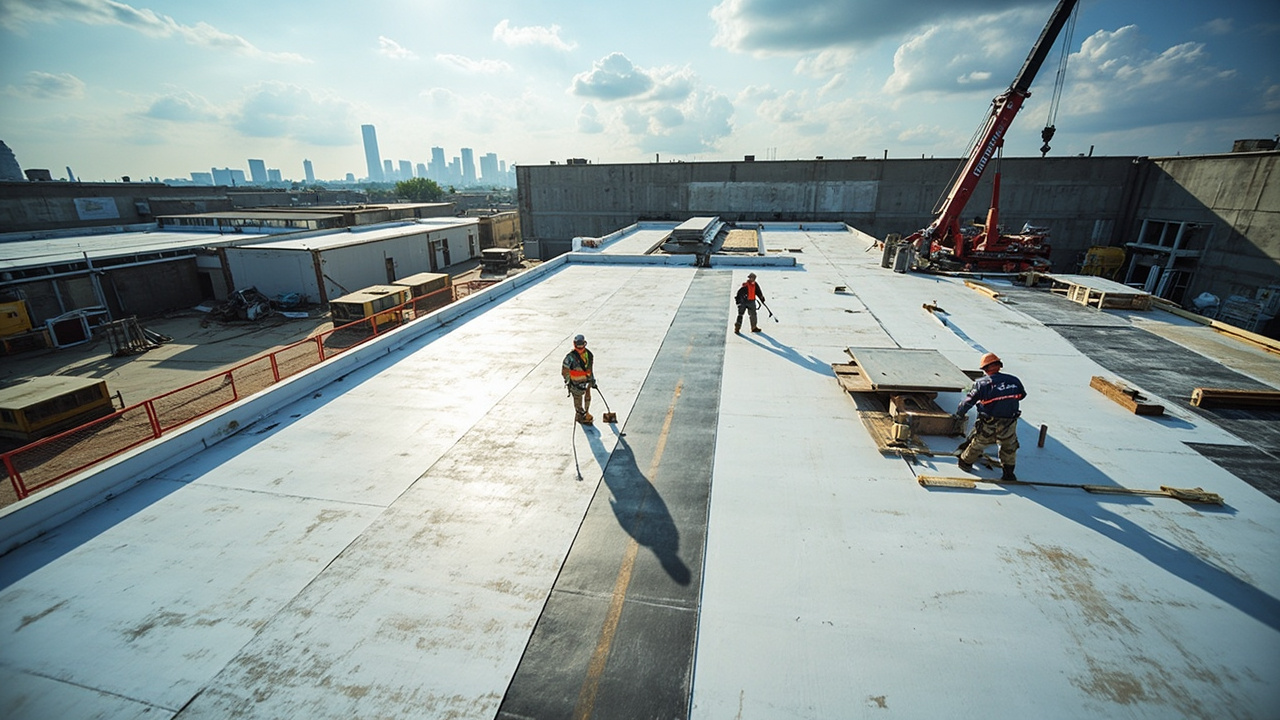
We phase the work. Your facility does not go dark while we replace 80,000 square feet of membrane. We map production areas, loading zones, and critical equipment locations, then divide the roof into sections that can be completed in 72-hour blocks. We maintain weather-tight conditions across the entire building every night before your second shift starts.

Our approach to commercial roof replacement begins with core sampling to determine exact insulation saturation levels and deck condition. We do not guess. We cut cores, measure R-value loss, check for deck rust or rot, and engineer the replacement assembly based on actual conditions, not assumptions. For most Chicago industrial facilities, that means a fully adhered TPO or PVC system over polyiso insulation and a recovered deck.

We handle the logistics that stop other contractors. Crane placement for rooftop unit removal, coordination with your maintenance team for electrical shutdowns, material staging that does not block dock doors or truck circulation. On a recent warehouse roof replacement project near Midway, we coordinated with the facility manager to sequence our work around inbound freight schedules and climate-controlled storage requirements.

The technical execution matters. Proper flashing at parapet walls, correct fastening patterns for Chicago wind loads, welded seams that will not fail during the next polar vortex. We follow NRCA guidelines and manufacturer specifications because your roof needs to last 25 years, not just pass inspection. Patriot Roofing Chicago brings that level of precision to every factory roof replacement we complete across the metro area.

Our Industrial Re-Roofing Process for Active Facilities

Industrial Roof Replacement in Chicago | Minimizing Downtime for Manufacturing and Distribution Facilities
01

Site Assessment and Phasing Plan

We evaluate your roof system, document current damage, and develop a phased work plan that maintains building operations. This includes core sampling to assess insulation and deck condition, infrared scanning to locate moisture infiltration, and coordination meetings with your facilities team to map production schedules, restricted areas, and equipment that cannot be disturbed. You receive a detailed timeline showing which roof sections get replaced each week.
02

Staged Tear-Off and Installation

We remove existing membrane, saturated insulation, and damaged decking in controlled sections, then immediately install the new roof assembly to maintain weather protection. Each phase gets completed to a watertight condition before we move to the next section. Material deliveries happen during your specified hours. Equipment staging areas get positioned to avoid interfering with loading docks, truck traffic, or emergency access routes required by your operations and local fire code.
03

Final Inspection and Documentation

After the complete commercial flat roof replacement, we conduct a full building inspection, provide thermal imaging to confirm insulation performance, and deliver as-built documentation showing all penetrations, flashing details, and drainage modifications. You receive manufacturer certification, warranty documentation, and a maintenance protocol specific to your roof system and Chicago climate conditions. We schedule annual inspections to catch small issues before they become production-stopping leaks.

Why Chicago Industrial Operations Trust Patriot Roofing Chicago

Most commercial roofing contractors cannot handle the complexity of an active industrial facility. They lack the crew size to complete large sections quickly. They do not understand how to coordinate with plant managers, safety officers, and production schedules. They have never navigated Chicago building department requirements for commercial roof replacement on buildings over 50,000 square feet.

We have replaced roofs on manufacturing plants while production lines ran below. We have re-roofed cold storage warehouses without breaking the cold chain. We understand that your facility operates 24/7 and that downtime costs you thousands of dollars per hour in lost production, missed shipments, and idle labor.

Our familiarity with Chicago's industrial building stock matters. We know the typical construction methods used in factories built in the 1970s and 1980s. We know which deck types require specific fastening systems. We know how to handle the parapet conditions common in Chicago industrial architecture and the drainage challenges created by flat roofs on buildings that have settled over decades.

We carry the insurance coverage required for industrial sites. Our crews are trained in facility-specific safety protocols, lockout-tagout procedures, and confined space requirements. We show up with the equipment needed for large-scale commercial work, including hot air welders for membrane seams, large-capacity tear-off equipment, and crane services for rooftop unit replacement.

The relationship does not end when we finish the installation. Industrial roofs need ongoing maintenance to hit their expected service life. We provide scheduled inspections, immediate response for storm damage, and preventive maintenance that keeps small problems from becoming emergency shutdowns during your peak season.

What to Expect from Your Industrial Roof Replacement Project

Project Timeline and Scheduling

Most warehouse roof replacement projects take four to eight weeks depending on building size, weather windows, and operational constraints. We provide a detailed schedule showing which sections get completed each week and when specific building areas will have active work overhead. You will know exactly when we need equipment shutdowns, when crane work happens, and when truck access may be restricted. We build weather delays into the schedule and communicate any timeline changes immediately. For facilities that cannot tolerate certain work during peak seasons, we schedule projects during your slower months or break the work into multiple phases across different quarters.

Initial Evaluation and Engineering

The assessment takes one to two days depending on building size. We conduct visual inspection, core sampling, infrared moisture scanning, and structural evaluation of the existing deck. You receive a written report documenting current conditions, recommended tear-off scope, insulation replacement needs, and any structural repairs required before new membrane installation. We provide multiple system options with performance specifications, expected service life, and maintenance requirements for each. The evaluation includes meetings with your facilities team to understand operational constraints, identify critical areas that need priority protection, and develop a work plan that fits your business requirements.

Installation Quality and Performance

You get a fully adhered or mechanically fastened membrane system engineered for Chicago wind loads and snow loads per current building code. All seams are heat-welded or chemically bonded to manufacturer specifications. Flashing details at parapets, penetrations, and equipment curbs are built to prevent the leak points that plague most commercial flat roof systems. We install tapered insulation systems to eliminate ponding water and ensure positive drainage to roof drains. The completed installation passes third-party inspection and qualifies for manufacturer warranty coverage, giving you documented protection and recourse if problems develop during the warranty period.

Post-Installation Support and Maintenance

We provide annual roof inspections to check membrane condition, clear drains, reseal minor penetrations, and catch small issues before they become leaks. You receive a written report after each inspection documenting roof condition and any recommended repairs. We offer emergency response for storm damage or unexpected leaks that threaten operations or inventory. Our maintenance program includes drain cleaning, removal of debris that blocks drainage paths, and resealing of pitch pans or equipment curbs that develop gaps over time. Scheduled maintenance extends roof life and protects your investment in the commercial roof replacement.

Frequently Asked Questions

You Have Questions,
We Have Answers

How much should a 2000 sq ft roof cost? +

Industrial roof replacement costs differ significantly from residential projects. A 2000 sq ft industrial roof typically costs more per square foot due to specialized membrane systems, heavier structural loads, and stricter code requirements in Chicago. Factors include roof type (TPO, EPDM, metal), existing substrate condition, drainage needs, and access challenges. Chicago's freeze-thaw cycles demand higher-grade materials and enhanced insulation to meet energy codes. Industrial facilities also face business continuity concerns, which affect scheduling and phasing costs. Request a site-specific assessment rather than relying on residential pricing models. Commercial roofing operates on different economics than residential work.

Can roofers make 100k a year? +

Commercial roofers in Chicago regularly exceed 100k annually, particularly those specializing in industrial systems. The commercial sector demands advanced certifications, membrane welding skills, and understanding of complex drainage and HVAC integration. Chicago's large industrial base provides consistent demand. Experienced foremen and certified installers earn premium wages due to liability exposure and technical complexity. Factors include union membership, manufacturer certifications (Firestone, GAF), and willingness to work year-round despite harsh winters. Industrial projects require precision and accountability that commands higher compensation than residential work. The skill gap in commercial roofing keeps wages competitive across the Chicago metro.

Is a commercial roof replacement tax deductible? +

Commercial roof replacement is generally tax deductible as a business expense, but classification matters. The IRS distinguishes between repairs (immediately deductible) and capital improvements (depreciated over time). A complete industrial roof replacement typically qualifies as a capital improvement, depreciated over 39 years for commercial property. However, Section 179 or bonus depreciation may allow accelerated deductions depending on your situation and current tax law. Energy-efficient systems may qualify for additional deductions under Section 179D. Consult your CPA before finalizing the project. Proper documentation of business necessity and code compliance strengthens your position. Tax treatment affects your project budget and timing decisions.

How long do industrial roofs last? +

Industrial roof longevity depends on membrane type, installation quality, and Chicago's climate stress. TPO systems last 15 to 25 years, EPDM rubber 20 to 30 years, and metal roofing 30 to 50 years with proper maintenance. Chicago's freeze-thaw cycles, ponding water from flat profiles, and thermal expansion accelerate degradation. Facilities with regular maintenance programs (biannual inspections, immediate repairs, drainage clearing) consistently reach the upper lifespan ranges. UV exposure, rooftop equipment vibration, and foot traffic from HVAC service also impact durability. Budget for mid-life restoration coatings to extend service life. Installation quality matters more than material choice for longevity.

What is the most expensive part of replacing a roof? +

Tear-off and disposal represent the highest cost variable in industrial roof replacement. Removing multiple existing layers, disposing of materials according to Chicago regulations, and addressing substrate damage discovered during tear-off drive expenses. Structural reinforcement often follows when decking fails inspection. Insulation upgrades to meet current energy codes add significant costs but improve long-term ROI. Drainage modifications to eliminate ponding water and compliance with updated building codes also escalate budgets. Labor represents 40 to 60 percent of total costs for industrial projects. Material costs remain relatively stable, but complexity and unforeseen conditions underneath existing membranes create budget uncertainty.

Will roofing prices go down in 2025? +

Roofing prices will likely remain stable or increase slightly in 2025. Material costs for TPO, EPDM, and metal roofing track petroleum and steel markets, which show no significant downward pressure. Labor shortages in skilled trades continue across Chicago, keeping installation costs elevated. Tariffs on imported materials and supply chain adjustments maintain pricing floors. Energy code updates in Chicago require thicker insulation and higher-performance membranes, adding cost regardless of material prices. Insurance requirements and liability costs for commercial contractors also trend upward. Waiting for price drops risks further deterioration and higher emergency repair costs. Budget based on current market rates rather than speculation.

What is the 10/50/50 rule? +

The 10/50/50 rule is a roofing industry guideline stating that 10 percent of roof failures occur from material defects, 50 percent from installation errors, and 50 percent from poor maintenance. For industrial facilities in Chicago, this emphasizes choosing experienced commercial contractors over low bidders. Installation quality determines whether your membrane withstands ponding water, thermal cycling, and wind uplift. Regular maintenance programs catch minor issues before they cascade into expensive failures. This rule explains why manufacturer warranties require certified installers and documented maintenance. Your contractor selection and maintenance commitment matter more than material brand for long-term performance.

Where do roofers make the most money? +

Commercial roofers earn the highest wages in major metro areas with significant industrial bases and union presence. Chicago ranks among the top markets due to dense commercial construction, strict code enforcement requiring skilled labor, and strong union representation. Coastal cities with hurricane exposure and oil industry hubs also pay premium wages. Commercial work pays more than residential due to liability exposure, technical complexity, and business continuity demands. Geographic cost of living affects wages, but industrial roofers in Chicago earn competitive rates due to year-round demand and specialized skill requirements. Certification in multiple membrane systems and willingness to handle complex projects increases earning potential.

What profession makes $100,000 a year? +

Multiple professions reach 100k annually, including commercial construction trades, project managers, engineers, healthcare professionals, technology workers, financial analysts, and sales professionals. In Chicago's commercial roofing sector, experienced foremen, estimators, project managers, and certified installers regularly exceed this threshold. The key differentiator is specialized skills that reduce liability and ensure business continuity for commercial clients. Industrial facilities cannot tolerate roof failures during production, creating demand for premium expertise. Professionals who combine technical skills with business acumen and client management command higher compensation. Career advancement requires ongoing training, manufacturer certifications, and understanding of building science beyond basic installation techniques.

Is there a tax credit for a new roof in 2025? +

The Energy Efficient Commercial Buildings Deduction (Section 179D) may apply to qualifying industrial roof replacements in 2025. This tax deduction provides up to $5 per square foot for energy-efficient building improvements that meet specific performance criteria. Roof systems with high insulation values and reflective membranes may qualify, particularly when part of a broader energy efficiency upgrade. Requirements include third-party energy modeling and certification. The Inflation Reduction Act modified these provisions, making them more accessible for building owners. Consult your tax advisor early in the planning phase to document requirements properly. Energy tax incentives change frequently, so verify current law before finalizing your project budget.

How Chicago's Freeze-Thaw Cycles and Industrial Zoning Drive Factory Roof Replacement Needs

Chicago experiences an average of 40 freeze-thaw cycles each winter. Water penetrates small cracks in membrane seams or flashing details, freezes overnight, expands, and tears the opening wider. By spring, you have active leaks. This cycle destroys commercial flat roof systems faster than in milder climates. Industrial facilities face additional stress from internal heat loads, ventilation systems that create pressure differentials, and rooftop equipment that vibrates and loosens fasteners. The combination means most factory roof replacement projects in Chicago happen at 18 to 22 years, well short of the 30-year service life promised by membrane manufacturers. Proper installation and drainage design are critical to reaching expected performance in this climate.

Chicago's industrial corridors fall under specific zoning and building code requirements that affect commercial roof replacement projects. The city requires permits for any work over 5,000 square feet, inspections at multiple phases, and compliance with energy code requirements for insulation R-values. Buildings in industrial planned developments may have additional restrictions on work hours, noise levels, and material staging. Contractors unfamiliar with Chicago Department of Buildings procedures cause delays that extend your project timeline and leave your facility exposed. We navigate permit approvals, coordinate required inspections, and ensure your warehouse roof replacement meets all local code requirements without surprises or schedule disruptions.
Roofing Services in The Chicago Area

Patriot Roofing is proud to be a locally owned and operated business committed to serving our community and the surrounding areas. Our deep understanding of the local climate and architectural styles allows us to provide roofing solutions that are perfectly suited to the unique needs of our clients. We invite you to explore our service area and see why so many residents trust us for all their roofing needs.

Address:
Patriot Roofing Chicago, 2111 S Halsted St, Chicago, IL, 60608

Additional Services We Offer

Our news updates

Latest Articles & News from The Blogs

How to Maintain the Integrity of Steep-Pitched Tudor Roofs in Lincoln Square Steep-pitched Tudor roofs dominate the architectural landscape of…

How to Maintain the Integrity of Steep-Pitched Tudor Roofs in Lincoln Square

How to Maintain the Integrity of Steep-Pitched Tudor Roofs in Lincoln Square Steep-pitched Tudor roofs dominate the architectural landscape of…

Dealing with Extra Wear and Tear on Hegewisch Roofs Near Industrial Areas

Dealing with Extra Wear and Tear on Hegewisch Roofs Near Industrial Areas If you live in Hegewisch near Chicago’s industrial…

The Benefits of Investing in Impact-Resistant Shingles for Your Austin Neighborhood Home

The Benefits of Investing in Impact-Resistant Shingles for Your Austin Neighborhood Home Chicago’s location in the Midwest makes it particularly…

Contact Us

Your industrial facility cannot wait months for a roof replacement. Call Patriot Roofing Chicago at (773) 599-7055 to schedule an evaluation and receive a phased work plan that keeps your operations running while we install a roof system built for Chicago conditions.