
menu

TPO Roofing Installation in Chicago – Minimize Downtime with Industrial-Grade Single-Ply Systems

Commercial TPO membrane roofing built to withstand Chicago's freeze-thaw cycles and thermal expansion, installed by certified crews who keep your operations running while protecting your investment.

Slider Image 1
Slider Image 2
Slider Image 3
Slider Image 4
Slider Image 5
Slider Image 7
Slider Image 8
Slider Image 9
Slider Image 10
Slider Image 11

Chicago's Climate Destroys Flat Roofs Without the Right Membrane System

Chicago's commercial buildings face a specific threat. Winter temperatures plunge to negative digits, then spring brings rapid thaws. This freeze-thaw cycling causes traditional roofing materials to crack, buckle, and fail at seams. Add summer heat that pushes surface temperatures past 160 degrees, and you have a recipe for membrane degradation and costly leaks.

Single-ply TPO roofing solves this problem. Thermoplastic Polyolefin installation creates a heat-welded, monolithic barrier that expands and contracts without splitting. Unlike EPDM rubber or modified bitumen, TPO membrane roofing reflects UV radiation, reducing cooling loads and extending service life in Chicago's extreme temperature swings.

Your flat roof faces additional stress from ponding water. Chicago's Lake Michigan proximity creates heavy precipitation, and inadequate drainage turns flat commercial roofs into pools. Standing water accelerates membrane breakdown, creates biological growth, and eventually penetrates the building envelope. Commercial TPO roof systems resist ponding damage better than alternatives because the seams are thermally welded, not glued or mechanically fastened at vulnerable points.

The cost of roof failure is not just repair bills. Water intrusion shuts down operations, ruins inventory, and creates liability. A properly installed TPO flat roof installation protects your business continuity while meeting Chicago building code requirements for R-value and fire resistance. The choice is clear: invest in a proven commercial membrane system or accept the risk of catastrophic failure during your busiest season.

Chicago's Climate Destroys Flat Roofs Without the Right Membrane System
How Proper TPO Installation Protects Your Building Envelope

How Proper TPO Installation Protects Your Building Envelope

Commercial TPO roof systems fail when contractors skip critical steps or use residential-grade materials on industrial buildings. The difference between a 10-year roof and a 25-year roof is in the substrate preparation, insulation attachment, and seam welding.

We start with substrate analysis. Your existing roof deck must be dry, structurally sound, and properly sloped for drainage. We use infrared scanning to identify trapped moisture in the existing insulation layers. Installing new TPO membrane roofing over wet substrate traps moisture and voids any manufacturer warranty. If we find compromised sections, we remove and replace them before moving forward.

Insulation attachment matters more than most building owners realize. Chicago wind loads require mechanically fastened polyisocyanurate or EPS insulation boards, tapered to create positive drainage to roof drains and scuppers. We calculate fastener density based on your building height, parapet configuration, and exposure category per Chicago building code. Inadequate attachment leads to blow-offs during severe weather.

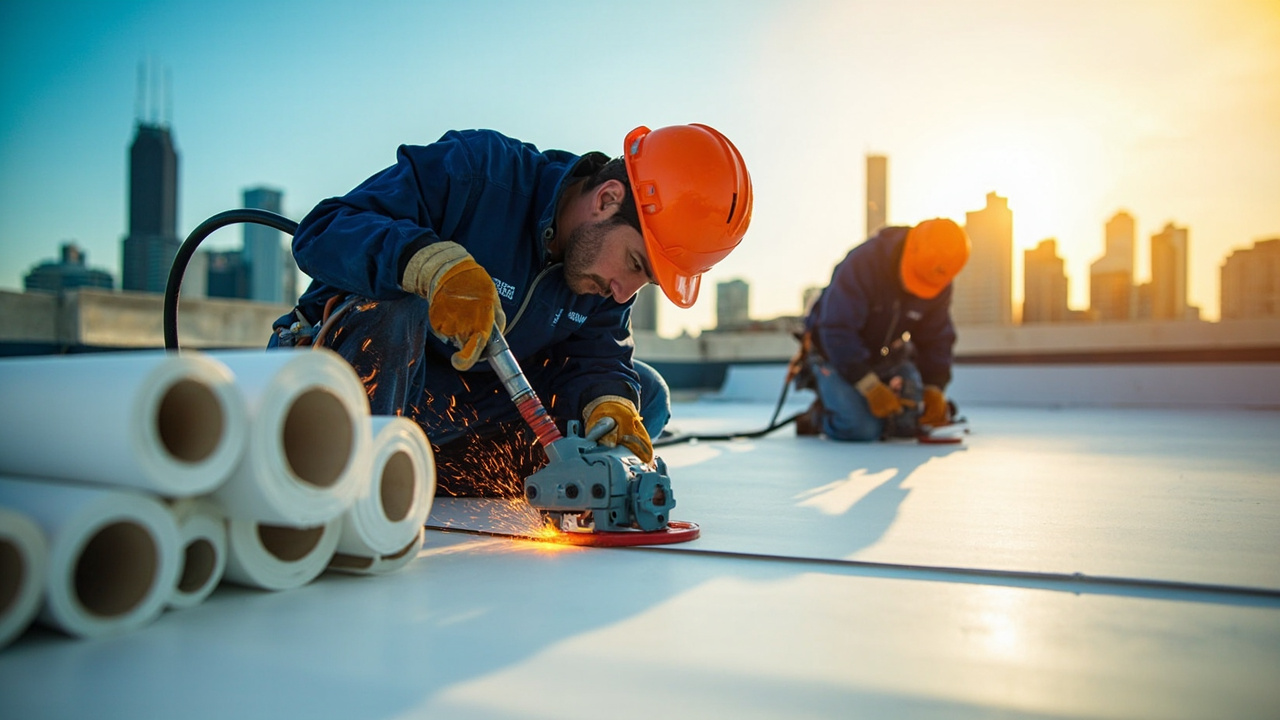
The TPO membrane itself is heat-welded at every seam using hot air welding equipment calibrated to manufacturer specifications. We create seam overlaps of at least two inches and test every weld with a probe to verify complete fusion. Penetrations for HVAC units, exhaust fans, and roof drains receive custom-fabricated flashing boots that are integrated into the membrane, not caulked as an afterthought.

Details determine longevity. We install walkway pads at high-traffic areas, secure all termination bars with proper fastener spacing, and coordinate with your facilities team to minimize disruption to operations below.

What Happens During Your Commercial TPO Installation

TPO Roofing Installation in Chicago – Minimize Downtime with Industrial-Grade Single-Ply Systems
01

Pre-Installation Building Assessment

We conduct a comprehensive roof inspection including core samples, infrared moisture scanning, and structural load analysis. Our team maps all penetrations, drainage points, and potential problem areas. You receive a detailed scope document that identifies existing conditions, required repairs, and installation timeline. We coordinate with your operations manager to schedule work during low-activity periods and establish safety protocols for occupied buildings.
02

Tear-Off and Substrate Preparation

Our crews remove the existing membrane system and inspect the underlying insulation and deck. We replace any damaged wood blocking, re-fasten loose metal decking, and install new tapered insulation to eliminate ponding areas. All work zones are contained with temporary barriers to prevent debris from entering your building. We maintain negative air pressure in work areas and seal all interior access points. Daily cleanup ensures your facility remains operational and safe.
03

Membrane Installation and Quality Control

We roll out TPO membrane sheets in strategic layouts that minimize seams and reduce thermal bridging. Every seam is hot-air welded and tested with both visual inspection and probe testing. Flashing details at walls, curbs, and penetrations are fabricated on-site and fully integrated into the membrane system. Final inspection includes a flood test at all drains and a complete documentation package with thermal images, weld test results, and manufacturer certification required for warranty activation.

Why Chicago Building Owners Choose Experienced TPO Installers

Commercial roofing is not a place for learning curves. A TPO installation error discovered three years later means full tear-off and replacement. The risk is too high to trust contractors who primarily install residential shingles or lack manufacturer certification.

Chicago's commercial building stock includes structures from the 1920s to modern construction. Each building type presents unique challenges. Pre-war buildings with heavy timber decks require different attachment methods than 1980s steel deck construction. We have installed TPO membrane roofing on manufacturing facilities, distribution warehouses, office buildings, and retail centers throughout Cook County. This experience means we anticipate problems before they occur.

Local code knowledge protects you from compliance issues. Chicago requires specific fire ratings for roof assemblies based on building occupancy and construction type. We submit permit applications, coordinate inspections, and ensure your installation meets Factory Mutual requirements if your insurer mandates it. Out-of-town contractors often miss these details, leaving you with code violations or insurance claim denials.

Our relationship with TPO manufacturers gives you access to extended warranties and technical support. We maintain certification with major membrane suppliers, which means factory representatives review our installation plans and verify our work meets their standards. This manufacturer backing is critical when warranty claims arise years after installation.

Capacity matters when weather windows close. We can mobilize multiple crews to complete large installations before seasonal weather changes. Delays during winter roof replacement cost you productivity and risk water damage. We schedule strategically and deliver on committed timelines.

What Your Commercial TPO Project Looks Like

Project Timeline and Scheduling

Most commercial TPO installations take one to three weeks depending on building size, existing roof conditions, and weather. We schedule work during your low-activity periods and can work nights or weekends to avoid disrupting operations. Our project manager provides daily progress updates and coordinates with your facilities team on any building access needs. We maintain continuous weather monitoring and have contingency plans for unexpected precipitation. All tear-off areas are weatherproofed each night to protect your building envelope.

Initial Roof Evaluation Process

Our assessment includes a complete roof inspection with core samples to evaluate insulation condition, infrared scanning to detect trapped moisture, and structural analysis of deck fastening. We document all penetrations, drainage issues, and code compliance concerns. You receive a comprehensive report with thermal images, core sample photos, and detailed scope recommendations. This evaluation typically takes two to four hours and can be scheduled around your business operations. The data we collect determines your installation approach and warranty eligibility.

Final System Performance

Your completed TPO roof system delivers measurable performance improvements. Reflective white membrane reduces cooling costs by rejecting solar heat gain. Fully adhered or mechanically attached systems withstand Chicago wind events without blow-off risk. Heat-welded seams eliminate the leak points common in glued or sealed systems. You receive complete documentation including thermal images of seam welds, fastener pull-test results, and manufacturer warranty certificates. Our installations meet Factory Mutual 1-90 wind uplift ratings and Chicago energy code requirements for commercial buildings.

Post-Installation Support and Maintenance

We provide detailed maintenance guidelines specific to your roof system and schedule annual inspections to identify minor issues before they become expensive problems. Our maintenance programs include drain cleaning, seam inspection, and proactive repairs that extend system life. You receive priority response for any weather-related concerns and direct access to our commercial service team. We maintain detailed records of your roof system and coordinate with membrane manufacturers on any warranty claims. Preventive maintenance is the difference between getting 15 years or 30 years from your TPO investment.

Frequently Asked Questions

You Have Questions,
We Have Answers

What are the disadvantages of TPO roofing? +

TPO roofing has three main drawbacks for commercial properties. First, seam integrity depends on installer skill. Poor heat-welding technique leads to premature failure. Second, membrane shrinkage occurs over time, especially during Chicago's freeze-thaw cycles, which can pull fasteners loose or stress seams. Third, puncture resistance is lower than EPDM or modified bitumen. Rooftop equipment, foot traffic, and hail damage the membrane more easily. Chicago's variable weather exposes these vulnerabilities. Budget for regular inspections and maintenance to extend service life. TPO offers cost savings upfront but requires proper installation and ongoing vigilance to avoid expensive repairs.

What goes under a TPO roof? +

A TPO roof system requires multiple layers for performance and code compliance. The structural deck (typically metal or concrete on commercial buildings) comes first. Next is a cover board, usually polyisocyanurate or gypsum, which protects insulation and provides a smooth surface. Insulation follows, with R-values meeting Chicago's energy code requirements for climate zone 5A. A vapor retarder may be required depending on building use and interior humidity levels. Finally, the TPO membrane is installed over this assembly. The cover board is critical. It prevents punctures from foot traffic and fasteners, and adds fire resistance for commercial building compliance.

Should TPO roofing be glued down? +

TPO roofing has three attachment methods: mechanically fastened, fully adhered, and ballasted. Fully adhered (glued down) offers superior wind uplift resistance, making it ideal for Chicago's exposed commercial buildings and high-rise structures. The adhesive bonds the entire membrane to the substrate, eliminating flutter and mechanical stress on seams. This method also reduces puncture risk since no fasteners penetrate the membrane. However, it requires dry conditions during installation and costs more than mechanical attachment. For buildings near the lakefront or in open areas with high wind exposure, fully adhered TPO provides the best long-term performance and minimizes insurance liability.

Can you put TPO directly over plywood? +

You should not install TPO directly over plywood on commercial structures. Building code requires a cover board between the membrane and substrate for fire resistance, puncture protection, and thermal performance. Plywood expands and contracts with Chicago's humidity swings, telegraphing movement into the membrane and stressing seams. The wood also retains moisture, promoting rot and voiding membrane warranties. Commercial TPO installations require rigid insulation or a approved cover board over the structural deck. This creates a stable, code-compliant substrate. For low-slope commercial roofs, use polyisocyanurate insulation with a DensDeck or gypsum cover board to meet fire ratings and protect your investment.

How many years does a TPO roof last? +

TPO roofs last 15 to 25 years depending on membrane thickness, installation quality, and maintenance. A 60-mil membrane outlasts 45-mil options. Chicago's climate shortens lifespan through UV exposure, freeze-thaw cycles, and thermal cycling that stresses seams. Ponding water accelerates degradation. Mechanically attached systems experience more movement and seam stress than fully adhered installations. Regular inspections, prompt repairs, and keeping drains clear extend service life. Budget for re-coating or replacement at year 15 to 20. For commercial properties, track the roof age and condition in capital planning. Proper maintenance and timely intervention maximize your return on investment.

Why do insurance companies not like flat roofs? +

Insurance companies view flat roofs as higher risk because water drainage is slower and ponding increases leak probability. Claims data shows flat roofs generate more water damage losses than sloped roofs. Membrane deterioration, seam failure, and clogged drains cause interior damage that disrupts business operations. In Chicago, snow load and ice dam formation add structural risk. Insurers may charge higher premiums, require more frequent inspections, or mandate specific maintenance protocols. To manage liability, maintain documentation of all inspections, repairs, and preventive maintenance. Keep drains clear and address ponding within 48 hours. Demonstrating proactive management reduces insurance costs and claim denials.

Can water sit on a TPO roof? +

Water should not sit on a TPO roof for more than 48 hours after rainfall. Ponding water accelerates membrane degradation through UV concentration, plasticizer leaching, and biological growth. Chicago's temperature swings expand and contract ponded areas, stressing seams and fasteners. Ponding also indicates inadequate drainage slope or clogged drains, both code violations that void warranties. Commercial property owners face liability if ponding causes structural overload or interior damage. Inspect drains quarterly and after heavy storms. Address low spots with tapered insulation during re-roofing. Ponding reduces TPO lifespan by 30 to 50 percent. Fix drainage issues immediately to protect your investment.

How much is a 60 mil TPO roof? +

TPO roof pricing varies based on building size, access, existing conditions, and attachment method. Cost factors include tear-off requirements, insulation upgrades, edge metal, and penetration details. Chicago projects add complexity from building codes, seasonal weather constraints, and disposal fees. Request detailed proposals from multiple contractors with itemized breakdowns. Compare membrane warranties, insulation R-values, and workmanship coverage. The cheapest bid often uses thinner membranes or skips critical details like proper flashing. Focus on total lifecycle cost, not just installation price. A well-installed 60-mil system with proper insulation delivers better ROI than a budget 45-mil roof that fails prematurely.

Which roof is better, EPDM or TPO? +

TPO and EPDM both serve commercial applications but differ in performance. TPO offers heat-reflective white surfaces that reduce cooling costs in Chicago's summers and meets energy code requirements more easily. The heat-welded seams create stronger bonds than EPDM's tape or adhesive seams. However, EPDM resists punctures better and tolerates ponding water longer. EPDM also remains flexible at lower temperatures during Chicago winters. For high-traffic roofs with equipment, EPDM handles abuse better. For energy efficiency and clean aesthetics, TPO is superior. Your building use, budget, and maintenance capacity determine the better choice. Both require professional installation for long-term performance.

Why does a TPO roof leak? +

TPO roofs leak from three primary causes. First, seam failure from improper heat-welding allows water infiltration. Rushed installation or inexperienced crews create weak bonds that separate under stress. Second, punctures from foot traffic, hail, or falling debris penetrate the membrane. Third, flashing details around penetrations, edge metal, and HVAC curbs fail when shortcuts are taken during installation. Chicago's freeze-thaw cycles worsen these vulnerabilities by expanding water in cracks. Poor drainage compounds problems by keeping defects submerged. Regular inspections catch small issues before they become major leaks. Choose experienced commercial roofers who understand TPO-specific installation requirements and local building codes.

How Chicago's Thermal Cycling Accelerates TPO Membrane Failure

Chicago experiences temperature swings of 100 degrees between January lows and July highs. This thermal cycling causes roofing materials to expand and contract repeatedly, stressing seams and fastener points. Single-ply TPO roofing handles this stress because the membrane remains flexible at negative temperatures and does not degrade under UV exposure at high temperatures. Buildings near Lake Michigan face additional challenges from humidity and precipitation that accelerate membrane aging. Proper Thermoplastic Polyolefin installation accounts for these local conditions with reinforced perimeter attachment and increased fastener density in high-stress zones.

Chicago's commercial building code requires specific R-values and fire ratings that vary by construction type and occupancy. We work with local building inspectors and understand permit requirements for Cook County installations. Our familiarity with Chicago's commercial roofing environment means we anticipate code compliance issues and coordinate inspections efficiently. Local expertise reduces project delays and ensures your TPO roof system meets both manufacturer specifications and municipal requirements. This knowledge protects your investment and eliminates costly callbacks for compliance failures.
Roofing Services in The Chicago Area

Patriot Roofing is proud to be a locally owned and operated business committed to serving our community and the surrounding areas. Our deep understanding of the local climate and architectural styles allows us to provide roofing solutions that are perfectly suited to the unique needs of our clients. We invite you to explore our service area and see why so many residents trust us for all their roofing needs.

Address:
Patriot Roofing Chicago, 2111 S Halsted St, Chicago, IL, 60608

Additional Services We Offer

Our news updates

Latest Articles & News from The Blogs

How to Maintain the Integrity of Steep-Pitched Tudor Roofs in Lincoln Square Steep-pitched Tudor roofs dominate the architectural landscape of…

How to Maintain the Integrity of Steep-Pitched Tudor Roofs in Lincoln Square

How to Maintain the Integrity of Steep-Pitched Tudor Roofs in Lincoln Square Steep-pitched Tudor roofs dominate the architectural landscape of…

Dealing with Extra Wear and Tear on Hegewisch Roofs Near Industrial Areas

Dealing with Extra Wear and Tear on Hegewisch Roofs Near Industrial Areas If you live in Hegewisch near Chicago’s industrial…

The Benefits of Investing in Impact-Resistant Shingles for Your Austin Neighborhood Home

The Benefits of Investing in Impact-Resistant Shingles for Your Austin Neighborhood Home Chicago’s location in the Midwest makes it particularly…

Contact Us

Your roof is a business asset that requires professional evaluation. Call (773) 599-7055 to schedule a comprehensive roof inspection with thermal imaging and structural analysis. We provide detailed reports and transparent pricing for commercial TPO installations throughout Chicago.