
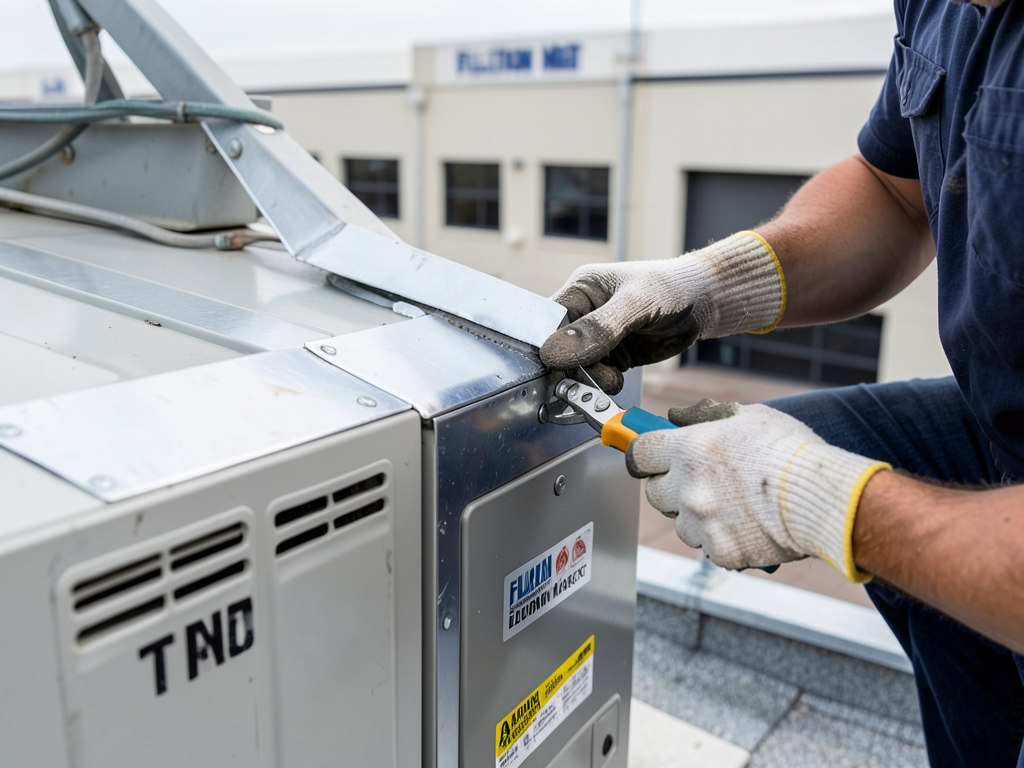
Managing the Complexities of Roofing Around Heavy HVAC Units in Fulton Market
Heavy HVAC units on Fulton Market rooftops create unique roofing challenges that require specialized knowledge of Chicago’s building codes, weather patterns, and industrial architecture. The neighborhood’s converted warehouses and modern office buildings feature massive rooftop systems that demand precise flashing techniques to prevent costly water damage. Chicago Building Department.
Fulton Market’s HVAC units typically range from 10 to 50 tons and sit on raised curbs weighing thousands of pounds. These systems create multiple vulnerability points where water infiltration commonly occurs. Understanding these specific challenges helps property managers protect their investments and maintain building envelope integrity.
Why Fulton Market HVAC Units Create Unique Roofing Challenges
The neighborhood’s industrial heritage means most buildings feature large, flat roofs designed to support heavy equipment loads. However, these same characteristics create specific problems that generic roofing approaches cannot address. Is Solar Roofing Worth the Investment for Homes in Evanston?.
Thermal expansion represents the primary concern. Fulton Market experiences Chicago’s characteristic temperature swings, with summer highs exceeding 90°F and winter lows dropping below zero. This 100-degree variation causes metal HVAC components to expand and contract significantly, creating movement that stresses roof connections.
Wind uplift presents another major factor. The area’s proximity to the Chicago River and open corridors between buildings creates wind tunnel effects that generate uplift forces exceeding 30 pounds per square foot on rooftop equipment. Standard flashing methods often fail under these conditions.
Moisture management becomes critical due to the neighborhood’s micro-climate. Fulton Market’s industrial buildings retain heat longer than residential areas, creating condensation patterns that trap moisture around HVAC curbs. This leads to accelerated corrosion and membrane degradation.. Read more about The Right Way to Seal Roof Leaks Around Solar Panels in Skokie.
Common Failure Points Around Rooftop HVAC Units
Understanding where problems typically occur helps prevent expensive repairs. Most HVAC-related roof leaks develop in specific locations that property managers should monitor regularly.
Curb-to-roof connections represent the most frequent failure point. The sealant between the HVAC curb and roofing membrane deteriorates from UV exposure, temperature cycling, and mechanical vibration. Small gaps as narrow as 1/16 inch allow significant water intrusion during heavy rains. Roofing Berwyn.
Pipe penetrations create another vulnerability. Condensate drains, refrigerant lines, and gas connections pass through the roof deck, each requiring precise flashing. These penetrations often settle differently than the surrounding roof, creating stress points that crack sealants over time.
Equipment vibration accelerates wear at all connection points. Fulton Market’s older HVAC systems generate more vibration than modern units, causing fasteners to loosen and sealants to separate. This mechanical fatigue typically manifests within 3-5 years of installation.
Drainage patterns around units often fail during Chicago’s intense storms. Water pooling near HVAC curbs indicates improper slope or blocked drains, leading to saturation that compromises the entire roof assembly.
Building Code Requirements for Fulton Market HVAC Flashing
Chicago Municipal Code Section 13-32-050 mandates specific flashing requirements for commercial HVAC installations. These regulations ensure proper waterproofing and structural integrity for heavy rooftop equipment. Roofing Forest Park.
The code requires minimum 26-gauge galvanized steel or aluminum counter-flashing that extends at least 4 inches up vertical surfaces. This material must be mechanically fastened with corrosion-resistant screws spaced no more than 12 inches apart.
Termination bars must be installed at all membrane-to-curb transitions. The code specifies 1/8-inch diameter holes drilled every 6 inches, with fasteners penetrating the structural deck beneath the roofing assembly.. Read more about PVC vs TPO Roofing Options for Commercial Buildings in Downers Grove.
Expansion joints become mandatory for HVAC units exceeding 10 tons or curb lengths over 8 feet. These joints accommodate thermal movement while maintaining watertight seals. The International Building Code requires these joints to be inspected annually by certified professionals. National Roofing Contractors Association.
Class A fire ratings apply to all commercial roofing in Fulton Market due to the area’s dense development. This requirement influences material selection and installation methods for HVAC flashing systems.. Read more about What a Commercial Roof Recovery Coating Can Actually Do for Your Warehouse in Elk Grove Village.
Advanced Flashing Systems for Heavy HVAC Units
Modern flashing solutions address Fulton Market’s specific challenges through engineered systems that outperform traditional methods. These approaches provide longer service life and better protection against Chicago’s harsh conditions.
Curb-mounted flashing systems feature integrated expansion joints that accommodate thermal movement without compromising seals. These systems use flexible thermoplastic membranes that stretch up to 300% without tearing, maintaining watertight connections through extreme temperature cycles.
Liquid-applied flashing creates seamless transitions between HVAC curbs and roofing membranes. This polyurethane-based material forms a chemical bond with both surfaces, eliminating the mechanical stress points that plague traditional flashing methods.
Reglet systems provide superior protection for masonry or concrete parapet walls. These metal channels create a mechanical lock that prevents water migration behind flashing, addressing a common failure mode in older Fulton Market buildings.
Pitch pockets with compression seals handle multiple penetrations through a single assembly. These systems use neoprene or silicone gaskets that compress around pipes and conduits, maintaining seals as equipment settles or shifts.
Material Selection for Chicago’s Climate
Material performance varies significantly in Fulton Market’s extreme conditions. Selecting appropriate materials prevents premature failure and reduces long-term maintenance costs.
EPDM rubber flashing offers excellent flexibility and UV resistance for most applications. This material maintains elasticity at temperatures as low as -40°F, making it ideal for Chicago’s winters. However, it requires protection from petroleum-based products that cause swelling and degradation.
TPO membranes provide superior puncture resistance and reflect heat, reducing cooling costs for HVAC systems. These materials weld together at the seams, creating monolithic barriers that resist wind uplift better than mechanically fastened alternatives.
Aluminum counter-flashing resists corrosion and maintains dimensional stability through temperature cycles. Anodized aluminum provides additional protection against galvanic corrosion when in contact with dissimilar metals.
Stainless steel fasteners prevent rust staining and maintain holding power through freeze-thaw cycles. Grade 304 stainless offers adequate corrosion resistance for most applications, while grade 316 provides enhanced protection near salt water or industrial pollutants.
Installation Best Practices for Fulton Market Buildings
Proper installation techniques ensure flashing systems perform as designed. These methods address the specific challenges of heavy HVAC units on industrial rooftops.
Surface preparation determines long-term success. All substrates must be cleaned with solvent to remove oils, dust, and loose material. Moisture content should be tested with a calibrated meter, with readings below 15% required for membrane adhesion.
Primer application creates chemical bonds between dissimilar materials. Acrylic primers work well for most roofing membranes, while epoxy primers provide superior adhesion to metal surfaces. Two thin coats achieve better results than one heavy application.
Heat welding of TPO or PVC membranes requires precise temperature control. Weld temperatures between 400-450°F create optimal bonds without damaging the material. Pressure application during cooling ensures proper fusion and prevents delamination.
Expansion joint installation demands careful measurement and cutting. Joints should be centered on anticipated movement points and allow for 50% more movement than calculated to accommodate unexpected thermal expansion.
Maintenance Strategies for HVAC Roof Systems
Regular maintenance prevents minor issues from becoming major problems. A structured inspection program identifies concerns before they cause significant damage.
Seasonal inspections should occur in spring and fall to assess winter damage and prepare for summer storms. These inspections check sealant integrity, fastener tightness, and membrane condition around all HVAC penetrations.
Moisture scanning with infrared technology detects water infiltration beneath the surface. Wet insulation appears cooler than dry material, allowing technicians to locate problems without destructive testing. This method identifies issues before visible leaks appear.
Sealant replacement follows a predictable schedule based on material type and exposure conditions. Silicone sealants typically require replacement every 7-10 years, while polyurethane products may last 12-15 years under optimal conditions.
Drainage system maintenance prevents water accumulation that stresses flashing connections. Roof drains should be cleaned quarterly, with additional attention after heavy storms or during autumn leaf fall.
Cost Factors for HVAC Flashing Projects
Several variables influence project costs in Fulton Market. Understanding these factors helps property managers budget appropriately and avoid unexpected expenses.
Unit size directly affects material requirements and labor time. A 10-ton unit typically requires 40-60 linear feet of flashing, while a 50-ton system may need 200+ feet of specialized flashing assemblies.
Roof accessibility impacts labor costs significantly. Buildings without rooftop access require equipment rental and additional safety measures, increasing project costs by 30-50% compared to accessible installations.
Existing damage extent determines repair scope. Minor sealant failure requires simple reapplication, while extensive water damage may necessitate complete curb replacement and membrane patching.
Material selection affects both initial costs and long-term performance. Premium materials like stainless steel flashing cost 40-60% more than standard options but provide 2-3 times the service life in Chicago’s harsh climate.
Emergency repairs command premium pricing due to overtime labor and expedited material delivery. Planning maintenance during normal business hours typically reduces costs by 25-35%. What to Do When You Have a Roof Leak Emergency in Logan Square.
When to Repair vs. Replace HVAC Flashing
Decision-making between repair and replacement depends on several diagnostic factors. Property managers must evaluate current conditions against replacement costs to make economically sound choices.
Age serves as the primary indicator. Flashing systems typically last 15-20 years in Chicago’s climate. Units approaching this age often benefit from complete replacement rather than repeated repairs.
Damage extent influences the decision. Localized sealant failure or minor corrosion may justify repair, while widespread deterioration or structural damage typically necessitates replacement.
Energy efficiency considerations affect long-term costs. Modern flashing systems with improved insulation and sealing can reduce HVAC operating costs by 15-25%, potentially offsetting higher initial investment.
Building use changes may drive replacement decisions. Converting warehouse space to office use often requires upgraded flashing to meet current energy codes and tenant expectations.
Future equipment plans influence timing. If HVAC replacement is planned within 3-5 years, coordinating flashing work with unit replacement often proves more cost-effective than separate projects.
Emergency Response for HVAC Roof Leaks
Quick response minimizes damage when HVAC-related leaks occur. Property managers should follow established procedures to protect building contents and occupants.
Initial assessment involves identifying leak source and extent. Water travels along structural members before dripping, so the visible leak location often differs from the actual entry point. Thermal imaging helps locate hidden moisture sources.
Temporary containment prevents interior damage. Plastic sheeting and collection systems should be deployed immediately, with consideration for electrical equipment and valuable contents below the leak.
Emergency sealing methods provide short-term protection. Polyurethane foam or butyl tape can seal small gaps temporarily, buying time for permanent repairs without risking water damage.
Documentation supports insurance claims and future maintenance planning. Photos of damage, repair methods, and affected areas help track recurring issues and justify capital expenditures.
Professional assessment should follow emergency response. Certified roofing contractors can evaluate damage extent and recommend permanent solutions that address root causes rather than symptoms. Extending the Life of Your Flat Roof in Hyde Park with Professional Coating.
Future Trends in HVAC Roof Integration
Emerging technologies and practices are changing how HVAC systems integrate with roofing assemblies. These developments offer improved performance and reduced maintenance requirements.
Prefabricated flashing assemblies reduce installation time and improve consistency. These factory-built components arrive with integrated seals and expansion joints, eliminating field welding and reducing error potential.
Smart monitoring systems detect moisture intrusion early. Sensors embedded in flashing assemblies alert property managers to water infiltration before visible damage occurs, enabling proactive maintenance.
Green roof integration with HVAC systems provides cooling benefits and extends membrane life. Vegetation buffers temperature extremes and protects flashing from UV radiation, potentially doubling service life in some applications.
Advanced materials like self-healing polymers automatically seal small punctures and gaps. These materials contain microcapsules that release sealant when damaged, maintaining watertight integrity without human intervention.
Building information modeling (BIM) improves flashing design and installation. 3D modeling identifies potential conflicts before construction, reducing field modifications and ensuring proper integration with other building systems.
Frequently Asked Questions
How often should HVAC roof flashing be inspected in Fulton Market?
Professional inspections should occur twice annually, typically in spring and fall. Additional inspections after severe weather events help identify damage that could lead to leaks if left unaddressed.
What are the signs that HVAC flashing needs replacement?
Cracked or missing sealant, visible rust on metal components, water stains on interior ceilings, and increased energy costs indicate flashing deterioration. Any visible gaps or separation between flashing and roofing membrane warrant immediate professional assessment.
Can I repair HVAC flashing myself to save money?
Temporary repairs using roofing tape or sealant may provide short-term protection, but proper flashing repair requires specialized knowledge, materials, and tools. Improper repairs often void warranties and can lead to more extensive damage requiring costly professional intervention.
How long does HVAC flashing replacement typically take?
Most residential HVAC flashing replacements require 2-4 hours, while commercial units may need 1-2 days depending on size and complexity. Weather conditions, roof accessibility, and existing damage extent can extend project duration significantly.
What warranty should I expect on new HVAC flashing?
Quality flashing installations typically include 10-15 year warranties on materials and 2-5 year warranties on workmanship. Some premium systems offer extended warranties up to 20 years when installed by certified contractors using manufacturer-approved methods.
Call for Professional Assessment
Don’t wait for water damage to become visible before addressing HVAC roof concerns. Professional assessment identifies potential problems early, saving thousands in repair costs and preventing business disruption.
Call (773) 599-7055 today to schedule your comprehensive HVAC roof inspection. Our certified technicians understand Fulton Market’s unique challenges and provide solutions that protect your investment for years to come.
Pick up the phone and call (773) 599-7055 before the next storm hits. Early intervention prevents the costly interior damage that occurs when HVAC flashing fails during Chicago’s severe weather events.
Our team provides detailed assessments, clear recommendations, and upfront pricing for all HVAC roof flashing services in Fulton Market and surrounding Chicago neighborhoods.
You may also find this helpful. Improving Natural Light in Your Dark Elk Grove Village Warehouse with Industrial Skylights.
{
“@context”: “https://schema.org”,
“@type”: “BlogPosting”,
“headline”: “Managing the Complexities of Roofing Around Heavy HVAC Units in Fulton Market”,
“description”: “Learn how Fulton Market’s industrial HVAC rooftop units create unique roofing challenges. Discover flashing solutions, code compliance, and maintenance strategies from Chicago experts.”,
“wordCount”: 2269,
“datePublished”: “2026-05-29T06:31:00.000Z”,
“dateModified”: “2026-05-29T06:31:00.000Z”,
“inLanguage”: “en-US”,
“mainEntityOfPage”: {
“@type”: “WebPage”,
“@id”: “https://patriotroofingchicago.com”
},
“publisher”: {
“@type”: “LocalBusiness”,
“name”: “Patriot Roofing Chicago”,
“url”: “https://patriotroofingchicago.com”
},
“author”: {
“@type”: “Organization”,
“name”: “Patriot Roofing Chicago”,
“url”: “https://patriotroofingchicago.com”
},
“image”: {
“@type”: “ImageObject”,
“url”: “https://patriotroofingchicago.com/wp-content/uploads/2026/03/managing-the-complexities-of-roofing-around-heavy-1.png”
}
}
{
“@context”: “https://schema.org”,
“@type”: “RoofingContractor”,
“name”: “Patriot Roofing Chicago”,
“url”: “https://patriotroofingchicago.com”,
“address”: {
“@type”: “PostalAddress”,
“addressLocality”: “Chicago”
},
“areaServed”: {
“@type”: “City”,
“name”: “Chicago”
}
}
{
“@context”: “https://schema.org”,
“@type”: “FAQPage”,
“mainEntity”: [
{
“@type”: “Question”,
“name”: “How often should HVAC roof flashing be inspected in Fulton Market?”,
“acceptedAnswer”: {
“@type”: “Answer”,
“text”: “Professional inspections should occur twice annually, typically in spring and fall. Additional inspections after severe weather events help identify damage that could lead to leaks if left unaddressed.”
}
},
{
“@type”: “Question”,
“name”: “What are the signs that HVAC flashing needs replacement?”,
“acceptedAnswer”: {
“@type”: “Answer”,
“text”: “Cracked or missing sealant, visible rust on metal components, water stains on interior ceilings, and increased energy costs indicate flashing deterioration. Any visible gaps or separation between flashing and roofing membrane warrant immediate professional assessment.”
}
},
{
“@type”: “Question”,
“name”: “Can I repair HVAC flashing myself to save money?”,
“acceptedAnswer”: {
“@type”: “Answer”,
“text”: “Temporary repairs using roofing tape or sealant may provide short-term protection, but proper flashing repair requires specialized knowledge, materials, and tools. Improper repairs often void warranties and can lead to more extensive damage requiring costly professional intervention.”
}
},
{
“@type”: “Question”,
“name”: “How long does HVAC flashing replacement typically take?”,
“acceptedAnswer”: {
“@type”: “Answer”,
“text”: “Most residential HVAC flashing replacements require 2-4 hours, while commercial units may need 1-2 days depending on size and complexity. Weather conditions, roof accessibility, and existing damage extent can extend project duration significantly.”
}
},
{
“@type”: “Question”,
“name”: “What warranty should I expect on new HVAC flashing?”,
“acceptedAnswer”: {
“@type”: “Answer”,
“text”: “Quality flashing installations typically include 10-15 year warranties on materials and 2-5 year warranties on workmanship. Some premium systems offer extended warranties up to 20 years when installed by certified contractors using manufacturer-approved methods.”
}
}
]
}
{
“@context”: “https://schema.org”,
“@type”: “BreadcrumbList”,
“itemListElement”: [
{
“@type”: “ListItem”,
“position”: 1,
“name”: “Home”,
“item”: “https://patriotroofingchicago.com”
},
{
“@type”: “ListItem”,
“position”: 2,
“name”: “Blog”,
“item”: “https://patriotroofingchicago.com/blog”
},
{
“@type”: “ListItem”,
“position”: 3,
“name”: “Managing the Complexities of Roofing Around Heavy HVAC Units in Fulton Market”
}
]
}
{
“@context”: “https://schema.org”,
“@type”: “Service”,
“serviceType”: “Roofing”,
“provider”: {
“@type”: “LocalBusiness”,
“name”: “Patriot Roofing Chicago”,
“url”: “https://patriotroofingchicago.com”
},
“areaServed”: {
“@type”: “City”,
“name”: “Chicago”
},
“description”: “Learn how Fulton Market’s industrial HVAC rooftop units create unique roofing challenges. Discover flashing solutions, code compliance, and maintenance strategies from Chicago experts.”
}