

menu

Spray Foam Roofing in Chicago – Minimize Downtime and Extend Asset Life for Commercial Properties

SPF roofing systems deliver seamless, monolithic protection for Chicago commercial buildings, reducing maintenance costs, improving energy efficiency, and eliminating leak points that disrupt operations.

Slider Image 1
Slider Image 2
Slider Image 3
Slider Image 4
Slider Image 5
Slider Image 7
Slider Image 8
Slider Image 9
Slider Image 10
Slider Image 11

Why Chicago Commercial Buildings Need Spray Foam Roofing

Chicago's commercial buildings face intense thermal cycling. Winter temperatures drop below zero, and summers spike into the 90s. This freeze-thaw cycle splits seams, degrades adhesives, and accelerates membrane failure on traditional built-up roofing systems. Add in the city's notorious wind loads off Lake Michigan, and you have a recipe for shortened roof lifespans and frequent repair calls that interrupt business operations.

Spray polyurethane foam roofing solves this problem by creating a seamless, self-adhering membrane that expands and contracts with your building. There are no laps, no seams, and no mechanical fasteners to fail. The SPF roof system bonds directly to your existing substrate, eliminating the need for costly tear-offs and reducing downtime to days instead of weeks.

Commercial spray foam roofing also provides superior thermal resistance. Chicago's energy costs are high, and poorly insulated flat roofs account for 25 to 40 percent of total building heat loss. An SPF roofing system delivers an R-value of 6 to 7 per inch, creating a thermal envelope that cuts HVAC load and improves tenant comfort. You reduce liability, extend the service life of your roof deck, and protect the interior environment from moisture intrusion that leads to mold, rot, and structural damage.

For warehouse operators, manufacturing facilities, and multi-tenant commercial properties, polyurethane foam roofing is a strategic investment that protects revenue, reduces insurance claims, and defers major capital expenditures.

Why Chicago Commercial Buildings Need Spray Foam Roofing
How SPF Roofing Systems Are Installed on Chicago Commercial Buildings

How SPF Roofing Systems Are Installed on Chicago Commercial Buildings

We do not apply spray foam over wet decking or damaged substrates. The process begins with a complete roof inspection using infrared scanning to identify moisture pockets, compromised insulation, and areas of delamination. This diagnostic phase prevents adhesion failure and ensures the SPF roof system bonds properly to the existing surface.

Next, we prepare the substrate. All loose gravel, debris, and failed coatings are removed. Drains, penetrations, and edge flashings are cleaned and primed. Any structural issues, including ponding water zones or sagging deck sections, are corrected before foam application begins. This is where most contractors cut corners, and it is why you see premature foam delamination and warranty claims within the first 18 months.

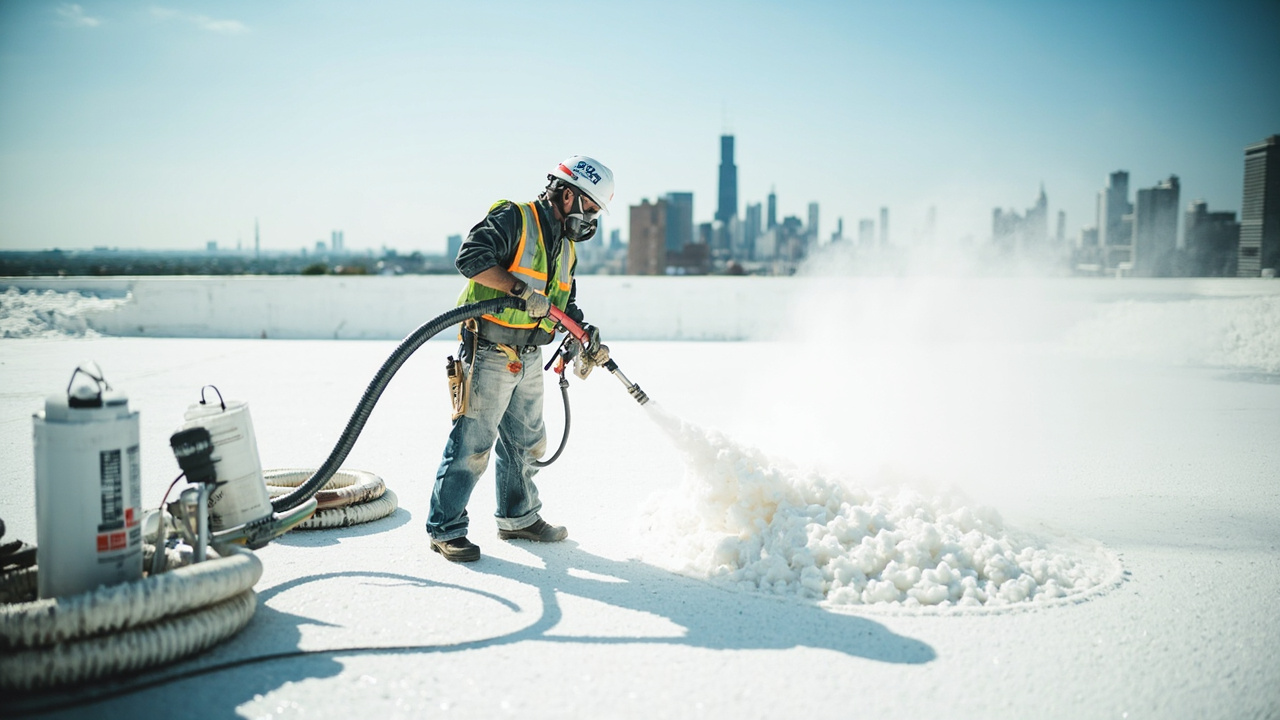
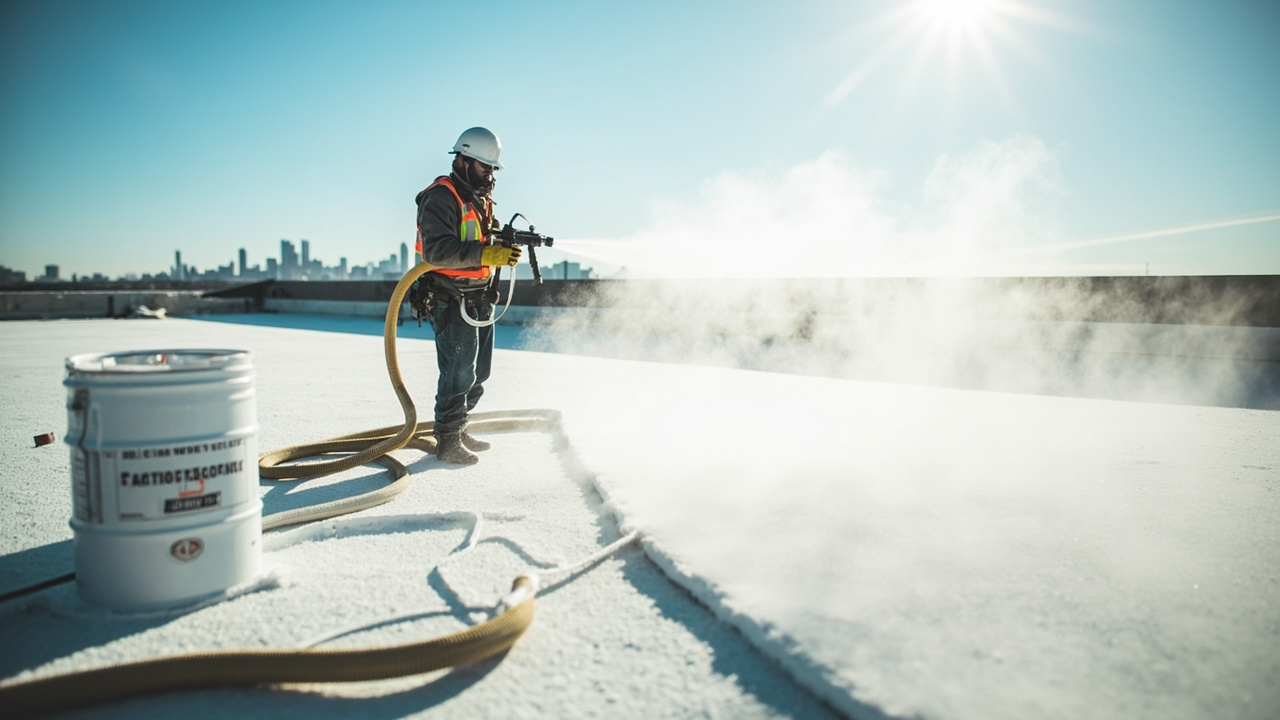
The polyurethane foam is applied in multiple passes using high-pressure spray equipment. Each pass bonds to the previous layer, creating a monolithic membrane that is fully adhered and self-flashing around rooftop units, pipes, and vents. Thickness is controlled to meet your specified R-value, and the foam is shaped to eliminate ponding and direct water toward drains.

Once the foam is cured, we apply an elastomeric coating that provides UV protection and extends the life of the SPF roofing system. This topcoat is reflective, reducing roof surface temperatures by 30 to 50 degrees and lowering cooling costs during Chicago's summer heat. The result is a durable, energy-efficient roof that requires minimal maintenance and performs for 20 to 30 years when properly maintained.

What to Expect During Your Commercial SPF Roof Installation

Spray Foam Roofing in Chicago – Minimize Downtime and Extend Asset Life for Commercial Properties
01

Roof Assessment and Moisture Scan

We conduct a full infrared moisture scan to map trapped water in your existing roof assembly. This prevents adhesion failure and identifies areas that need remediation before foam application. You receive a detailed report showing problem zones, structural defects, and insulation performance gaps. This diagnostic phase is critical for preventing callbacks and ensuring long-term foam adhesion.
02

Substrate Preparation and Foam Application

We remove debris, repair structural defects, and prime all surfaces. Spray polyurethane foam is applied in controlled passes to achieve your specified R-value and eliminate ponding. The foam is self-adhering and self-flashing, which means it bonds to irregular surfaces and creates a seamless barrier around rooftop equipment, vents, and penetrations. We shape the foam to direct water toward drains and prevent standing water.
03

Protective Coating and Final Inspection

A UV-resistant elastomeric coating is applied to protect the foam from degradation and reflect solar heat. This coating extends the life of the SPF roof system and reduces roof surface temperatures. We conduct a final inspection to verify thickness, adhesion, and proper drainage. You receive documentation for building records, and we schedule a follow-up inspection to verify performance after the first Chicago winter season.

Why Chicago Property Managers Choose First Choice Roofing Atlanta for SPF Systems

Chicago's building codes require foam roofing to meet specific fire ratings and wind uplift classifications. Not all contractors understand these requirements, and improper installation can void your insurance coverage. We work with commercial property managers, facility directors, and building engineers who need compliant, code-approved installations that pass third-party inspections.

We also understand Chicago's seasonal constraints. Spray foam requires ambient temperatures above 40 degrees and low humidity for proper curing. We schedule installations during optimal weather windows to prevent foam shrinkage, cracking, and adhesion failure. If your building operates 24/7, we coordinate around your production schedule to minimize disruption and protect interior spaces from overspray or fumes.

Our crews are trained on high-pressure spray equipment and follow strict safety protocols for working on occupied commercial buildings. We carry the required liability coverage for multi-tenant properties and provide certificates of insurance to your property management company before work begins. This protects you from contractor default, worker injury claims, and uninsured subcontractor liability.

You also get transparent project timelines. We provide a detailed scope of work that includes substrate preparation, foam thickness, coating specifications, and expected completion dates. There are no change orders for conditions that should have been identified during the initial assessment. We document the entire process with photos and thermal imaging, so you have a complete record for asset management and future roof maintenance planning.

Chicago's commercial roofing market is full of contractors who bid low and deliver substandard work. We focus on long-term performance, code compliance, and protecting your investment.

What You Can Expect from a Commercial Spray Foam Roof Installation

Installation Timeline and Site Coordination

Most commercial SPF roofing projects in Chicago take five to ten days, depending on building size and substrate condition. We schedule around your operations and protect rooftop HVAC units, exhaust fans, and skylights from overspray. If your building houses sensitive operations like food processing or clean rooms, we coordinate staging areas and ventilation protocols to prevent contamination. Weather delays are possible during spring and fall when temperatures drop below application thresholds, so we build buffer time into the project schedule.

Infrared Moisture Scanning and Substrate Evaluation

We use FLIR thermal imaging to identify trapped moisture, wet insulation, and areas of delamination. This scan is performed before any work begins and gives you a detailed map of problem zones. If we find structural damage or widespread moisture intrusion, we provide a remediation plan before foam application. This prevents warranty issues and ensures the SPF roof system adheres properly. You receive a digital copy of the scan for your facility records and future maintenance planning.

Energy Performance and Leak Elimination

A properly installed SPF roofing system eliminates leak points and reduces HVAC load by 20 to 30 percent. The foam creates a continuous thermal barrier that stops air infiltration and reduces heat transfer through the roof deck. You will notice lower energy bills within the first quarter after installation. The reflective topcoat also reduces roof surface temperatures, which extends the life of rooftop HVAC units and lowers maintenance costs. For multi-tenant buildings, improved thermal performance increases tenant comfort and reduces complaints.

Maintenance Plans and Re-Coating Schedules

Spray polyurethane foam roofing requires periodic re-coating to maintain UV protection and waterproofing performance. We recommend inspections every three to five years and re-coating every ten to fifteen years, depending on exposure and foot traffic. Regular maintenance extends the life of the SPF roof system and prevents costly repairs. We provide a maintenance schedule and offer annual inspection contracts for property managers who want to stay ahead of issues. Documented maintenance also preserves warranty coverage and protects your capital investment.

Frequently Asked Questions

You Have Questions,
We Have Answers

Is spray foam good for roofs? +

Yes. Spray foam performs well on commercial roofs because it creates a seamless, monolithic barrier that stops water infiltration and air leaks. In Chicago, where freeze-thaw cycles stress conventional roof systems, spray foam expands into cracks and gaps to prevent moisture damage. It adheres directly to metal, concrete, or existing roof substrates without mechanical fasteners. The closed-cell formulation resists wind uplift and adds structural rigidity. Spray foam also provides continuous insulation, reducing energy costs in buildings with large square footage. It handles ponding water better than other systems and requires minimal maintenance over its lifespan.

What are the disadvantages of a spray foam roof? +

Spray foam roofs require professional installation. Poor application leads to uneven thickness, voids, or adhesion failure. The material degrades under prolonged UV exposure without a protective coating, so regular recoating every 10 to 15 years is necessary. Spray foam can trap moisture if applied over wet substrates, causing hidden damage. In Chicago, winter installations become difficult because low temperatures affect curing and expansion rates. Overspray can drift and damage adjacent surfaces or vehicles. Foam also lacks fire resistance without coatings, which adds cost. Repairs require trained technicians, and misapplication voids warranties, creating liability concerns for commercial property owners.

How long does spray foam last on a roof? +

Spray foam roofs last 20 to 30 years with proper maintenance. The foam itself remains stable, but the protective topcoat requires reapplication every 10 to 15 years to prevent UV degradation. In Chicago, where temperature swings and ice damming stress roofing systems, spray foam maintains its integrity better than single-ply membranes. Regular inspections identify surface wear, punctures, or coating failure early. Commercial buildings with heavy foot traffic or rooftop equipment need more frequent recoating. Proper drainage and timely repairs extend service life. Neglected systems fail prematurely, so budgeting for periodic maintenance ensures the foam reaches its full lifespan.

Is spray foam roofing expensive? +

Spray foam roofing costs more upfront than TPO or EPDM systems. Material and labor expenses run higher because installation requires specialized equipment and trained applicators. In Chicago, commercial projects often see costs increase due to accessibility challenges, weather delays, and the need for protective coatings suited to freeze-thaw conditions. However, spray foam reduces long-term energy costs through superior insulation and minimizes leak-related repairs. Lower maintenance expenses and extended service life offset the initial investment. For commercial property owners prioritizing energy efficiency and minimizing business interruption, spray foam delivers better ROI despite higher installation costs compared to traditional systems.

Why are insurance companies not insuring homes with spray foam insulation? +

Insurance companies scrutinize spray foam insulation because improper installation traps moisture, leading to mold, wood rot, and structural damage. Policies often exclude coverage for pre-existing conditions or installation defects. In residential attics, spray foam applied to roof decking prevents ventilation, violating building codes and creating hidden moisture accumulation. Some insurers view spray foam as a liability risk due to fire rating concerns without proper coatings. Chicago homes with older construction may face stricter underwriting. Commercial properties typically avoid these issues because professional applicators follow fire codes and use closed-cell formulations, but residential DIY or substandard installations trigger underwriting rejections.

How much does it cost to spray foam a 2000 foot attic? +

Cost discussions for specific projects fall outside the scope of this commercial roofing FAQ. Residential attic insulation pricing varies widely based on access, preparation, foam thickness, and local labor rates. Commercial spray foam roofing focuses on large-scale applications where cost per square foot decreases with project size. In Chicago, commercial roof systems prioritize energy savings, code compliance, and minimizing downtime over residential cost concerns. For accurate pricing on commercial roofing projects, request a site-specific assessment that accounts for substrate condition, drainage requirements, and protective coating specifications. Residential insulation projects involve different materials, application methods, and pricing structures than commercial roofing systems.

Why are people removing spray foam? +

Property owners remove spray foam due to improper installation that traps moisture, causes mold, or violates building codes. In residential attics, spray foam applied directly to roof decking eliminates ventilation, leading to condensation and wood rot. Some removal occurs during sales transactions when lenders or inspectors flag non-compliant installations. In Chicago, older homes with inadequate vapor barriers see moisture accumulation behind foam, forcing costly remediation. Commercial buildings rarely remove properly installed spray foam roofing, but residential contractors sometimes apply attic insulation incorrectly, creating liability. Removal involves scraping, chemical solvents, or replacement of damaged substrates, adding significant expense and downtime.

Why is it hard to sell a house with spray foam insulation? +

Homes with spray foam insulation face buyer resistance because lenders and inspectors flag moisture concerns, code violations, and insurance complications. Spray foam applied to roof decking eliminates attic ventilation, trapping moisture and causing hidden damage. In Chicago, older homes with improper vapor barriers see condensation issues that buyers avoid. Appraisers flag non-compliant installations, reducing property value. Insurance companies deny coverage or charge higher premiums due to perceived risks. Buyers request removal or price reductions to offset future liability. Commercial properties with professionally installed spray foam roofing systems avoid these issues because they meet fire codes, include protective coatings, and follow industry standards that residential installations often ignore.

Why are lenders rejecting homes with spray foam insulation? +

Lenders reject homes with spray foam insulation because improper installation creates moisture damage, mold, and structural issues that jeopardize collateral value. Appraisers flag non-code-compliant applications where spray foam blocks attic ventilation or violates building standards. In Chicago, underwriters see patterns of hidden moisture accumulation in older homes with spray foam applied directly to roof decking. Lenders require expensive inspections, remediation, or removal before approving mortgages. Insurance unavailability further complicates financing. Commercial properties avoid these problems because professional spray foam roofing installations meet fire codes, include engineered drainage, and follow manufacturer specifications. Residential DIY or substandard applications create the lending barriers that commercial systems do not face.

Can mold grow behind spray foam insulation? +

Yes. Mold grows behind spray foam when moisture becomes trapped between the foam and substrate. In Chicago, freeze-thaw cycles cause condensation if vapor barriers fail or if foam is applied over wet surfaces. Spray foam prevents airflow, so any moisture present before installation or introduced through leaks cannot escape. Closed-cell foam resists water absorption, but improper surface preparation or substrate damage allows moisture infiltration. Commercial roofing installations prevent mold by ensuring dry substrates, proper drainage, and regular inspections. Residential attic applications often trap moisture because spray foam eliminates ventilation. Professional installation, moisture testing, and climate-appropriate vapor barriers prevent mold growth behind spray foam insulation.

How Chicago's Freeze-Thaw Cycles Accelerate Commercial Roof Failure

Chicago experiences 30 to 50 freeze-thaw cycles each winter. Water penetrates seams and laps in traditional roofing membranes, freezes overnight, and expands. This expansion splits adhesive bonds, cracks coatings, and opens leak paths that worsen with each cycle. By March, you have widespread membrane failure and interior water damage. SPF roofing eliminates this problem by creating a seamless, monolithic barrier that expands and contracts with the building. There are no seams to split, and the foam remains flexible through extreme temperature swings.

Chicago's commercial building code requires roofing systems to meet specific wind uplift ratings and fire classifications. Not all foam contractors understand these requirements, and improper installation can void your insurance coverage. We work directly with building engineers, architects, and third-party inspectors to ensure compliance with the Chicago Building Code and International Building Code standards. Our crews are trained on proper foam density, thickness, and coating application to meet Class A fire ratings and FM wind uplift approvals required for high-rise and industrial facilities.
Roofing Services in The Chicago Area

Patriot Roofing is proud to be a locally owned and operated business committed to serving our community and the surrounding areas. Our deep understanding of the local climate and architectural styles allows us to provide roofing solutions that are perfectly suited to the unique needs of our clients. We invite you to explore our service area and see why so many residents trust us for all their roofing needs.

Address:
Patriot Roofing Chicago, 2111 S Halsted St, Chicago, IL, 60608

Additional Services We Offer

Our news updates

Latest Articles & News from The Blogs

Common Problems with Mansard Roofs in Irving Park and How to Fix Them Living in Irving Park means owning a…

Common Problems with Mansard Roofs in Irving Park and How to Fix Them

Common Problems with Mansard Roofs in Irving Park and How to Fix Them Living in Irving Park means owning a…

Why Burr Ridge Homeowners are Choosing Designer Asphalt Shingles Over Natural Slate

Why Burr Ridge Homeowners are Choosing Designer Asphalt Shingles Over Natural Slate Burr Ridge homeowners are discovering that designer asphalt…

Dealing with Crumbling Parapet Walls on Your Rogers Park Multi-Unit Building

Dealing with Crumbling Parapet Walls on Your Rogers Park Multi-Unit Building Parapet walls are the exposed sections of masonry that…

Contact Us

Stop paying for repeated repairs and interior damage. Get a roof that performs for decades. Call First Choice Roofing Atlanta at (773) 599-7055 to schedule your infrared moisture scan and project consultation.