
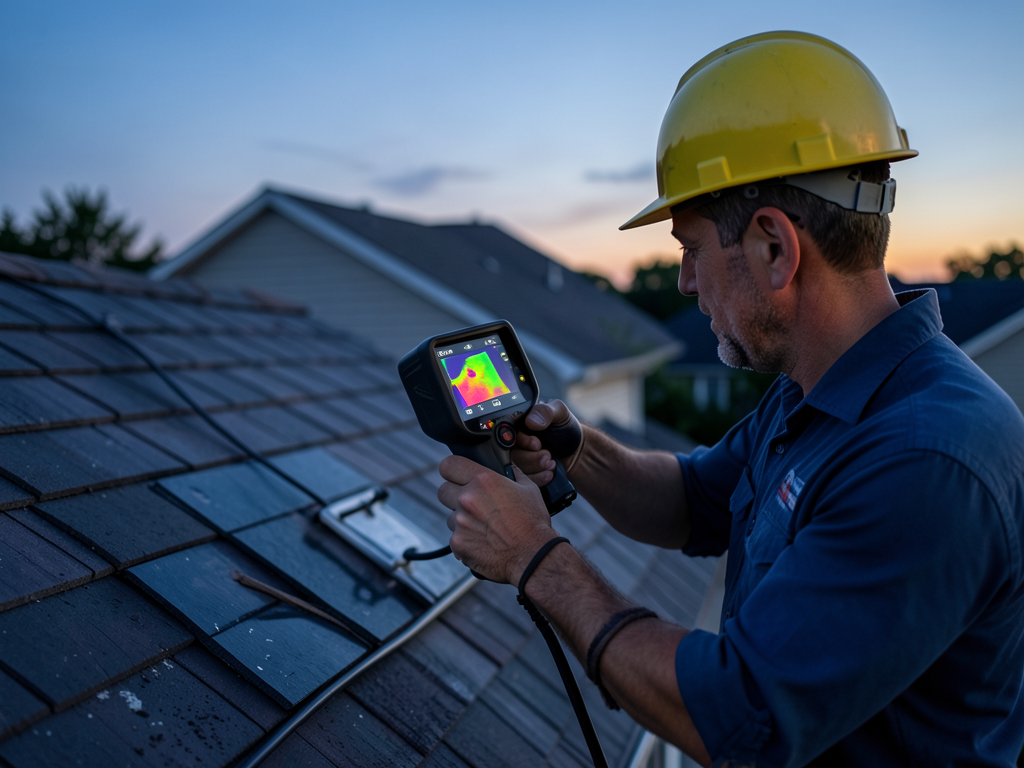
Why Thermal Imaging is the Best Way to Find Hidden Leaks in Your River Woods Home
Hidden roof leaks can destroy your River Woods home from the inside out before you ever see a water stain on the ceiling. Thermal imaging technology now allows professional roofers to detect moisture trapped beneath your roof membrane without tearing apart your ceilings or walls. This non-destructive testing method uses infrared cameras to identify temperature differences caused by water intrusion revealing problems that traditional inspection methods miss. Infrared Training Center.
River Woods homes face unique challenges from Chicago’s extreme weather. The freeze-thaw cycles common in this area cause roofing materials to expand and contract creating gaps where water can enter. By the time a leak becomes visible inside your home significant damage has already occurred to your insulation roof deck and structural components. Thermal imaging provides a solution by detecting these hidden moisture problems early when repairs cost far less than full roof replacement. Getting Your Flat Roof Ready for a Chicago Winter in Wicker Park.
The technology works by measuring infrared energy emitted from building surfaces. Wet insulation holds heat differently than dry insulation creating a thermal signature that shows up clearly on infrared cameras. This allows trained technicians to pinpoint exact leak locations without any demolition saving homeowners thousands in unnecessary repair costs. Why More Naperville Homeowners are Switching to Metal Roofing This Year.
How Thermal Imaging Works on Chicago Roofs
Thermal imaging cameras detect infrared radiation which all objects emit based on their temperature. When moisture intrudes into roofing systems it changes how that area absorbs and releases heat creating what technicians call thermal anomalies. These anomalies appear as distinct patterns on infrared images allowing experts to map out the exact extent of water damage. Is Solar Roofing Worth the Investment for Homes in Evanston?.
The process requires specific conditions to work effectively. Technicians typically perform inspections in the evening after the sun has set because this is when temperature differences between wet and dry areas are most pronounced. During the day the sun heats the entire roof surface masking the subtle temperature variations that indicate moisture problems.. Read more about Deciding Between Traditional Gutters and Leaf Guards for Your Heavily Wooded Lot in Western Springs.
River Woods homes often have complex roof designs with multiple valleys dormers and chimneys. These architectural features create additional leak points where thermal imaging proves especially valuable. The technology can detect moisture around flashing details and under shingles in areas that would be impossible to inspect visually without extensive demolition.. Read more about The Hidden Signs of Roof Neglect to Look for When Buying a Fixer Upper in Avondale.
Professional thermographers use specialized equipment like FLIR cameras that measure temperature differences as small as 0.1 degrees Fahrenheit. This precision allows them to distinguish between normal temperature variations and those caused by moisture intrusion. The cameras also record both thermal and digital images creating a complete documentation package for insurance claims or repair planning. Extending the Life of Your Flat Roof in Hyde Park with Professional Coating.
Common Leak Sources in River Woods Architecture
River Woods features many mid-century ranch homes and split-level designs common to Chicago’s western suburbs. These architectural styles present specific challenges for roof integrity. The low-pitched roofs on many ranch homes in this area are particularly susceptible to ice dam formation during Chicago winters.
Ice dams form when heat escaping from your attic melts snow on the roof surface. This melted water flows down to the colder roof edges where it refreezes creating a dam that traps additional meltwater. This backed-up water can work its way under shingles and into your home causing damage that thermal imaging can detect even when no interior signs are visible.
Many River Woods homes also feature complex roof transitions where different sections meet at varying heights. These transition points often have inadequate flashing or sealant allowing water to penetrate during heavy rains or snowmelt. Thermal imaging excels at finding these hidden entry points by showing exactly where moisture has traveled beneath the surface.
The area’s mature tree canopy while beautiful creates additional roof stress. Falling branches during storms can damage shingles creating openings for water intrusion. Thermal imaging can detect moisture around impact points even when the damage appears minor from ground level inspection.
ASTM Standards for Thermal Roof Inspections
Professional thermal imaging inspections follow strict guidelines established by ASTM International. The ASTM C1153 standard specifically addresses locating wet insulation in roofing systems using infrared imaging. This standard requires specific training certification and testing procedures to ensure accurate results. ASTM C1153 Standard.
Certified thermographers must complete training through organizations like the Infrared Training Center (ITC) and maintain current certifications. These professionals understand the physics behind thermal imaging and can distinguish between moisture-related thermal patterns and those caused by other factors like missing insulation or structural variations.
The ASTM standard also specifies that thermal inspections should be conducted when the roof is dry and the surface temperature differs from the interior by at least 10 degrees Fahrenheit. This temperature differential is crucial for creating the thermal contrast needed to detect moisture patterns accurately.
Professional inspections include both thermal imaging and verification testing using moisture meters. This two-step process ensures that thermal anomalies are actually caused by moisture rather than other factors. The combination of technologies provides the most accurate assessment of roof condition possible without destructive testing.
Benefits of Non-Destructive Testing for Homeowners
Traditional leak detection methods often require removing drywall ceiling sections or roof materials to locate the source of water intrusion. This destructive approach can cause additional damage and significantly increase repair costs. Thermal imaging eliminates this problem by allowing technicians to see through building materials without any demolition.
The cost savings from non-destructive testing are substantial. A typical thermal inspection costs between $300 and $600 for an average home while traditional leak detection that requires demolition can cost $1,500 to $3,000 or more plus the cost of repairs to the areas that were opened up.
Thermal imaging also provides documentation that many insurance companies require for moisture damage claims. The high-resolution images show exactly where water has entered and how far it has spread through the building structure. This documentation helps ensure your claim is processed quickly and completely.
Early detection through thermal imaging prevents the secondary damage that occurs when leaks go unnoticed. Moisture trapped in roof assemblies creates ideal conditions for mold growth which can begin within 24 to 48 hours of water intrusion. Thermal imaging can detect these moisture problems before mold has a chance to establish itself protecting your family’s health.
Commercial vs Residential Applications
While this article focuses on residential applications thermal imaging serves both commercial and residential buildings in River Woods. Commercial buildings often have flat or low-slope roofs that are particularly prone to water pooling and infiltration. These roof types benefit greatly from thermal imaging because water tends to travel horizontally across the roof deck before finding an entry point.
Residential homes in River Woods typically have steeper roof pitches which direct water more quickly off the roof surface. However the complex rooflines common in this area with multiple dormers valleys and transitions create numerous potential leak points that thermal imaging can identify.
Commercial buildings often use different roofing materials than residential homes. Many local businesses have EPDM or TPO membrane roofs that can develop seam failures or punctures. Thermal imaging detects these failures by showing the thermal patterns created when moisture becomes trapped beneath the membrane. Roofing Berwyn.
The inspection process differs slightly between building types. Commercial roofs often require larger thermal imaging equipment and may need to be inspected at night when the building is unoccupied. Residential inspections can typically be completed during daylight hours and use more portable equipment.
Best Times for Thermal Inspections in Chicago
Timing is crucial for effective thermal imaging inspections. In Chicago the best inspection windows are late spring through early fall when temperatures are moderate and weather conditions are stable. Winter inspections are possible but snow cover can mask thermal patterns and extreme cold can affect equipment performance.
The ideal conditions include clear skies for several days before the inspection allowing the roof to dry completely. Recent rain or snowmelt can make it difficult to distinguish between active leaks and residual moisture from weather events. Technicians recommend scheduling inspections at least 48 hours after the last significant precipitation.
Evening inspections are standard practice because this is when the roof surface cools and thermal differentials become most pronounced. For River Woods homes this typically means scheduling inspections between 7:00 and 9:00 PM during summer months or 5:00 to 7:00 PM in early spring or fall.
Morning inspections can sometimes be effective especially for roofs with significant solar exposure. East-facing roof slopes may show better thermal contrast in early morning while west-facing slopes may be better inspected in late afternoon. Professional thermographers assess each situation to determine the optimal inspection time.
What to Expect During a Professional Inspection
A professional thermal imaging inspection begins with a thorough visual examination of your roof’s exterior. The technician documents any visible damage missing shingles or compromised flashing before beginning the thermal scanning process. This preliminary inspection helps identify areas that may need closer thermal examination.
The thermal scanning process typically takes 1 to 2 hours for an average sized home. The technician systematically scans the entire roof surface paying special attention to problem areas identified during the visual inspection. They may also scan interior ceiling areas if access is available to check for moisture that has already penetrated the roof assembly.
During the inspection the technician records both thermal and digital images of any anomalies found. These images are analyzed to determine whether the thermal patterns indicate moisture or other issues like missing insulation or structural variations. The technician may use a moisture meter to verify suspected problem areas.
After completing the inspection you receive a detailed report including all thermal images digital photos and the technician’s findings. The report identifies specific problem areas recommends repairs and provides documentation suitable for insurance claims or contractor bidding.
Cost Factors and Investment Protection
The cost of thermal imaging inspections varies based on several factors including home size roof complexity and travel distance. For River Woods homes expect to pay between $350 and $600 for a complete residential inspection. This investment typically pays for itself by identifying problems early when repairs are less expensive.
Several factors influence inspection costs. Larger homes require more scanning time. Complex roof designs with multiple levels dormers or transitions take longer to inspect thoroughly. Homes with limited access to roof areas may require additional equipment or time to complete the inspection safely.
Consider the long-term cost savings when evaluating inspection costs. Early leak detection through thermal imaging can prevent $5,000 to $15,000 in structural repairs that might be needed if a leak goes undetected for months or years. The technology also helps avoid the health costs associated with mold growth from chronic moisture problems.
Many homeowners find that thermal imaging inspections pay for themselves through insurance premium reductions. Some insurance companies offer discounts for homes with documented roof maintenance including thermal inspections. The detailed documentation also speeds up claims processing if damage does occur.
Finding Qualified Thermal Imaging Professionals
Not all roofers or home inspectors are qualified to perform thermal imaging inspections. Look for technicians certified by the Infrared Training Center or similar organizations. These certifications require specific training in both the technical aspects of thermal imaging and the building science principles that affect how moisture moves through structures.
Ask potential inspectors about their experience with Chicago area homes specifically. The region’s climate creates unique challenges that require specialized knowledge. A technician familiar with local building patterns and common failure modes will provide more accurate assessments and better recommendations.
Verify that the inspection company carries appropriate insurance including professional liability coverage for thermal imaging services. This protects you if the inspection misses a problem or if the inspection process itself causes any damage to your property.
Request sample inspection reports before hiring a company. Quality reports include clear thermal images with annotations explaining what each thermal pattern indicates. The report should also include recommendations for repairs prioritized by urgency and estimated costs.
Frequently Asked Questions
How accurate is thermal imaging for finding roof leaks?
Thermal imaging is highly accurate when performed by certified professionals under proper conditions. The technology can detect moisture problems with 90% accuracy or higher. However thermal imaging shows where moisture is present but not always the original source of the leak. Additional investigation may be needed to find the entry point.
Can thermal imaging detect mold behind walls?
Yes thermal imaging can detect moisture that often leads to mold growth. However it cannot directly see mold itself. The technology identifies areas of elevated moisture which are likely to support mold growth if not addressed. If mold is visible on surfaces it will often show as a cooler area on thermal images due to evaporative cooling.
How long does a thermal roof inspection take?
A typical residential thermal roof inspection takes 1 to 2 hours depending on home size and roof complexity. The scanning process itself takes about an hour while setup documentation and report preparation add additional time. Commercial inspections may take several hours or multiple days for large buildings.
Is thermal imaging worth the cost for an older home?
Absolutely. Older homes in River Woods often have aging roofing systems more susceptible to leaks and water damage. Thermal imaging can identify problems while they’re still minor preventing the extensive damage that often occurs in older homes with undetected leaks. The cost of inspection is minimal compared to potential repair costs.
What time of year is best for thermal imaging in Chicago?
Late spring through early fall provides the best conditions for thermal imaging in Chicago. These months offer moderate temperatures stable weather and sufficient darkness for evening inspections. Winter inspections are possible but snow cover and extreme cold can interfere with accurate readings.
Protecting Your River Woods Home Investment
Your home represents one of your largest financial investments. Protecting that investment requires proactive maintenance and early problem detection. Thermal imaging provides a powerful tool for identifying roof problems before they cause extensive damage to your home’s structure insulation and interior finishes.
River Woods homes face specific challenges from Chicago’s climate including freeze-thaw cycles high winds and heavy snow loads. These conditions create stress points in roofing systems that thermal imaging can identify before they become major problems. The technology pays for itself by preventing the costly repairs that result from undetected leaks.
Don’t wait for water stains to appear on your ceiling before taking action. By then the damage is already extensive and expensive to repair. A thermal imaging inspection provides peace of mind by confirming your roof is performing properly or identifying problems early when repairs are simple and affordable.
Call (773) 599-7055 today to schedule your professional thermal imaging inspection. Our certified technicians use state-of-the-art equipment to protect your River Woods home from hidden water damage. Early detection saves money prevents health hazards and extends the life of your roofing system.
Pick up the phone and call (773) 599-7055 before the next storm hits. Chicago weather waits for no one and neither should you when it comes to protecting your home. Our team understands the unique challenges facing River Woods homes and provides the expert service you deserve.
Don’t let hidden leaks destroy your home from the inside out. Thermal imaging technology gives you the power to see what’s happening beneath your roof surface before it’s too late. Call (773) 599-7055 now to schedule your inspection and protect your investment for years to come.
You may also find this helpful. Why Your Brick Parapet Walls Are Leaking Even With a New Roof in Chinatown.
{
“@context”: “https://schema.org”,
“@type”: “BlogPosting”,
“headline”: “Why Thermal Imaging is the Best Way to Find Hidden Leaks in Your River Woods Home”,
“description”: “Discover how infrared thermography detects hidden roof leaks in River Woods homes. Learn why this non-destructive technology is essential for Chicago’s freeze-thaw climate.”,
“wordCount”: 2589,
“datePublished”: “2026-05-05T08:01:00.000Z”,
“dateModified”: “2026-05-05T08:01:00.000Z”,
“inLanguage”: “en-US”,
“mainEntityOfPage”: {
“@type”: “WebPage”,
“@id”: “https://patriotroofingchicago.com”
},
“publisher”: {
“@type”: “LocalBusiness”,
“name”: “Patriot Roofing Chicago”,
“url”: “https://patriotroofingchicago.com”
},
“author”: {
“@type”: “Organization”,
“name”: “Patriot Roofing Chicago”,
“url”: “https://patriotroofingchicago.com”
},
“image”: {
“@type”: “ImageObject”,
“url”: “https://patriotroofingchicago.com/wp-content/uploads/2026/03/why-thermal-imaging-is-the-best-way-to-find-hidden-1.png”
}
}
{
“@context”: “https://schema.org”,
“@type”: “RoofingContractor”,
“name”: “Patriot Roofing Chicago”,
“url”: “https://patriotroofingchicago.com”,
“address”: {
“@type”: “PostalAddress”,
“addressLocality”: “Chicago”
},
“areaServed”: {
“@type”: “City”,
“name”: “Chicago”
}
}
{
“@context”: “https://schema.org”,
“@type”: “FAQPage”,
“mainEntity”: [
{
“@type”: “Question”,
“name”: “How accurate is thermal imaging for finding roof leaks?”,
“acceptedAnswer”: {
“@type”: “Answer”,
“text”: “Thermal imaging is highly accurate when performed by certified professionals under proper conditions. The technology can detect moisture problems with 90% accuracy or higher. However thermal imaging shows where moisture is present but not always the original source of the leak. Additional investigation may be needed to find the entry point.”
}
},
{
“@type”: “Question”,
“name”: “Can thermal imaging detect mold behind walls?”,
“acceptedAnswer”: {
“@type”: “Answer”,
“text”: “Yes thermal imaging can detect moisture that often leads to mold growth. However it cannot directly see mold itself. The technology identifies areas of elevated moisture which are likely to support mold growth if not addressed. If mold is visible on surfaces it will often show as a cooler area on thermal images due to evaporative cooling.”
}
},
{
“@type”: “Question”,
“name”: “How long does a thermal roof inspection take?”,
“acceptedAnswer”: {
“@type”: “Answer”,
“text”: “A typical residential thermal roof inspection takes 1 to 2 hours depending on home size and roof complexity. The scanning process itself takes about an hour while setup documentation and report preparation add additional time. Commercial inspections may take several hours or multiple days for large buildings.”
}
},
{
“@type”: “Question”,
“name”: “Is thermal imaging worth the cost for an older home?”,
“acceptedAnswer”: {
“@type”: “Answer”,
“text”: “Absolutely. Older homes in River Woods often have aging roofing systems more susceptible to leaks and water damage. Thermal imaging can identify problems while they’re still minor preventing the extensive damage that often occurs in older homes with undetected leaks. The cost of inspection is minimal compared to potential repair costs.”
}
},
{
“@type”: “Question”,
“name”: “What time of year is best for thermal imaging in Chicago?”,
“acceptedAnswer”: {
“@type”: “Answer”,
“text”: “Late spring through early fall provides the best conditions for thermal imaging in Chicago. These months offer moderate temperatures stable weather and sufficient darkness for evening inspections. Winter inspections are possible but snow cover and extreme cold can interfere with accurate readings.”
}
}
]
}
{
“@context”: “https://schema.org”,
“@type”: “BreadcrumbList”,
“itemListElement”: [
{
“@type”: “ListItem”,
“position”: 1,
“name”: “Home”,
“item”: “https://patriotroofingchicago.com”
},
{
“@type”: “ListItem”,
“position”: 2,
“name”: “Blog”,
“item”: “https://patriotroofingchicago.com/blog”
},
{
“@type”: “ListItem”,
“position”: 3,
“name”: “Why Thermal Imaging is the Best Way to Find Hidden Leaks in Your River Woods Home”
}
]
}
{
“@context”: “https://schema.org”,
“@type”: “Service”,
“serviceType”: “Roofing”,
“provider”: {
“@type”: “LocalBusiness”,
“name”: “Patriot Roofing Chicago”,
“url”: “https://patriotroofingchicago.com”
},
“areaServed”: {
“@type”: “City”,
“name”: “Chicago”
},
“description”: “Discover how infrared thermography detects hidden roof leaks in River Woods homes. Learn why this non-destructive technology is essential for Chicago’s freeze-thaw climate.”
}