
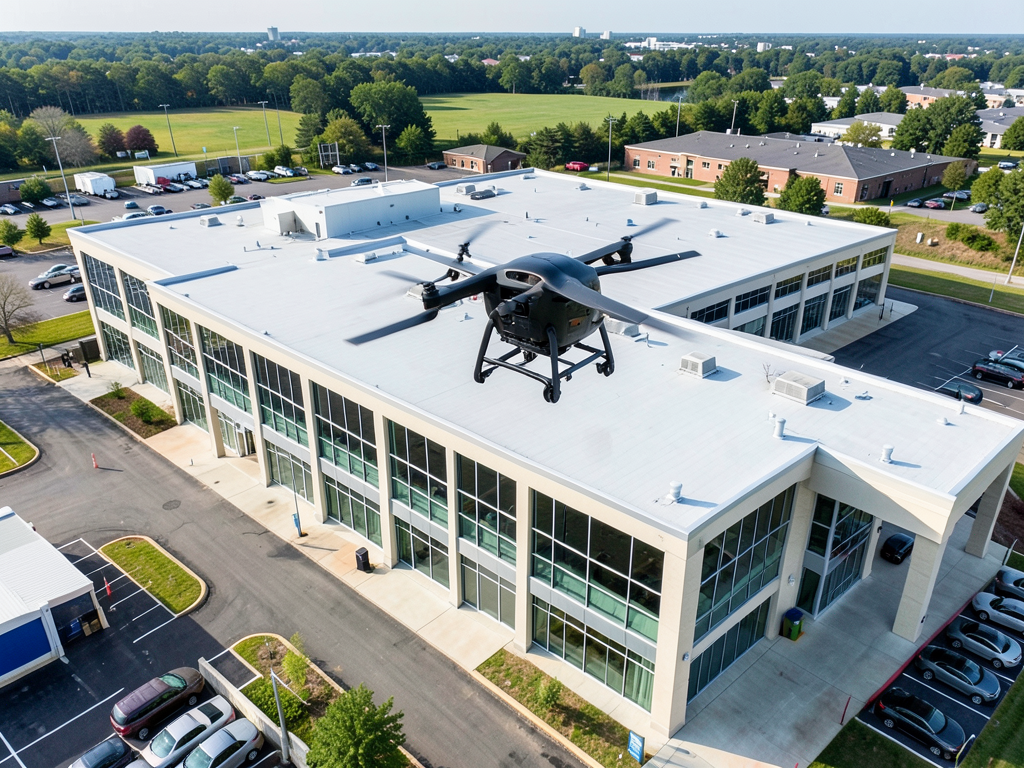
Using Drones for Roof Inspections (And Why it Matters for Your Large Property in Libertyville)
Large properties in Libertyville face unique challenges when it comes to roof maintenance. Traditional manual inspections require ladders, scaffolding, and put workers at risk on steep pitches or multi-story buildings. Drone technology now offers a safer, faster, and more accurate alternative that delivers comprehensive data without anyone ever stepping on your roof. For property managers and owners of estates, commercial complexes, or institutional buildings in Libertyville, this modern approach means catching problems early, reducing liability, and making data-driven decisions about repairs and maintenance.
Safety: Eliminating Fall Risks on High-Pitch and Multi-Story Buildings
Libertyville’s large properties often feature complex rooflines with steep pitches, multiple levels, and hard-to-reach areas. Manual inspections traditionally require workers to navigate these dangerous surfaces while carrying tools and equipment. A single misstep on a 12:12 pitch roof can result in serious injury or worse.
Drone inspections eliminate these fall risks entirely. Certified pilots operate the unmanned aerial vehicle from the ground, capturing high-resolution imagery of every roof surface without anyone climbing a ladder. This is particularly valuable for Libertyville’s historic properties near the Libertyville train station or the older commercial buildings along Milwaukee Avenue, where roof access can be limited and fall hazards are significant.
The safety benefits extend beyond immediate injury prevention. Property owners reduce liability exposure, insurance costs, and workers’ compensation claims. For large properties with extensive roof areas, this translates to substantial risk reduction over time.
Superior Data Accuracy with Thermal Imaging
Modern drones equipped with thermal imaging cameras can detect problems invisible to the naked eye. These infrared sensors identify temperature variations across your roof surface, revealing moisture trapped under roofing membranes, poor insulation, and active leaks before they become visible from inside. Is Solar Roofing Worth the Investment for Homes in Evanston?.
This capability is especially critical in Libertyville where freeze-thaw cycles cause water to expand and contract within roof assemblies. A small amount of trapped moisture in November can become a major leak by January when temperatures plummet. Thermal imaging catches these issues during fall inspections, allowing for preventative repairs before winter damage occurs.. Read more about What Happens to Your Roof After a Small Attic Fire in a Morton Grove Home.
The technology also excels at identifying heat loss patterns in large commercial buildings. Property managers can pinpoint areas where insulation has settled or been compromised, leading to significant energy savings. For Libertyville’s older institutional buildings near the College of Lake County campus, this data helps prioritize energy efficiency upgrades.
Cost-Efficiency and Speed
A comprehensive drone inspection of a large property typically takes 20-30 minutes of flight time compared to 2-4 hours for a manual inspection. This dramatic time reduction means less disruption to your operations and faster turnaround on inspection reports.
The cost benefits multiply when you consider the data quality. Drone inspections capture every square foot of your roof in high resolution, creating a permanent visual record. This eliminates the need for repeat visits when questions arise about specific areas. For Libertyville property managers overseeing multiple buildings, this efficiency means more frequent inspections become economically viable, catching problems when they’re small and inexpensive to fix.
Consider a 50,000 square foot commercial roof in Libertyville. A manual inspection might miss subtle damage in hard-to-reach areas, while a drone captures every detail. The cost difference between catching a minor repair early versus a major replacement later can be tens of thousands of dollars.
Chicago Compliance: Navigating FAA Regulations in Urban Environments
Operating drones in the Chicago metropolitan area requires strict adherence to FAA Part 107 regulations. Libertyville property owners need assurance that their inspection provider maintains current certification and understands local flight restrictions. FAA Part 107 drone regulations.
Libertyville falls within controlled airspace near Chicago Executive Airport. Professional drone operators must obtain authorization through the FAA’s LAANC system before each flight. They also need to understand wind patterns specific to Lake County, where gusts from nearby open spaces can affect drone stability. Extending the Life of Your Flat Roof in Hyde Park with Professional Coating.
Local building codes in Libertyville require documentation of any roof work, and drone inspections provide the photographic evidence needed for permit applications. The Libertyville building department accepts high-resolution drone imagery as part of roofing permit submissions, streamlining the approval process for property improvements. Roofing Berwyn.
Insurance Claim Support
When storm damage occurs, insurance companies require clear evidence of the extent and timing of damage. Drone inspections provide indisputable 4K high-resolution imagery that documents roof conditions before and after weather events.
For Libertyville properties that experienced hail damage during the severe storms of 2024, drone imagery provided the detailed documentation needed for successful insurance claims. The ability to zoom in on individual shingles, measure hail impact marks, and create a complete damage inventory strengthened claim submissions.. Read more about Why Pressure Washing Your Shingles is a Huge Mistake for Niles Homeowners.
Beyond initial claims, drone inspections support ongoing maintenance documentation. Property owners can establish baseline conditions, track deterioration over time, and demonstrate due diligence in property maintenance. This documentation becomes invaluable when negotiating with insurance carriers about coverage terms and premiums.
Drone vs Manual Inspection Comparison
| Inspection Type | Time Required | Safety Risk | Data Quality | Cost Range |
|---|---|---|---|---|
| Manual Inspection | 2-4 hours | High (fall risk) | Limited access areas | $500-1,200 |
| Drone Inspection | 20-30 minutes | None (ground-based) | Complete coverage | $400-900 |
| Thermal Drone | 30-40 minutes | None | Moisture detection | $600-1,400 |
Libertyville Property Considerations
Libertyville’s large properties face specific challenges that make drone inspections particularly valuable. The area’s mature tree canopy creates debris accumulation on roofs, while the freeze-thaw cycles common to northern Illinois cause expansion damage to roofing materials. Roofing Forest Park.
Properties near Butler Lake or the Des Plaines River corridor experience higher humidity levels that accelerate wood rot in roof structures. Drone thermal imaging can detect these moisture problems before they compromise structural integrity.
The village’s building height restrictions and zoning regulations mean many large properties maximize their footprint, creating complex roof geometries that are difficult to inspect manually. Drone technology provides complete coverage of these intricate roof designs.
Choosing a Qualified Drone Inspection Provider
Not all drone operators have the roofing expertise needed to identify problems. Look for providers who combine FAA Part 107 certification with roofing industry experience. They should understand common failure patterns in Libertyville’s climate and be able to distinguish between normal weathering and actual damage.
Professional providers use commercial-grade drones with 4K cameras and thermal imaging capabilities. They should provide detailed inspection reports with annotated imagery, moisture mapping, and specific recommendations for repairs or maintenance.
Insurance verification is critical. Your provider should carry both aviation liability insurance and general liability coverage. This protects you from any liability related to the drone operation on your property.
Environmental Benefits
Drone inspections reduce the carbon footprint associated with roof assessments. No trucks carrying scaffolding, ladders, and equipment are needed. The lightweight drones use minimal energy compared to the fuel consumption of traditional inspection methods.
The detailed data from drone inspections also supports sustainable building practices. Property managers can identify areas where green roof installations would be most effective, or where solar panel placement would maximize energy production based on roof orientation and shading patterns.
For Libertyville properties pursuing LEED certification or other sustainability goals, drone inspection data provides the documentation needed to track building performance improvements over time.
Implementation Timeline
Scheduling a drone inspection is straightforward. Most providers can accommodate requests within 48-72 hours, weather permitting. The actual flight takes under an hour for most large properties, with additional time needed for data processing and report generation.
Weather considerations are important. Drone operations require winds under 20 mph and good visibility. Libertyville’s weather patterns mean inspections are most reliable from late spring through early fall, though thermal imaging can be valuable year-round for identifying heat loss patterns.
After the inspection, you’ll receive a comprehensive report within 24-48 hours. This includes high-resolution imagery, thermal maps if requested, and specific recommendations organized by priority level.
Cost Factors for Large Properties
Several factors influence drone inspection pricing for Libertyville’s large properties. Property size is the primary determinant, but complexity also matters. Multi-level roofs, steep pitches, and numerous roof penetrations increase inspection time.
Thermal imaging adds to the cost but provides valuable moisture detection capabilities. For properties over 20,000 square feet or those with known moisture issues, the additional investment typically pays for itself through early problem detection.
Emergency inspections following storm damage may incur premium pricing due to immediate scheduling requirements. However, the speed of drone deployment often means faster insurance claim processing, offsetting the additional cost. What to Do When You Have a Roof Leak Emergency in Logan Square.
Integration with Maintenance Programs
Drone inspections work best as part of a comprehensive roof maintenance program. Annual or bi-annual inspections create a timeline of roof conditions, making it easier to predict replacement timing and budget for repairs.
The high-resolution imagery from drone inspections integrates well with building management software. Property managers can tag specific areas with maintenance notes, track repair history, and generate reports for stakeholders or board members.
For Libertyville’s commercial property owners, this documentation supports capital planning and helps justify maintenance budgets to ownership groups or investors.
Future of Drone Roof Inspections
Drone technology continues to advance rapidly. Current developments include AI-powered damage detection that can automatically identify missing shingles, rust spots, or pooling water. Some systems can now estimate material quantities for repairs based on 3D models generated from drone imagery.
Libertyville property owners can expect these capabilities to become standard within the next few years. The combination of AI analysis and human expertise will provide even more accurate assessments and predictive maintenance recommendations.
Regulatory changes may also expand drone capabilities. Beyond visual line of sight operations could allow single pilots to inspect multiple large properties in a single flight, further reducing costs for property management companies.
Frequently Asked Questions
How long does a drone roof inspection take?
A typical drone inspection of a large property takes 20-30 minutes of flight time, with additional time for setup, breakdown, and data processing. Most inspections are completed within 2-3 hours total.
Is drone inspection data as reliable as manual inspection?
Yes, drone inspections often provide more reliable data because they capture complete coverage of all roof surfaces, including areas that are dangerous or impossible to access manually. The high-resolution imagery allows for detailed analysis that exceeds what’s possible with visual inspections alone.
What happens if the drone crashes during inspection?
Professional drone operators carry comprehensive insurance that covers equipment damage and liability. Modern drones have multiple safety features including return-to-home functions and obstacle avoidance. Crashes are extremely rare when working with certified professionals.
Can drone inspections detect all types of roof damage?
Drones excel at detecting visible damage like missing shingles, ponding water, and debris accumulation. Thermal imaging can identify moisture problems and insulation issues. However, some internal structural problems may still require interior inspection or physical testing.
Do I need to be present during the inspection?
You don’t need to be present, but someone should be available to provide property access and answer any questions about specific roof areas. The drone pilot will handle all flight operations from the ground.
Next Steps for Your Libertyville Property
Drone roof inspections represent a significant advancement in property maintenance technology. For Libertyville’s large properties, they offer unmatched safety, comprehensive data collection, and cost-effective monitoring of roof conditions.
The combination of visual and thermal imaging capabilities means problems are caught early when they’re less expensive to fix. The documentation provided supports insurance claims, maintenance planning, and capital budgeting decisions.
Libertyville property owners should consider scheduling drone inspections as part of their regular maintenance programs. The investment typically pays for itself through early problem detection, reduced liability, and better-informed maintenance decisions.
Ready to see what drone technology can reveal about your property’s roof condition? Call (773) 599-7055 today to schedule your professional drone roof inspection. Don’t wait for visible damage to appear – catch problems early with comprehensive aerial assessment. For more information, visit OSHA roofing safety standards.
You may also find this helpful. Comparing Modified Bitumen and TPO for Industrial Buildings in McKinley Park.
{
“@context”: “https://schema.org”,
“@type”: “BlogPosting”,
“headline”: “Using Drones for Roof Inspections (And Why it Matters for Your Large Property in Libertyville)”,
“description”: “Discover how drone roof inspections provide faster, safer, and more accurate assessments for Libertyville’s large properties. Learn about thermal imaging, FAA compliance, and insurance benefits.”,
“wordCount”: 1983,
“datePublished”: “2026-05-11T15:43:00.000Z”,
“dateModified”: “2026-05-11T15:43:00.000Z”,
“inLanguage”: “en-US”,
“mainEntityOfPage”: {
“@type”: “WebPage”,
“@id”: “https://patriotroofingchicago.com”
},
“publisher”: {
“@type”: “LocalBusiness”,
“name”: “Patriot Roofing Chicago”,
“url”: “https://patriotroofingchicago.com”
},
“author”: {
“@type”: “Organization”,
“name”: “Patriot Roofing Chicago”,
“url”: “https://patriotroofingchicago.com”
},
“image”: {
“@type”: “ImageObject”,
“url”: “https://patriotroofingchicago.com/wp-content/uploads/2026/03/using-drones-for-roof-inspections-and-why-it-matte-1.png”
}
}
{
“@context”: “https://schema.org”,
“@type”: “RoofingContractor”,
“name”: “Patriot Roofing Chicago”,
“url”: “https://patriotroofingchicago.com”,
“address”: {
“@type”: “PostalAddress”,
“addressLocality”: “Chicago”
},
“areaServed”: {
“@type”: “City”,
“name”: “Chicago”
}
}
{
“@context”: “https://schema.org”,
“@type”: “FAQPage”,
“mainEntity”: [
{
“@type”: “Question”,
“name”: “How long does a drone roof inspection take?”,
“acceptedAnswer”: {
“@type”: “Answer”,
“text”: “A typical drone inspection of a large property takes 20-30 minutes of flight time, with additional time for setup, breakdown, and data processing. Most inspections are completed within 2-3 hours total.”
}
},
{
“@type”: “Question”,
“name”: “Is drone inspection data as reliable as manual inspection?”,
“acceptedAnswer”: {
“@type”: “Answer”,
“text”: “Yes, drone inspections often provide more reliable data because they capture complete coverage of all roof surfaces, including areas that are dangerous or impossible to access manually. The high-resolution imagery allows for detailed analysis that exceeds what’s possible with visual inspections alone.”
}
},
{
“@type”: “Question”,
“name”: “What happens if the drone crashes during inspection?”,
“acceptedAnswer”: {
“@type”: “Answer”,
“text”: “Professional drone operators carry comprehensive insurance that covers equipment damage and liability. Modern drones have multiple safety features including return-to-home functions and obstacle avoidance. Crashes are extremely rare when working with certified professionals.”
}
},
{
“@type”: “Question”,
“name”: “Can drone inspections detect all types of roof damage?”,
“acceptedAnswer”: {
“@type”: “Answer”,
“text”: “Drones excel at detecting visible damage like missing shingles, ponding water, and debris accumulation. Thermal imaging can identify moisture problems and insulation issues. However, some internal structural problems may still require interior inspection or physical testing.”
}
},
{
“@type”: “Question”,
“name”: “Do I need to be present during the inspection?”,
“acceptedAnswer”: {
“@type”: “Answer”,
“text”: “You don’t need to be present, but someone should be available to provide property access and answer any questions about specific roof areas. The drone pilot will handle all flight operations from the ground.”
}
}
]
}
{
“@context”: “https://schema.org”,
“@type”: “BreadcrumbList”,
“itemListElement”: [
{
“@type”: “ListItem”,
“position”: 1,
“name”: “Home”,
“item”: “https://patriotroofingchicago.com”
},
{
“@type”: “ListItem”,
“position”: 2,
“name”: “Blog”,
“item”: “https://patriotroofingchicago.com/blog”
},
{
“@type”: “ListItem”,
“position”: 3,
“name”: “Using Drones for Roof Inspections (And Why it Matters for Your Large Property in Libertyville)”
}
]
}
{
“@context”: “https://schema.org”,
“@type”: “Service”,
“serviceType”: “Roofing”,
“provider”: {
“@type”: “LocalBusiness”,
“name”: “Patriot Roofing Chicago”,
“url”: “https://patriotroofingchicago.com”
},
“areaServed”: {
“@type”: “City”,
“name”: “Chicago”
},
“description”: “Discover how drone roof inspections provide faster, safer, and more accurate assessments for Libertyville’s large properties. Learn about thermal imaging, FAA compliance, and insurance benefits.”
}