
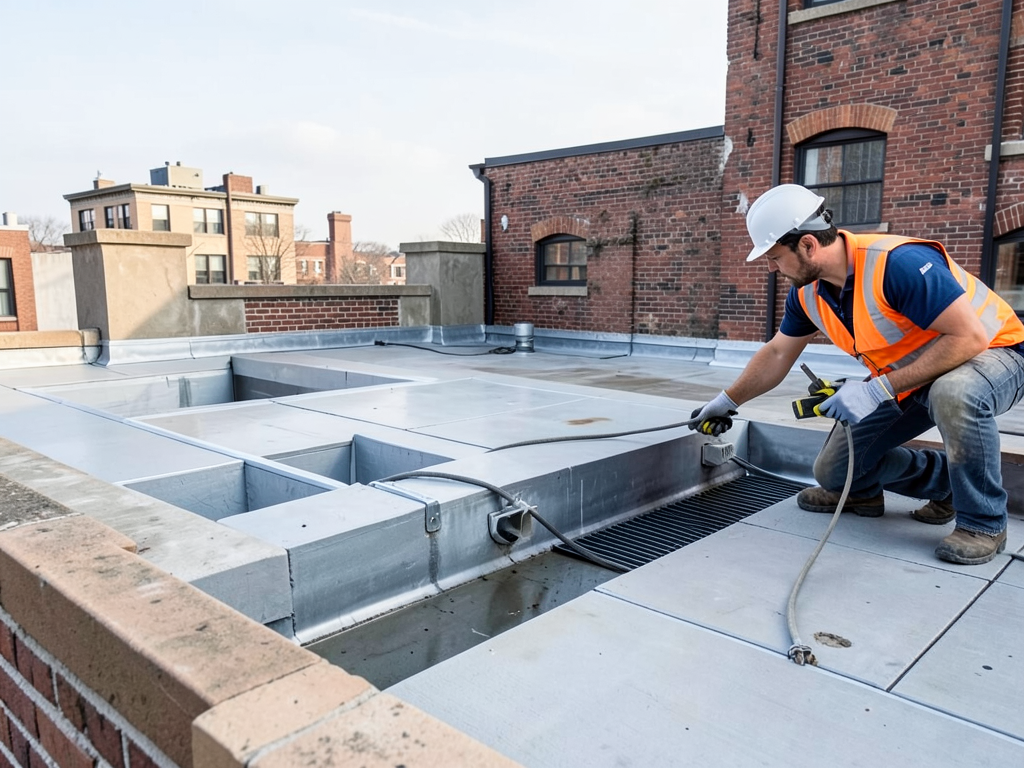
Solving Unique Drainage Challenges for Historic Loft Buildings in Printers Row
Printers Row’s historic loft buildings face unique drainage challenges that generic roofing solutions simply cannot address. The district’s converted printing warehouses feature flat roof designs, heavy parapet walls, and complex internal drainage systems that require specialized expertise. From the brick-and-timber structures along Dearborn Street to the converted industrial spaces near Plymouth Court, each building presents distinct water management issues that demand Chicago-specific knowledge. Chicago Building Code.
The primary challenge stems from the original industrial design. These buildings were constructed with large, flat roof expanses meant to support heavy printing equipment. Today, those same roof decks must handle Chicago’s extreme weather patterns while preserving the historic architecture. The combination of heavy snow loads, spring thunderstorms, and freeze-thaw cycles creates stress points that newer buildings simply don’t experience.
Understanding these specific challenges is crucial for property managers and building owners in the 60605 zip code. The right drainage solution not only protects the building but also ensures compliance with the Chicago Commission on Chicago Landmarks and the Chicago Department of Buildings’ strict requirements for historic structures. Commission on Chicago Landmarks.
Common Drainage Issues in Printers Row Lofts
Printers Row’s historic lofts share several drainage characteristics that create recurring problems. The flat roof designs, while architecturally significant, lack the natural water-shedding ability of sloped roofs. This becomes critical during Chicago’s heavy rainfall events when water accumulates rather than drains away quickly.
Parapet walls, a defining feature of these industrial buildings, create additional complications. These tall perimeter walls prevent water from flowing over the roof edge, forcing it through internal drainage systems. When these internal drains become clogged or damaged, water backs up and can cause significant interior damage to the loft spaces below.
The original drainage infrastructure often consists of cast iron pipes and copper flashing that, while durable for their time, have reached the end of their effective lifespan. Many buildings still operate with century-old drainage components that corrode from the inside out, creating hidden failure points that only become apparent during major weather events.
Another critical issue involves the roof deck structure itself. Many Printers Row lofts feature heavy timber construction with multiple roof levels and stepped designs. These complex geometries create areas where water pools rather than drains, especially when the original slope has settled over decades of use.
Specialized Drainage Solutions for Historic Buildings
Addressing Printers Row’s drainage challenges requires solutions that respect both the building’s historic character and modern performance requirements. The first step involves comprehensive roof assessment using thermal imaging to identify moisture intrusion points that aren’t visible to the naked eye.
Modern drainage systems for historic lofts often incorporate low-profile internal drains that maintain the building’s aesthetic while improving water flow. These drains feature larger openings and debris guards to prevent the clogging issues common in older systems. The installation process requires careful coordination with building management to minimize disruption to residents and ground-floor retail tenants.
Roof coating systems provide another effective solution for drainage improvement. Cool roof coatings with high solar reflectance reduce heat absorption, which minimizes thermal expansion and contraction that can damage drainage components. These coatings also create a seamless membrane that eliminates seams where water can penetrate. Is Solar Roofing Worth the Investment for Homes in Evanston?.
For buildings with severe drainage issues, tapered insulation systems can restore proper roof slope without altering the building’s exterior appearance. This solution involves installing sloped insulation panels that create positive drainage while adding energy efficiency benefits. The tapered system directs water toward existing drains or new low-profile collector boxes.
Scupper installations offer another option for buildings where internal drainage proves insufficient. These through-wall drainage components allow controlled water discharge over parapet walls while maintaining the building’s historic character. Modern scuppers feature corrosion-resistant materials and overflow protection to prevent freeze-related damage.
Chicago Building Code Requirements for Historic Structures
Navigating Chicago’s building codes for historic loft drainage requires understanding both the Chicago Building Code and the additional requirements from the Commission on Chicago Landmarks. The current code mandates specific overflow provisions for flat roofs, requiring secondary drainage paths when primary systems become overwhelmed.
Section 15-16-000 of the Chicago Municipal Code addresses roof drainage for buildings in historic districts. This section requires that any modifications preserve the building’s historic character while meeting current safety standards. For Printers Row properties, this often means using materials and installation methods that match the original construction while providing modern performance.
The code also specifies minimum drain size requirements based on roof area and local rainfall intensity. Chicago’s design storms, which account for the city’s severe weather patterns, require larger drain capacities than many other regions. A typical Printers Row loft might need 4-inch drains where a similar building in a milder climate could use 3-inch drains.
Permit requirements add another layer of complexity. The Chicago Department of Buildings requires separate permits for drainage work on historic structures, and the approval process includes review by the Commission on Chicago Landmarks. This review ensures that proposed changes won’t compromise the building’s historic integrity.
Working within these requirements demands experience with both modern roofing technology and historic preservation principles. The contractor must understand how to integrate new drainage components with existing structures without creating visual or structural conflicts. Roofing Berwyn.
Urban Logistics and Project Management
Printers Row’s dense urban environment creates unique logistical challenges for drainage projects. The narrow streets, particularly along Dearborn and Federal, limit access for large equipment. Crane operations require careful planning and coordination with the city for street closures that minimize impact on businesses and residents.
Debris removal presents another significant challenge. The historic district’s limited alley access means that roofing materials and old drainage components must be removed through the building or via crane over the street. This requires detailed planning to protect pedestrian areas and maintain building security during the project. Roofing Forest Park.
Noise restrictions in the South Loop affect work schedules. Many Printers Row buildings contain residential units, requiring work to be completed during specific hours to minimize disturbance. This constraint often extends project timelines but remains necessary for maintaining good relationships with building occupants.
Weather considerations play a crucial role in project planning. Chicago’s unpredictable weather patterns mean that drainage work must account for sudden storms that could overwhelm partially completed systems. This requires temporary protection measures and flexible scheduling to ensure work progresses safely.
Coordination with building management becomes essential for successful project execution. The contractor must work with property managers to schedule elevator use, coordinate with tenants, and ensure that emergency access remains available throughout the project duration. What to Do When You Have a Roof Leak Emergency in Logan Square.
Material Selection for Printers Row Drainage Systems
Material selection for historic loft drainage requires balancing durability, compatibility with existing structures, and compliance with preservation guidelines. Modern drainage components must withstand Chicago’s extreme weather while maintaining the building’s historic character.
Cast aluminum drains offer excellent corrosion resistance while providing a traditional appearance that matches many historic buildings. These drains feature thicker walls than standard components, providing the durability needed for Chicago’s freeze-thaw cycles. The material’s natural patina also helps maintain the building’s aged appearance.
Copper remains a popular choice for flashing and drainage components in historic buildings. Its natural weathering creates a distinctive green patina that many preservationists prefer. Copper’s longevity and resistance to corrosion make it ideal for Chicago’s harsh climate, though the material requires skilled installation to prevent galvanic corrosion with other metals.
High-density polyethylene (HDPE) pipes provide modern durability while offering flexibility for complex installations. These pipes resist the chemical degradation that affects older cast iron systems and can accommodate building movement without cracking. The material’s lightweight nature also reduces structural load on historic roof decks.
Modified bitumen membranes work well for historic loft applications due to their durability and ease of repair. These multi-layer systems provide excellent waterproofing while allowing for the integration of drainage components. The material’s flexibility accommodates building movement and thermal expansion without compromising the waterproof barrier.
Emergency Drainage Response for Commercial Properties
Commercial properties in Printers Row require rapid emergency response capabilities for drainage failures. A single blocked drain can cause extensive damage to multiple units in a converted loft building, making 24/7 availability essential for property management companies.
Emergency response begins with immediate leak detection using moisture meters and thermal imaging to locate the source of water intrusion. This diagnostic process must be completed quickly to prevent further damage while the property manager decides on the appropriate response level.
Temporary drainage solutions often involve installing emergency pumps or creating alternative water paths to prevent interior flooding. These measures require understanding the building’s original drainage design to work around existing components without causing additional damage.
Insurance documentation becomes critical during emergency responses. Detailed photographic documentation of damage and temporary repairs helps property owners navigate insurance claims while demonstrating due diligence in preventing further damage.
Preventative maintenance programs help minimize emergency situations. Regular drain cleaning, inspection of flashing components, and monitoring of roof surface conditions can identify potential failures before they cause significant damage. These programs typically include seasonal inspections before Chicago’s severe weather seasons.
Cost Considerations and ROI for Drainage Improvements
Drainage improvement projects in Printers Row represent significant investments, but the cost of inaction often exceeds the expense of proper upgrades. Water damage from inadequate drainage can cause structural deterioration, mold growth, and damage to interior finishes that far exceeds the cost of preventive improvements.
The initial assessment phase typically costs between $500 and $1,500, depending on the building’s size and complexity. This investment provides detailed documentation of existing conditions and recommendations for improvement, allowing property owners to make informed decisions about necessary upgrades.
Complete drainage system replacement in a typical Printers Row loft building ranges from $15,000 to $50,000, depending on the scope of work and building accessibility. This cost includes removal of existing components, installation of new drainage systems, and integration with existing roof structures.
Energy efficiency improvements often accompany drainage upgrades. Modern drainage systems can reduce cooling costs by preventing water accumulation that increases roof temperature. These energy savings, combined with extended roof life, can provide return on investment within 5 to 7 years.
Insurance premium reductions may also offset some improvement costs. Many insurance companies offer discounts for buildings with upgraded drainage systems that reduce the risk of water damage claims. These reductions can provide ongoing savings that improve the project’s overall financial viability.
Maintenance Programs for Long-Term Performance
Establishing a comprehensive maintenance program ensures that drainage improvements continue to protect the building over the long term. Chicago’s severe weather patterns and the historic nature of Printers Row buildings make regular maintenance essential for preventing costly failures.
Seasonal maintenance schedules should include pre-winter inspections to ensure drains are clear and functioning properly before freeze-thaw cycles begin. This inspection should check for debris accumulation, proper slope, and the condition of all drainage components. Post-winter inspections assess any damage from ice formation or snow loads.
Quarterly drain cleaning prevents the accumulation of leaves, debris, and sediment that can block drainage systems. This cleaning should include both surface-level debris removal and internal pipe inspection to identify developing clogs before they cause problems.
Annual roof inspections assess the overall condition of the drainage system and identify any areas requiring repair or upgrade. These inspections should include moisture testing of the roof deck, evaluation of flashing conditions, and assessment of any settlement that might affect drainage patterns.
Documentation of all maintenance activities provides valuable information for future planning and helps demonstrate due diligence to insurance companies and building code officials. This documentation should include inspection reports, repair records, and any recommendations for future improvements.
Frequently Asked Questions
What makes Printers Row drainage different from other Chicago neighborhoods?
Printers Row’s historic loft buildings feature flat roof designs with internal drainage systems that differ significantly from the sloped roofs common in other Chicago neighborhoods. The combination of heavy parapet walls, cast iron drainage components, and complex roof geometries requires specialized knowledge of both historic preservation and modern drainage technology.
How long does a typical drainage improvement project take in Printers Row?
Most drainage improvement projects in Printers Row require 2 to 4 weeks for completion, depending on the project scope and building accessibility. The dense urban environment, historic preservation requirements, and coordination with building occupants all contribute to extended timelines compared to standard roofing projects.
Are permits required for drainage work on historic buildings?
Yes, drainage work on historic buildings in Printers Row requires permits from both the Chicago Department of Buildings and approval from the Commission on Chicago Landmarks. These permits ensure that drainage improvements meet current building codes while preserving the historic character of the structure.
What materials work best for historic loft drainage systems?
Cast aluminum drains, copper flashing, and modified bitumen membranes provide excellent durability while maintaining compatibility with historic structures. These materials offer corrosion resistance and longevity needed for Chicago’s climate while providing the aesthetic compatibility required for historic preservation.
How can I tell if my building has drainage problems?
Signs of drainage problems include water stains on interior ceilings, musty odors in loft spaces, visible ponding on the roof surface, and slow drainage during rain events. Regular professional inspections can identify developing issues before they cause significant damage to the building. Extending the Life of Your Flat Roof in Hyde Park with Professional Coating.
Protecting Your Investment in Printers Row
Printers Row’s historic loft buildings represent significant investments that require specialized care to maintain their value and functionality. The unique drainage challenges these structures face demand expertise in both historic preservation and modern roofing technology. Property owners who invest in proper drainage solutions protect not only their buildings but also the historic character that makes Printers Row unique.
The combination of Chicago’s severe weather patterns and the architectural constraints of historic lofts creates a complex environment where generic solutions often fail. Success requires understanding the specific challenges of each building, from the brick structures along Dearborn to the converted warehouses near Plymouth Court. This understanding, combined with proper permitting and material selection, ensures that drainage improvements meet both functional and preservation requirements.
Regular maintenance and prompt attention to developing issues prevent the costly failures that can damage multiple units in a converted loft building. Property managers who establish comprehensive maintenance programs protect their investments while maintaining the historic character that defines Printers Row. The cost of proper maintenance pales in comparison to the expense of emergency repairs and water damage restoration.
For property owners in the 60605 zip code, partnering with contractors who understand these unique challenges provides peace of mind and long-term protection. The right contractor brings not only technical expertise but also knowledge of local building codes, historic preservation requirements, and the logistical challenges of working in Chicago’s dense urban environment.
Don’t wait for the next Chicago storm to reveal your building’s drainage vulnerabilities. Call (773) 599-7055 today to schedule a comprehensive drainage assessment and protect your Printers Row investment from water damage and code compliance issues.
{
“@context”: “https://schema.org”,
“@type”: “BlogPosting”,
“headline”: “Solving Unique Drainage Challenges for Historic Loft Buildings in Printers Row”,
“description”: “Expert solutions for Printers Row’s historic loft drainage issues. Learn how Chicago’s unique architecture affects commercial roofing systems and code compliance.”,
“wordCount”: 2505,
“datePublished”: “2026-04-24T14:08:00.000Z”,
“dateModified”: “2026-04-24T14:08:00.000Z”,
“inLanguage”: “en-US”,
“mainEntityOfPage”: {
“@type”: “WebPage”,
“@id”: “https://patriotroofingchicago.com”
},
“publisher”: {
“@type”: “LocalBusiness”,
“name”: “Patriot Roofing Chicago”,
“url”: “https://patriotroofingchicago.com”
},
“author”: {
“@type”: “Organization”,
“name”: “Patriot Roofing Chicago”,
“url”: “https://patriotroofingchicago.com”
},
“image”: {
“@type”: “ImageObject”,
“url”: “https://patriotroofingchicago.com/wp-content/uploads/2026/03/solving-unique-drainage-challenges-for-historic-lo-1.png”
}
}
{
“@context”: “https://schema.org”,
“@type”: “RoofingContractor”,
“name”: “Patriot Roofing Chicago”,
“url”: “https://patriotroofingchicago.com”,
“address”: {
“@type”: “PostalAddress”,
“addressLocality”: “Chicago”
},
“areaServed”: {
“@type”: “City”,
“name”: “Chicago”
}
}
{
“@context”: “https://schema.org”,
“@type”: “FAQPage”,
“mainEntity”: [
{
“@type”: “Question”,
“name”: “What makes Printers Row drainage different from other Chicago neighborhoods?”,
“acceptedAnswer”: {
“@type”: “Answer”,
“text”: “Printers Row’s historic loft buildings feature flat roof designs with internal drainage systems that differ significantly from the sloped roofs common in other Chicago neighborhoods. The combination of heavy parapet walls, cast iron drainage components, and complex roof geometries requires specialized knowledge of both historic preservation and modern drainage technology.”
}
},
{
“@type”: “Question”,
“name”: “How long does a typical drainage improvement project take in Printers Row?”,
“acceptedAnswer”: {
“@type”: “Answer”,
“text”: “Most drainage improvement projects in Printers Row require 2 to 4 weeks for completion, depending on the project scope and building accessibility. The dense urban environment, historic preservation requirements, and coordination with building occupants all contribute to extended timelines compared to standard roofing projects.”
}
},
{
“@type”: “Question”,
“name”: “Are permits required for drainage work on historic buildings?”,
“acceptedAnswer”: {
“@type”: “Answer”,
“text”: “Yes, drainage work on historic buildings in Printers Row requires permits from both the Chicago Department of Buildings and approval from the Commission on Chicago Landmarks. These permits ensure that drainage improvements meet current building codes while preserving the historic character of the structure.”
}
},
{
“@type”: “Question”,
“name”: “What materials work best for historic loft drainage systems?”,
“acceptedAnswer”: {
“@type”: “Answer”,
“text”: “Cast aluminum drains, copper flashing, and modified bitumen membranes provide excellent durability while maintaining compatibility with historic structures. These materials offer corrosion resistance and longevity needed for Chicago’s climate while providing the aesthetic compatibility required for historic preservation.”
}
},
{
“@type”: “Question”,
“name”: “How can I tell if my building has drainage problems?”,
“acceptedAnswer”: {
“@type”: “Answer”,
“text”: “Signs of drainage problems include water stains on interior ceilings, musty odors in loft spaces, visible ponding on the roof surface, and slow drainage during rain events. Regular professional inspections can identify developing issues before they cause significant damage to the building. Extending the Life of Your Flat Roof in Hyde Park with Professional Coating.”
}
}
]
}
{
“@context”: “https://schema.org”,
“@type”: “BreadcrumbList”,
“itemListElement”: [
{
“@type”: “ListItem”,
“position”: 1,
“name”: “Home”,
“item”: “https://patriotroofingchicago.com”
},
{
“@type”: “ListItem”,
“position”: 2,
“name”: “Blog”,
“item”: “https://patriotroofingchicago.com/blog”
},
{
“@type”: “ListItem”,
“position”: 3,
“name”: “Solving Unique Drainage Challenges for Historic Loft Buildings in Printers Row”
}
]
}
{
“@context”: “https://schema.org”,
“@type”: “Service”,
“serviceType”: “Roofing”,
“provider”: {
“@type”: “LocalBusiness”,
“name”: “Patriot Roofing Chicago”,
“url”: “https://patriotroofingchicago.com”
},
“areaServed”: {
“@type”: “City”,
“name”: “Chicago”
},
“description”: “Expert solutions for Printers Row’s historic loft drainage issues. Learn how Chicago’s unique architecture affects commercial roofing systems and code compliance.”
}