
How to Maintain the Integrity of Steep-Pitched Tudor Roofs in Lincoln Square
Steep-pitched Tudor roofs dominate the architectural landscape of Lincoln Square with their distinctive gables and steep slopes often ranging from 8:12 to 12:12 pitch. These dramatic rooflines create visual appeal but demand specialized maintenance approaches due to Chicago’s harsh freeze-thaw cycles and the inherent safety challenges of working on high-incline surfaces. Homeowners in the 60625 and 60640 ZIP codes face unique maintenance demands that differ significantly from flat-roofed bungalows or modern ranch homes. Chicago Ice Dam Prevention Guide.
Understanding how to properly maintain these steep-pitched structures means recognizing that standard roofing practices don’t apply. The combination of architectural complexity, material sensitivity, and Chicago’s extreme weather patterns requires a targeted approach focused on safety, seasonal timing, and material-specific care. This guide covers everything from OSHA-compliant safety equipment to winter ice dam prevention strategies specifically designed for Lincoln Square’s Tudor homes. OSHA Fall Protection Standards.
Essential Safety Equipment for Steep-Slope Maintenance
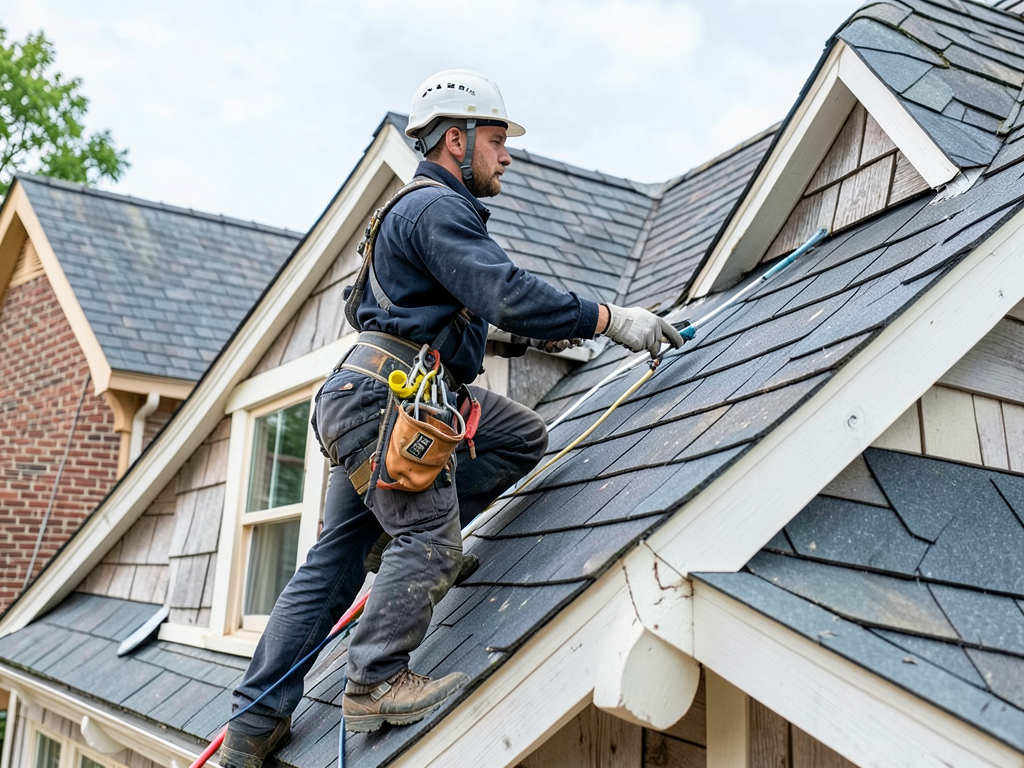
Working on a 10:12 pitch roof requires equipment that flat-roof contractors never need. The first line of defense is a full-body harness rated for fall arrest, anchored to roof-mounted D-rings or ridge anchors certified to 5,000-pound tensile strength. Toe boards provide stable footing on slopes exceeding 7:12 pitch, while roof brackets create temporary work platforms that prevent dangerous sliding.
OSHA Standard 1926.501 mandates fall protection for any roof with a slope greater than 4:12 when workers are within 6 feet of an edge. For Tudor homes in Lincoln Square, this means every maintenance task requires proper fall arrest systems. The equipment must be inspected before each use, with particular attention to harness stitching and anchor point integrity.
Beyond personal protection, specialized tools make steep-slope work possible. Extension ladders need stabilizers to prevent side-slipping, while roofing shovels with serrated blades handle the aggressive scraping needed on high-pitch surfaces. Magnetic nail sweepers become essential for collecting metal debris that standard brooms cannot effectively gather on steep inclines. Is Solar Roofing Worth the Investment for Homes in Evanston?.
Seasonal Maintenance Checklist for Chicago’s Climate
Chicago’s weather creates distinct maintenance windows that Lincoln Square homeowners must follow. Spring maintenance focuses on winter damage assessment and drainage system preparation. Summer provides the optimal window for repairs and material replacement. Fall maintenance prevents ice dam formation, while winter requires minimal intervention but vigilant monitoring. Why More Naperville Homeowners are Switching to Metal Roofing This Year.
Spring inspections should occur after the last freeze, typically mid-April in the 60625 area. Look for lifted shingles, damaged flashing around dormers, and gutter separations caused by ice expansion. The freeze-thaw cycle common to Chicago’s climate causes materials to expand and contract, creating gaps that water exploits during spring rains.. Read more about Why the Dormers on Your Roscoe Village Home Are the Most Likely Source of That Mystery Leak.
Summer maintenance takes advantage of stable weather for repairs. This is the time to replace damaged slate tiles, re-secure loose architectural shingles, and inspect chimney flashing. The warm temperatures allow sealants to properly cure, creating watertight bonds that withstand winter’s assault.. Read more about Why Your Oak Brook Home Needs an Ice and Water Shield Even if the Rest of the Roof is Fine.
Fall preparation prevents winter emergencies. Clean gutters thoroughly to handle Chicago’s heavy autumn leaf drop, install heat cables in problem areas, and trim tree branches that could damage roofs during winter storms. The goal is creating clear drainage paths before ice formation begins.
Winter monitoring means watching for ice dam formation, particularly on north-facing slopes where sun exposure is minimal. Signs of trouble include icicles forming at roof edges, water stains on interior ceilings, and visible ice buildup in gutters. Early detection prevents costly interior damage.
Material-Specific Maintenance for Tudor Roof Types
Lincoln Square’s Tudor homes feature several roofing materials, each requiring different maintenance approaches. Slate roofs, common on pre-1940s homes, demand gentle handling and specialized tools. The metamorphic rock splits along natural cleavage planes, making aggressive cleaning techniques destructive. Roofing Berwyn.
Slate maintenance requires soft-bristle brushes and pH-neutral cleaners. Avoid pressure washing, which can delaminate the stone surface. Instead, use a garden hose with gentle spray patterns. Inspect copper or lead flashing annually, as these metals develop protective patinas but can develop pinhole leaks over decades.
Clay tile roofs present different challenges. The curved surfaces shed water efficiently but trap debris in concave areas. Maintenance involves removing organic material that retains moisture and promotes moss growth. Use plastic tools rather than metal to prevent chipping the brittle clay surface.
Asphalt architectural shingles dominate post-war Tudor homes. These dimensional shingles hide minor imperfections but show wear patterns clearly. Look for granule loss, curling at shingle edges, and exposed nail heads. The fiberglass mat base becomes brittle in Chicago’s temperature extremes, requiring replacement every 20-25 years.
Wood shake roofs, though less common, require the most intensive maintenance. The natural material needs treatment every 3-5 years with preservatives that resist rot and UV damage. Moss and lichen growth must be removed manually, as chemical treatments can discolor the wood.. Read more about Choosing Between Natural Slate and Synthetic Alternatives for Your Glenview Estate.
Lincoln Square’s Tree Canopy Impact on Roof Health
The mature tree canopy in Lincoln Square’s residential areas creates both benefits and challenges for steep-pitched roofs. Mature oaks and maples provide summer shade that reduces cooling costs but drop leaves that clog gutters and retain moisture on roof surfaces. The 60625 ZIP code has a tree canopy coverage of approximately 28%, higher than Chicago’s citywide average.
Tree debris accumulation creates microenvironments where moss and algae thrive. The organic material holds moisture against roofing surfaces, accelerating deterioration. North-facing slopes beneath tree cover experience the most severe moss growth due to limited sun exposure and constant moisture availability.
Strategic tree management becomes part of roof maintenance. Prune branches that overhang roof surfaces to reduce debris deposition. Maintain a minimum 10-foot clearance between tree limbs and roof edges to prevent damage during storms. Consider installing copper or zinc strips along roof ridges, as these metals release ions that inhibit organic growth.
The root systems of mature trees can also affect roof health indirectly. Trees planted too close to foundations can cause soil movement that shifts roof framing, creating stress points in the roofing system. Monitor for signs of structural movement, particularly in homes built on Chicago’s clay-heavy soil.
Ice Dam Prevention for Steep Chicago Roofs
Ice dam formation represents the most significant winter threat to Lincoln Square’s steep-pitched roofs. When snow melts on warm roof surfaces and refreezes at colder eaves, it creates barriers that force water under shingles. The Chicago Department of Water Management reports that ice dam-related claims increase by 300% during severe winters.
Prevention starts with proper attic insulation and ventilation. Building Code Section 13-4-130 requires minimum R-38 insulation in attic spaces, but achieving R-49 provides better protection against heat loss. Ventilation should provide 1 square foot of net free area per 300 square feet of attic floor space.
Heat cables offer targeted protection for problem areas. Install them in a zigzag pattern along roof edges where ice typically forms. Modern self-regulating cables adjust their heat output based on ambient temperature, reducing energy consumption while maintaining effectiveness.
Roof rakes help remove snow before it can melt and refreeze. Use plastic-edged rakes to avoid damaging shingles. Remove snow in layers, working from the roof edge upward. Never attempt to remove ice with sharp tools, as this damages roofing materials.
Professional ice dam steaming provides the safest removal method when prevention fails. The process uses low-pressure steam at 300°F to melt ice without damaging roofing materials. This service becomes critical when interior water damage appears. Extending the Life of Your Flat Roof in Hyde Park with Professional Coating.
Advanced Diagnostic Techniques for Roof Assessment
Modern roof diagnostics go beyond visual inspection. Infrared thermography reveals heat loss patterns that indicate insulation problems or moisture intrusion. A properly functioning steep-pitched roof should show uniform temperature distribution, with variations indicating potential issues.
Moisture meters provide quantitative data about water content in roofing materials. For wood shake roofs, readings above 20% indicate problematic moisture levels. Slate and tile roofs require non-penetrating meters to avoid surface damage while detecting subsurface moisture.
Core sampling, though invasive, provides definitive information about roof deck condition. Remove a small section of roofing material to examine the underlying wood for rot, delamination, or insect damage. This technique proves especially valuable for homes with multiple roof layers.
Drones equipped with high-resolution cameras allow safe inspection of steep surfaces without risking worker safety. The aerial perspective reveals patterns of wear, damaged flashing, and drainage issues invisible from ground level. Thermal imaging drones can detect heat loss and moisture problems from above.. Read more about Using Drones for Roof Inspections (And Why it Matters for Your Large Property in Libertyville).
Sound testing helps assess slate and tile integrity. Tap each tile with a rubber mallet and listen for dull sounds that indicate cracking or delamination. Healthy tiles produce clear, ringing tones, while damaged ones sound muted or hollow.
Cost-Effective Maintenance Strategies
Proactive maintenance costs significantly less than emergency repairs. Annual professional inspections typically range from $200 to $400 but can identify problems when they’re still minor. This compares favorably to emergency repairs that can exceed $2,000 for water damage alone. What to Do When You Have a Roof Leak Emergency in Logan Square.
DIY maintenance saves money but requires proper safety equipment and knowledge. Homeowners comfortable with heights can clean gutters, remove debris, and inspect visible surfaces. However, any work requiring ladder use on steep slopes should involve professional help due to fall risks.
Material selection affects long-term costs. Premium architectural shingles with 30-year warranties cost 20-30% more initially but provide better wind resistance and longer service life. For Chicago’s climate, this investment often proves worthwhile given the extreme weather conditions.
Preventive treatments extend material life. Moss inhibitors applied every 2-3 years prevent organic growth that accelerates deterioration. UV-protective sealants for wood shake roofs reduce weathering and maintain the material’s natural appearance.
Insurance considerations affect maintenance decisions. Many policies offer premium discounts for impact-resistant materials or certified maintenance programs. Document all maintenance activities, as this documentation supports claims if damage occurs.
When to Call a Professional
Certain situations demand professional intervention regardless of homeowner skill level. Any work requiring ladder use on slopes exceeding 7:12 pitch poses unacceptable fall risks for untrained individuals. Professional roofers carry insurance that protects both worker and homeowner.
Storm damage assessment requires trained eyes to identify hidden problems. Hail damage often appears as minor cosmetic issues but can compromise shingle integrity. Professional inspectors use standardized damage assessment protocols that insurance companies recognize.
Permit-required work must involve licensed contractors. Chicago Municipal Code Section 13-4-100 requires permits for most roofing work, with violations carrying fines up to $1,000 per day. Professional contractors handle permitting and ensure work meets code requirements.
Insurance claims benefit from professional documentation. Contractors familiar with insurance processes provide the detailed reports and photographs needed for claim approval. They also understand how to maximize coverage for necessary repairs.
Safety concerns override cost considerations. If a roof surface feels spongy underfoot, shows visible sagging, or has missing structural components, professional assessment becomes urgent. These conditions indicate potential collapse risks that DIY approaches cannot address safely.
Frequently Asked Questions
How often should I inspect my steep-pitched Tudor roof in Lincoln Square?
Professional inspections should occur annually, with additional self-inspections after major storms. Spring and fall represent optimal inspection times, allowing you to address winter damage before summer heat and prepare for winter before freezing temperatures arrive.
What’s the average lifespan of different roofing materials on steep pitches?
Slate roofs typically last 75-100 years with proper maintenance. Clay tiles last 50-75 years. Premium architectural shingles provide 25-30 years of service. Wood shake roofs require replacement every 20-25 years but need more frequent maintenance to achieve that lifespan.
Can I walk on my steep-pitched roof for maintenance?
Walking on slopes exceeding 7:12 pitch requires professional equipment and training. The risk of falls increases dramatically above this pitch. Use roof brackets and toe boards for stable footing, and always wear fall protection equipment rated for roofing applications.
How do I know if my roof has ice dam damage?
Signs include water stains on interior ceilings, icicles forming at roof edges, and visible ice buildup in gutters. Check attic spaces for moisture or frost accumulation on rafters. These indicators suggest ice dams forcing water under roofing materials.
What maintenance costs should I budget annually?
Budget $200-400 for professional inspections and $100-300 for DIY maintenance supplies. Set aside 1-2% of your home’s value annually for major repairs or eventual replacement. This proactive approach prevents costly emergency repairs.
Protecting Your Lincoln Square Tudor Home’s Roof Investment
The steep-pitched Tudor roofs that give Lincoln Square its distinctive character require dedicated maintenance to preserve both their beauty and functionality. Chicago’s extreme weather patterns, from summer hail storms to winter ice dams, create challenges that demand year-round attention. Understanding these challenges and implementing proper maintenance protocols protects your home’s structural integrity and maintains property value.
Success in steep-pitch roof maintenance comes from recognizing that this is not a DIY-friendly endeavor for most homeowners. The combination of fall risks, specialized equipment needs, and complex material requirements makes professional involvement essential for most maintenance tasks. However, informed homeowners who understand basic maintenance principles can make better decisions about when to call professionals and how to protect their investment between professional visits.. Read more about Why Your Norwood Park Bungalow Needs a Specific Kind of Attic Fan to Survive the Summer.
Remember that Lincoln Square’s mature tree canopy, historic architecture, and specific weather patterns create a unique maintenance environment. What works for suburban ranch homes or modern constructions doesn’t apply to these classic Tudor structures. By following the guidelines outlined in this guide and maintaining regular professional inspections, you can ensure your steep-pitched roof continues to protect your home for decades to come.
Don’t wait for visible damage to appear. Call (773) 599-7055 today to schedule your comprehensive steep-slope roof inspection. Our Lincoln Square specialists understand the unique challenges of maintaining these architectural treasures and can identify potential problems before they become costly emergencies. Your Tudor home deserves expert care from professionals who know Chicago’s climate and Lincoln Square’s specific requirements.
Pick up the phone and call (773) 599-7055 before the next storm hits. Your roof’s integrity depends on proactive maintenance, and our team has the specialized equipment and local expertise to keep your steep-pitched Tudor roof performing at its best through every Chicago season.
{
“@context”: “https://schema.org”,
“@type”: “BlogPosting”,
“headline”: “How to Maintain the Integrity of Steep-Pitched Tudor Roofs in Lincoln Square”,
“description”: “Expert guide to maintaining steep-pitched Tudor roofs in Lincoln Square. Learn safety protocols, seasonal maintenance, and Chicago-specific challenges from local roofing specialists.”,
“wordCount”: 2339,
“datePublished”: “2026-04-15T12:38:00.000Z”,
“dateModified”: “2026-04-15T12:38:00.000Z”,
“inLanguage”: “en-US”,
“mainEntityOfPage”: {
“@type”: “WebPage”,
“@id”: “https://patriotroofingchicago.com”
},
“publisher”: {
“@type”: “LocalBusiness”,
“name”: “Patriot Roofing Chicago”,
“url”: “https://patriotroofingchicago.com”
},
“author”: {
“@type”: “Organization”,
“name”: “Patriot Roofing Chicago”,
“url”: “https://patriotroofingchicago.com”
},
“image”: {
“@type”: “ImageObject”,
“url”: “https://patriotroofingchicago.com/wp-content/uploads/2026/03/how-to-maintain-the-integrity-of-steep-pitched-tud-1.png”
}
}
{
“@context”: “https://schema.org”,
“@type”: “RoofingContractor”,
“name”: “Patriot Roofing Chicago”,
“url”: “https://patriotroofingchicago.com”,
“address”: {
“@type”: “PostalAddress”,
“addressLocality”: “Chicago”
},
“areaServed”: {
“@type”: “City”,
“name”: “Chicago”
}
}
{
“@context”: “https://schema.org”,
“@type”: “FAQPage”,
“mainEntity”: [
{
“@type”: “Question”,
“name”: “How often should I inspect my steep-pitched Tudor roof in Lincoln Square?”,
“acceptedAnswer”: {
“@type”: “Answer”,
“text”: “Professional inspections should occur annually, with additional self-inspections after major storms. Spring and fall represent optimal inspection times, allowing you to address winter damage before summer heat and prepare for winter before freezing temperatures arrive.”
}
},
{
“@type”: “Question”,
“name”: “What’s the average lifespan of different roofing materials on steep pitches?”,
“acceptedAnswer”: {
“@type”: “Answer”,
“text”: “Slate roofs typically last 75-100 years with proper maintenance. Clay tiles last 50-75 years. Premium architectural shingles provide 25-30 years of service. Wood shake roofs require replacement every 20-25 years but need more frequent maintenance to achieve that lifespan.”
}
},
{
“@type”: “Question”,
“name”: “Can I walk on my steep-pitched roof for maintenance?”,
“acceptedAnswer”: {
“@type”: “Answer”,
“text”: “Walking on slopes exceeding 7:12 pitch requires professional equipment and training. The risk of falls increases dramatically above this pitch. Use roof brackets and toe boards for stable footing, and always wear fall protection equipment rated for roofing applications.”
}
},
{
“@type”: “Question”,
“name”: “How do I know if my roof has ice dam damage?”,
“acceptedAnswer”: {
“@type”: “Answer”,
“text”: “Signs include water stains on interior ceilings, icicles forming at roof edges, and visible ice buildup in gutters. Check attic spaces for moisture or frost accumulation on rafters. These indicators suggest ice dams forcing water under roofing materials.”
}
},
{
“@type”: “Question”,
“name”: “What maintenance costs should I budget annually?”,
“acceptedAnswer”: {
“@type”: “Answer”,
“text”: “Budget $200-400 for professional inspections and $100-300 for DIY maintenance supplies. Set aside 1-2% of your home’s value annually for major repairs or eventual replacement. This proactive approach prevents costly emergency repairs.”
}
}
]
}
{
“@context”: “https://schema.org”,
“@type”: “BreadcrumbList”,
“itemListElement”: [
{
“@type”: “ListItem”,
“position”: 1,
“name”: “Home”,
“item”: “https://patriotroofingchicago.com”
},
{
“@type”: “ListItem”,
“position”: 2,
“name”: “Blog”,
“item”: “https://patriotroofingchicago.com/blog”
},
{
“@type”: “ListItem”,
“position”: 3,
“name”: “How to Maintain the Integrity of Steep-Pitched Tudor Roofs in Lincoln Square”
}
]
}
{
“@context”: “https://schema.org”,
“@type”: “Service”,
“serviceType”: “Roofing”,
“provider”: {
“@type”: “LocalBusiness”,
“name”: “Patriot Roofing Chicago”,
“url”: “https://patriotroofingchicago.com”
},
“areaServed”: {
“@type”: “City”,
“name”: “Chicago”
},
“description”: “Expert guide to maintaining steep-pitched Tudor roofs in Lincoln Square. Learn safety protocols, seasonal maintenance, and Chicago-specific challenges from local roofing specialists.”
}