
Commercial Flat Roof Replacement Options for Businesses in The Loop
Flat roof replacement for commercial buildings in Chicago’s Loop requires specialized knowledge of high-rise logistics, Chicago Department of Buildings regulations, and material performance in the Windy City’s extreme climate. Property managers and building owners face unique challenges when replacing aging roofs on downtown office towers, retail spaces, and mixed-use buildings. This guide breaks down the most effective flat roofing systems, the permitting process, and why local experience matters for successful installations on Wacker Drive, LaSalle Street, and throughout the 60601, 60602, and 60603 zip codes. Chicago Building Permits.
Understanding Commercial Flat Roof Systems for Downtown Chicago
Commercial buildings in the Loop demand roofing systems that can withstand lake-effect winds, heavy snow loads, and the constant vibration from nearby CTA trains. The right flat roof system must provide superior waterproofing while meeting Chicago’s energy efficiency requirements and historic preservation guidelines where applicable. Energy Star Cool Roofs.
Three primary commercial flat roofing systems dominate the Loop market: TPO (thermoplastic polyolefin), EPDM (ethylene propylene diene monomer), and PVC (polyvinyl chloride). Each material offers distinct advantages for Chicago’s climate and the specific needs of high-rise buildings. Is Solar Roofing Worth the Investment for Homes in Evanston?.
TPO roofing has become the most popular choice for new construction and replacement projects in the Loop. This single-ply membrane reflects UV radiation, reducing cooling costs during Chicago’s humid summers. The heat-welded seams create a monolithic surface that resists wind uplift better than traditional adhesives, critical for buildings near the lakefront where wind speeds can exceed 70 mph during winter storms. Roofing Berwyn.
EPDM rubber roofing provides excellent durability at a lower initial cost. The black membrane absorbs heat in winter, potentially reducing heating costs for buildings with poor insulation. However, EPDM requires careful installation around HVAC units and roof penetrations to prevent seam failures that could lead to water infiltration during heavy rains. Roofing Forest Park.
PVC roofing offers superior chemical resistance and fire ratings, making it ideal for restaurants and buildings with rooftop equipment that may leak oils or greases. The material’s flexibility allows it to expand and contract with temperature changes without cracking, essential for Chicago’s freeze-thaw cycles.
Call (773) 599-7055 today to schedule your inspection.
High-Rise Roofing Logistics: The Chicago Loop Challenge
Replacing a flat roof on a 20-story building in the Loop presents challenges that suburban contractors rarely encounter. Limited rooftop access, pedestrian traffic below, and strict Chicago Department of Transportation (CDOT) permitting requirements make Loop roofing projects significantly more complex than standard commercial installations.
Material staging becomes a critical factor in Loop projects. Most buildings lack adequate rooftop storage, requiring materials to be delivered in phases. This means coordinating with building management to schedule deliveries during off-peak hours, often between 6 AM and 8 AM or after 6 PM, to minimize disruption to tenants and comply with Chicago’s noise ordinances.
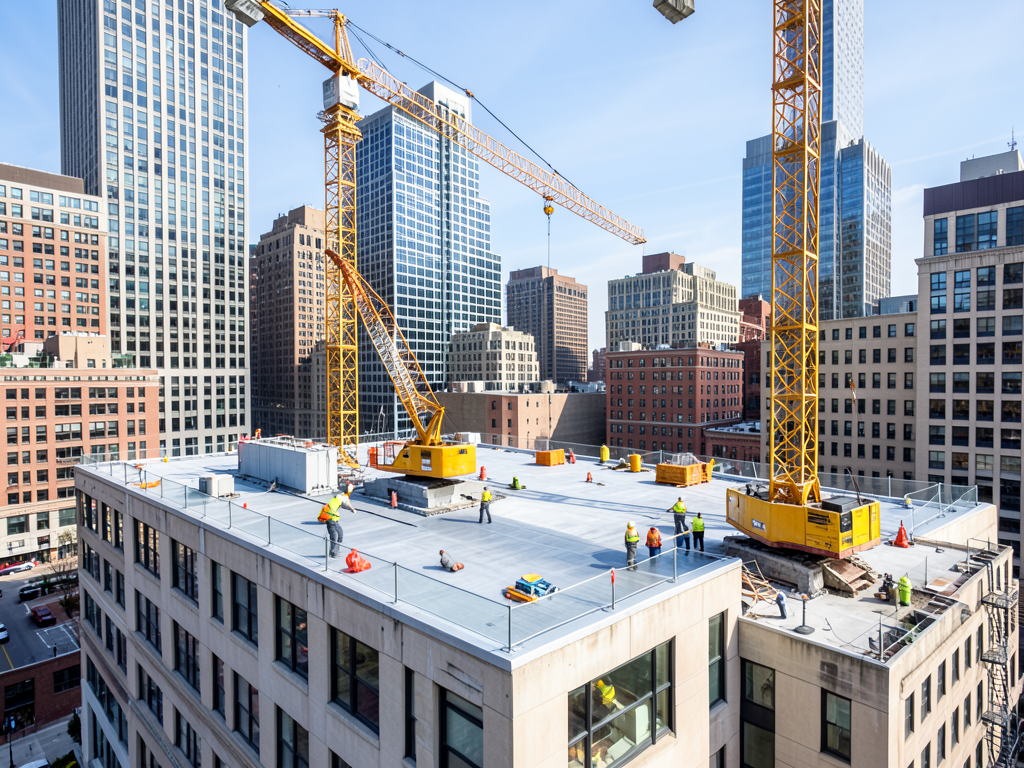
Crane operations in the Loop require extensive coordination with multiple city departments. A typical 20,000-square-foot roof replacement might need three to five crane lifts over several days. Each lift requires a CDOT street closure permit, which can take up to two weeks to process. The contractor must also coordinate with ComEd to ensure power lines remain de-energized during operations.
Safety protocols for Loop high-rise work exceed standard OSHA requirements. Perimeter protection systems must be installed before any work begins, and all workers must complete Chicago-specific fall protection training. The Chicago Municipal Code Section 11-4-1410 mandates specific tie-off requirements for work above 15 feet on commercial structures.
Weather monitoring becomes critical during installation. Chicago’s sudden temperature drops can affect adhesive curing times and membrane welding. Professional contractors use infrared thermometers to ensure surface temperatures remain within manufacturer specifications, typically between 40°F and 90°F for most adhesives. Extending the Life of Your Flat Roof in Hyde Park with Professional Coating.
Pick up the phone and call (773) 599-7055 before the next storm hits.
Chicago Building Code Compliance and Energy Requirements
Chicago’s building code requirements for commercial roofing exceed many other major cities. The Chicago Energy Conservation Code mandates specific R-values for roof assemblies, typically R-25 to R-30 for commercial buildings, depending on the building’s use and location within the city.
Roof replacement projects in the Loop must comply with the Chicago Sustainable Development Policy, which encourages cool roof installations on buildings over 10,000 square feet. This policy offers expedited permitting and potential density bonuses for buildings that install reflective roofing systems that meet Energy Star requirements.
Historic buildings in the Loop face additional restrictions. The Commission on Chicago Landmarks requires that any visible roof work maintain the building’s historical character. This often means using materials that match the original construction or installing modern systems that remain hidden from street view.
Fire ratings become crucial in the Loop’s dense urban environment. Most commercial buildings require Class A fire-rated roofing systems, which can withstand severe fire exposure from external sources. PVC and TPO systems typically achieve Class A ratings when installed with appropriate underlayment.
Chicago’s Department of Buildings requires specific documentation for roof replacements, including material specifications, energy calculations, and structural engineer approvals for any modifications to the roof assembly. The permitting process typically takes 3-4 weeks for standard commercial buildings but can extend to 8-10 weeks for historic structures or buildings in designated landmark districts.
Material Comparison: TPO vs EPDM vs PVC for Loop Buildings
| Material | Initial Cost/sq ft | Energy Efficiency | Wind Resistance | Chicago Suitability |
|---|---|---|---|---|
| TPO | $5.50 – $7.50 | Excellent (Reflects 80%+ UV) | Class D (up to 90 mph) | Excellent for most Loop buildings |
| EPDM | $4.50 – $6.50 | Fair (Absorbs heat) | Class C (up to 60 mph) | Good for older buildings with poor insulation |
| PVC | $6.50 – $8.50 | Very Good (Reflects 70%+ UV) | Class D (up to 90 mph) | Excellent for restaurants and chemical exposure |
Installation quality significantly impacts long-term performance. Poor seam welding on TPO systems can lead to water infiltration within the first year. Professional installers use hot-air welders that maintain consistent temperatures between 900°F and 1100°F, creating seams stronger than the membrane itself.
Modified bitumen systems, while less common in new installations, remain popular for buildings requiring frequent rooftop access. The multi-ply construction provides redundancy if one layer fails. Installation requires careful temperature monitoring, as cold weather can prevent proper asphalt flow and adhesion.
Green roof systems are gaining traction in the Loop, particularly for buildings seeking LEED certification or compliance with Chicago’s sustainable development initiatives. These systems add 20-30 pounds per square foot when saturated, requiring structural evaluation before installation. The additional weight can actually improve energy efficiency by providing better insulation.
Emergency Commercial Roof Repair in the Loop
Commercial buildings in the Loop cannot afford extended roof failures. A single leak can damage expensive office equipment, disrupt business operations, and create liability issues for property managers. Emergency response times matter more in the Loop than in suburban areas due to the density of businesses and the complexity of gaining rooftop access. What to Do When You Have a Roof Leak Emergency in Logan Square.
Professional contractors maintain 24/7 emergency response teams specifically for Loop buildings. These teams carry specialized equipment including portable generators, temporary roofing materials, and water extraction equipment. The goal is to stop active leaks within two hours of arrival and provide permanent repairs within 24-48 hours.
Common emergency scenarios in Loop buildings include HVAC unit failures that create ponding water, wind damage to edge metal or coping caps, and membrane punctures from rooftop equipment maintenance. Each scenario requires different response protocols and materials.
Preventative maintenance programs can reduce emergency repair frequency by up to 70%. These programs include bi-annual inspections, drain cleaning, and minor repairs before they become major issues. Many Loop property managers find that the cost of maintenance contracts is quickly offset by reduced emergency repair expenses and extended roof life.
Case Studies: Successful Loop Roof Replacements
A 15-story office building on LaSalle Street required emergency roof replacement after a severe storm damaged the existing EPDM system. The project involved coordinating with 12 different tenants, each with varying business hours. The contractor scheduled work during off-peak hours and completed the 18,000-square-foot replacement in just under three weeks, minimizing tenant disruption.
A historic building on Michigan Avenue required a roof replacement that maintained the building’s architectural integrity while meeting modern energy codes. The solution involved installing a TPO system beneath the existing parapet walls, keeping the visible portions unchanged while providing superior waterproofing and energy efficiency.
A mixed-use building on Wacker Drive needed a roof replacement that could support a future green roof installation. The contractor installed a reinforced TPO system with additional drainage layers and root barriers, creating a foundation for the eventual green roof while providing immediate waterproofing benefits.
Each project demonstrated the importance of local experience. The contractors understood Chicago’s permitting requirements, knew which materials perform best in the local climate, and had established relationships with city departments and material suppliers.
Choosing the Right Contractor for Your Loop Building
Not all roofing contractors have the experience and resources to handle Loop projects effectively. The right contractor should have specific experience with high-rise buildings, understand Chicago’s permitting process, and maintain proper insurance coverage for work in the downtown area.
Key qualifications to verify include Illinois roofing license, Chicago Department of Buildings contractor registration, and specific experience with buildings similar to yours. Request references from other Loop property managers and ask to see documentation of completed projects in the 60601-60606 zip codes.
Insurance requirements for Loop work exceed standard commercial roofing. Contractors should carry at least $1 million in general liability insurance and $2 million in umbrella coverage. Many Loop buildings also require workers’ compensation certificates naming the building owner as an additional insured.
Material selection should be based on building use, tenant requirements, and long-term performance goals. A building with restaurants on lower floors might benefit from PVC’s chemical resistance, while an office building seeking LEED certification might prioritize TPO’s energy efficiency.
Project planning should begin at least 90 days before the desired start date. This allows time for permitting, material ordering, and coordination with building tenants and city departments. Rush projects typically cost 15-20% more due to expedited permitting fees and overtime labor costs.
Call (773) 599-7055 today to schedule your inspection.
Frequently Asked Questions
How long does a commercial roof replacement take in the Loop?
Most commercial roof replacements in the Loop take 2-4 weeks, depending on building size, weather conditions, and permitting requirements. Emergency replacements can be completed in as little as one week, but these rush projects typically cost more.
What permits are required for roof replacement in Chicago?
Chicago requires building permits for all commercial roof replacements, plus CDOT street closure permits if crane operations are needed. Historic buildings may require additional approvals from the Commission on Chicago Landmarks.
How much does commercial roof replacement cost in the Loop?
Commercial roof replacement costs in the Loop typically range from $5 to $12 per square foot, depending on the material selected, building height, and project complexity. High-rise buildings and those requiring extensive permitting may cost more.
Can roof replacement be done during winter in Chicago?
Yes, but with limitations. Most adhesives and some membranes require minimum temperatures for proper installation. Professional contractors use cold-weather installation techniques and may need to tent work areas or use temporary heating.
What warranty options are available for commercial roofs?
Warranty options range from 10-year standard warranties to 30-year extended warranties. Longer warranties typically require specific installation techniques and may include annual maintenance requirements to remain valid.
How do I know if my commercial roof needs replacement or repair?
Signs that indicate replacement may be needed include multiple leak locations, widespread membrane deterioration, and recurring problems despite repairs. A professional inspection can determine whether repair or replacement is most cost-effective.
- Schedule Professional Inspection
Contact a qualified roofing contractor to assess your current roof condition and provide recommendations for repair or replacement.
- Review Building Requirements
Check with your building management and insurance provider about any specific requirements or restrictions for roof work.
- Obtain Multiple Bids
Get detailed proposals from at least three qualified contractors, including material specifications and project timelines.
- Secure Permits
Work with your contractor to obtain all necessary building and CDOT permits before work begins.
- Plan for Tenant Communication
Notify building tenants about the project timeline, potential disruptions, and safety protocols.
Commercial flat roof replacement in Chicago’s Loop requires careful planning, specialized expertise, and strict adherence to local regulations. The right contractor can guide you through the process, ensuring your building receives a durable, code-compliant roof that protects your investment for decades to come.
Ready to replace your commercial roof? Call (773) 599-7055 now to speak with our Loop roofing specialists.
{
“@context”: “https://schema.org”,
“@type”: “BlogPosting”,
“headline”: “Commercial Flat Roof Replacement Options for Businesses in The Loop”,
“description”: “Explore flat roof replacement options for Loop businesses. Learn about TPO, EPDM, PVC systems, high-rise logistics, and Chicago code compliance. Call (773) 599-7055.”,
“wordCount”: 2114,
“datePublished”: “2026-02-18T09:11:00.000Z”,
“dateModified”: “2026-02-18T09:11:00.000Z”,
“inLanguage”: “en-US”,
“mainEntityOfPage”: {
“@type”: “WebPage”,
“@id”: “https://patriotroofingchicago.com”
},
“publisher”: {
“@type”: “LocalBusiness”,
“name”: “Patriot Roofing Chicago”,
“url”: “https://patriotroofingchicago.com”
},
“author”: {
“@type”: “Organization”,
“name”: “Patriot Roofing Chicago”,
“url”: “https://patriotroofingchicago.com”
},
“image”: {
“@type”: “ImageObject”,
“url”: “https://patriotroofingchicago.com/wp-content/uploads/2026/03/commercial-flat-roof-replacement-options-for-busin-1.png”
}
}
{
“@context”: “https://schema.org”,
“@type”: “RoofingContractor”,
“name”: “Patriot Roofing Chicago”,
“url”: “https://patriotroofingchicago.com”,
“address”: {
“@type”: “PostalAddress”,
“addressLocality”: “Chicago”
},
“areaServed”: {
“@type”: “City”,
“name”: “Chicago”
}
}
{
“@context”: “https://schema.org”,
“@type”: “FAQPage”,
“mainEntity”: [
{
“@type”: “Question”,
“name”: “How long does a commercial roof replacement take in the Loop?”,
“acceptedAnswer”: {
“@type”: “Answer”,
“text”: “Most commercial roof replacements in the Loop take 2-4 weeks, depending on building size, weather conditions, and permitting requirements. Emergency replacements can be completed in as little as one week, but these rush projects typically cost more.”
}
},
{
“@type”: “Question”,
“name”: “What permits are required for roof replacement in Chicago?”,
“acceptedAnswer”: {
“@type”: “Answer”,
“text”: “Chicago requires building permits for all commercial roof replacements, plus CDOT street closure permits if crane operations are needed. Historic buildings may require additional approvals from the Commission on Chicago Landmarks.”
}
},
{
“@type”: “Question”,
“name”: “How much does commercial roof replacement cost in the Loop?”,
“acceptedAnswer”: {
“@type”: “Answer”,
“text”: “Commercial roof replacement costs in the Loop typically range from $5 to $12 per square foot, depending on the material selected, building height, and project complexity. High-rise buildings and those requiring extensive permitting may cost more.”
}
},
{
“@type”: “Question”,
“name”: “Can roof replacement be done during winter in Chicago?”,
“acceptedAnswer”: {
“@type”: “Answer”,
“text”: “Yes, but with limitations. Most adhesives and some membranes require minimum temperatures for proper installation. Professional contractors use cold-weather installation techniques and may need to tent work areas or use temporary heating.”
}
},
{
“@type”: “Question”,
“name”: “What warranty options are available for commercial roofs?”,
“acceptedAnswer”: {
“@type”: “Answer”,
“text”: “Warranty options range from 10-year standard warranties to 30-year extended warranties. Longer warranties typically require specific installation techniques and may include annual maintenance requirements to remain valid.”
}
},
{
“@type”: “Question”,
“name”: “How do I know if my commercial roof needs replacement or repair?”,
“acceptedAnswer”: {
“@type”: “Answer”,
“text”: “Signs that indicate replacement may be needed include multiple leak locations, widespread membrane deterioration, and recurring problems despite repairs. A professional inspection can determine whether repair or replacement is most cost-effective.”
}
}
]
}
{
“@context”: “https://schema.org”,
“@type”: “HowTo”,
“name”: “How to Prepare for Commercial Roof Replacement”,
“step”: [
{
“@type”: “HowToStep”,
“position”: 1,
“name”: “Schedule Professional Inspection”,
“text”: “Contact a qualified roofing contractor to assess your current roof condition and provide recommendations for repair or replacement.”
},
{
“@type”: “HowToStep”,
“position”: 2,
“name”: “Review Building Requirements”,
“text”: “Check with your building management and insurance provider about any specific requirements or restrictions for roof work.”
},
{
“@type”: “HowToStep”,
“position”: 3,
“name”: “Obtain Multiple Bids”,
“text”: “Get detailed proposals from at least three qualified contractors, including material specifications and project timelines.”
},
{
“@type”: “HowToStep”,
“position”: 4,
“name”: “Secure Permits”,
“text”: “Work with your contractor to obtain all necessary building and CDOT permits before work begins.”
},
{
“@type”: “HowToStep”,
“position”: 5,
“name”: “Plan for Tenant Communication”,
“text”: “Notify building tenants about the project timeline, potential disruptions, and safety protocols.”
}
],
“image”: “https://patriotroofingchicago.com/wp-content/uploads/2026/03/commercial-flat-roof-replacement-options-for-busin-1.png”
}
{
“@context”: “https://schema.org”,
“@type”: “BreadcrumbList”,
“itemListElement”: [
{
“@type”: “ListItem”,
“position”: 1,
“name”: “Home”,
“item”: “https://patriotroofingchicago.com”
},
{
“@type”: “ListItem”,
“position”: 2,
“name”: “Blog”,
“item”: “https://patriotroofingchicago.com/blog”
},
{
“@type”: “ListItem”,
“position”: 3,
“name”: “Commercial Flat Roof Replacement Options for Businesses in The Loop”
}
]
}
{
“@context”: “https://schema.org”,
“@type”: “Service”,
“serviceType”: “Roofing”,
“provider”: {
“@type”: “LocalBusiness”,
“name”: “Patriot Roofing Chicago”,
“url”: “https://patriotroofingchicago.com”
},
“areaServed”: {
“@type”: “City”,
“name”: “Chicago”
},
“description”: “Explore flat roof replacement options for Loop businesses. Learn about TPO, EPDM, PVC systems, high-rise logistics, and Chicago code compliance. Call (773) 599-7055.”
}