
The Difference Between Green Algae and Moss on Your Roof in North Center
Living in North Center means dealing with Chicago’s humid summers and freezing winters. Those conditions create perfect environments for green algae and moss to take hold on your roof. But here’s the critical difference: algae is a cosmetic issue that can be cleaned, while moss is a structural threat that can trap moisture and lift shingles. Understanding what’s growing on your roof determines whether you need a simple wash or a full inspection before winter hits. Chicago Department of Water Management.
Identifying What’s Growing on Your Roof
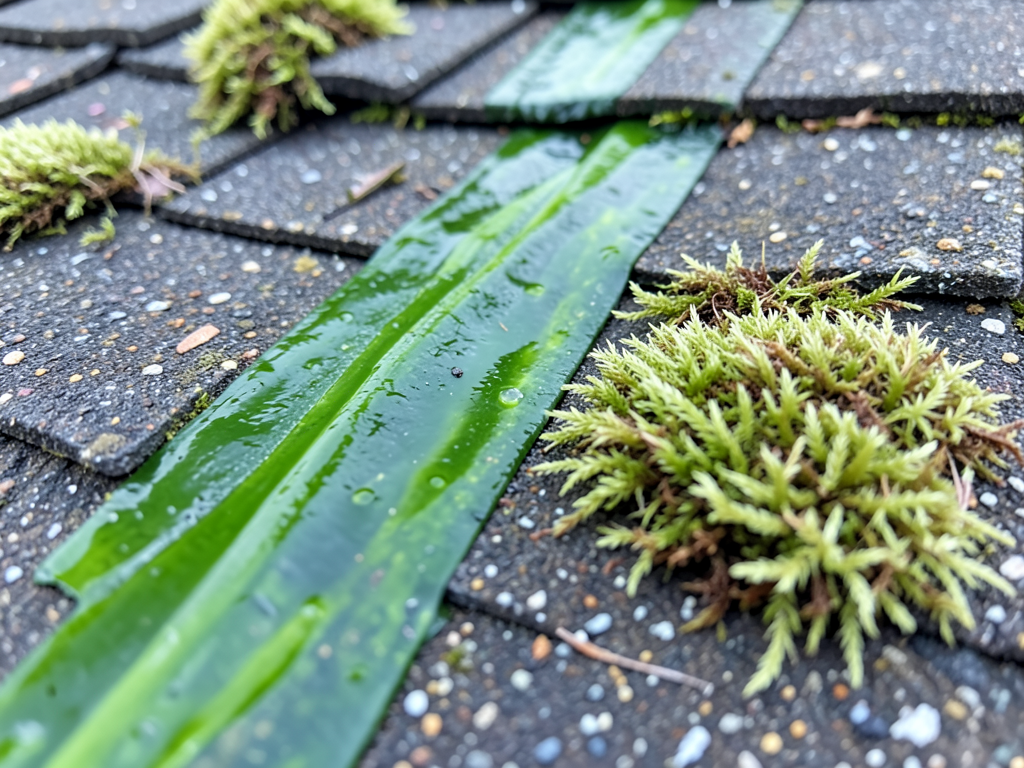
Green algae appears as dark streaks or patches that look like dirt from the street. It’s actually Gloeocapsa magma, a blue-green algae that feeds on the limestone filler in asphalt shingles. Moss looks like fuzzy green clumps that grow in shaded areas, especially on north-facing slopes. The key diagnostic test: algae wipes off with gentle pressure while moss feels spongy and clings tightly to the surface. Asphalt Roofing Manufacturers Association.
North Center homes near Welles Park and along Lincoln Avenue often show algae growth first because these areas receive afternoon sun that heats shingles just enough for algae to thrive. Moss typically appears on homes near the North Branch of the Chicago River where humidity stays higher year-round.
Why Chicago’s Climate Fuels Roof Growth
Chicago’s annual rainfall averages 38 inches, with most falling between April and August. Combine that with Lake Michigan’s humidity and you get the perfect recipe for roof organisms. The freeze-thaw cycles common in North Center ZIP codes 60618 and 60657 cause microscopic cracks where moisture collects, giving algae and moss a foothold.. Read more about How the Proximity to Lake Michigan Affects the Life of Your South Shore Roof.
According to the Asphalt Roofing Manufacturers Association (ARMA), algae growth accelerates when temperatures stay between 40-85°F with consistent moisture. That describes about five months of Chicago weather. Moss becomes problematic when it traps snow against shingles, creating ice dams that force water under roofing materials. Is Solar Roofing Worth the Investment for Homes in Evanston?.
The Structural Risk of Ignoring Moss
Moss doesn’t just look bad. It lifts shingles at the edges, creating gaps where water seeps underneath. In North Center’s older homes with original wood decking, this moisture leads to rot within 12-18 months. The Chicago Municipal Code Section 13-40-010 requires roofs to maintain weather-tight conditions, and moss growth can violate this standard.
During inspection, technicians use a moisture meter at multiple depths to check for trapped water beneath moss colonies. A reading above 20% moisture content indicates active damage. This diagnostic test reveals what homeowners cannot see from the ground. Why More Naperville Homeowners are Switching to Metal Roofing This Year.
Safe Cleaning Methods That Won’t Void Your Warranty
Pressure washing destroys asphalt shingles and voids warranties. The correct approach uses low-pressure application of sodium hypochlorite mixed at a 1:3 ratio with water. For stubborn moss, add one cup of trisodium phosphate (TSP) per gallon of solution. Apply when temperatures exceed 50°F for optimal chemical activation.
Before cleaning, protect landscaping by pre-wetting plants and covering them with tarps. The Chicago Department of Water Management requires that cleaning chemicals not enter storm sewers, so rinse solutions must be collected or directed to landscaped areas.
DIY vs Professional Cleaning: The Hidden Costs
DIY cleaning seems cheaper but carries risks. Ladder accidents account for 30% of fall injuries in home maintenance. North Center’s older homes often have steep pitches that make DIY dangerous. Professional cleaning includes safety equipment, proper chemical handling, and inspection for underlying damage. Extending the Life of Your Flat Roof in Hyde Park with Professional Coating.
Cost comparison shows DIY materials run $50-75 while professional service costs $300-500 for an average North Center home. But if DIY cleaning damages shingles or causes a fall, those savings disappear quickly.
Prevention: Stopping Growth Before It Starts
Zinc or copper strips installed under the top row of shingles release metal ions during rain that inhibit algae and moss growth. These strips last 15-20 years and cost about $2-3 per linear foot installed. For new roofs, algae-resistant shingles contain copper granules that prevent growth for the shingle’s lifetime.
North Center’s tree-lined streets mean shade is inevitable. Trimming branches to allow sunlight hits problem areas reduces moisture retention. The key is keeping gutters clean so water drains properly instead of pooling on the roof edge.
When to Call a Professional Immediately
Call for inspection if you see moss growing within 3 feet of chimneys or vent pipes, notice shingles lifting at the edges, or find dark spots spreading rapidly across the roof surface. These signs indicate active moisture damage that worsens with each freeze-thaw cycle.
The sound of loose shingles in high winds or the feel of soft spots when walking on the roof deck indicates structural compromise. These require immediate attention before winter snow adds weight to weakened areas.
Protecting Your Investment Long-Term
Annual roof inspections catch problems when they’re small and inexpensive to fix. In North Center’s historic districts, maintaining your roof preserves property values and prevents costly water damage to interior spaces. The cost of prevention is always less than emergency repairs after a major storm. What to Do When You Have a Roof Leak Emergency in Logan Square.
Consider the age of your roof. Most asphalt shingles last 20-25 years in Chicago’s climate. If your roof is approaching that age and showing algae or moss growth, replacement might be more cost-effective than repeated cleaning.
Don’t wait until winter storms reveal hidden damage. Call (773) 599-7055 today to schedule your professional roof inspection and protect your North Center home from Chicago’s harsh weather.
Frequently Asked Questions
How can I tell if I have algae or moss on my roof?
Algae appears as dark streaks that wipe off easily, while moss forms fuzzy green clumps that feel spongy and cling tightly to shingles. Algae is cosmetic; moss can lift shingles and trap moisture.
Is it safe to pressure wash my roof to remove algae or moss?
No. Pressure washing damages asphalt shingles, voids warranties, and can force water under roofing materials. Use low-pressure chemical cleaning instead, or hire a professional who follows ARMA guidelines. Roofing Berwyn.
How often should I clean my roof in Chicago’s climate?
Most roofs need cleaning every 3-5 years, but homes near trees or in shaded areas may need it annually. Install zinc strips to prevent growth and extend cleaning intervals.
Can moss damage spread to other parts of my house?
Yes. Moss retains moisture that can rot roof decking and spread to fascia boards and soffits. Water damage can then affect interior walls and ceilings, especially in older North Center homes.
You may also find this helpful. Comparing Ridge Vents and Solar Powered Attic Fans for Better Airflow in Woodridge.
{
“@context”: “https://schema.org”,
“@type”: “BlogPosting”,
“headline”: “The Difference Between Green Algae and Moss on Your Roof in North Center”,
“description”: “Learn to identify green algae vs moss on North Center roofs. Discover how Chicago’s humid climate fuels growth and what to do before damage spreads.”,
“wordCount”: 1108,
“datePublished”: “2026-05-31T12:28:00.000Z”,
“dateModified”: “2026-05-31T12:28:00.000Z”,
“inLanguage”: “en-US”,
“mainEntityOfPage”: {
“@type”: “WebPage”,
“@id”: “https://patriotroofingchicago.com”
},
“publisher”: {
“@type”: “LocalBusiness”,
“name”: “Patriot Roofing Chicago”,
“url”: “https://patriotroofingchicago.com”
},
“author”: {
“@type”: “Organization”,
“name”: “Patriot Roofing Chicago”,
“url”: “https://patriotroofingchicago.com”
},
“image”: {
“@type”: “ImageObject”,
“url”: “https://patriotroofingchicago.com/wp-content/uploads/2026/03/the-difference-between-green-algae-and-moss-on-you-1.png”
}
}
{
“@context”: “https://schema.org”,
“@type”: “RoofingContractor”,
“name”: “Patriot Roofing Chicago”,
“url”: “https://patriotroofingchicago.com”,
“address”: {
“@type”: “PostalAddress”,
“addressLocality”: “Chicago”
},
“areaServed”: {
“@type”: “City”,
“name”: “Chicago”
}
}
{
“@context”: “https://schema.org”,
“@type”: “FAQPage”,
“mainEntity”: [
{
“@type”: “Question”,
“name”: “How can I tell if I have algae or moss on my roof?”,
“acceptedAnswer”: {
“@type”: “Answer”,
“text”: “Algae appears as dark streaks that wipe off easily, while moss forms fuzzy green clumps that feel spongy and cling tightly to shingles. Algae is cosmetic; moss can lift shingles and trap moisture.”
}
},
{
“@type”: “Question”,
“name”: “Is it safe to pressure wash my roof to remove algae or moss?”,
“acceptedAnswer”: {
“@type”: “Answer”,
“text”: “No. Pressure washing damages asphalt shingles, voids warranties, and can force water under roofing materials. Use low-pressure chemical cleaning instead, or hire a professional who follows ARMA guidelines. Roofing Berwyn.”
}
},
{
“@type”: “Question”,
“name”: “How often should I clean my roof in Chicago’s climate?”,
“acceptedAnswer”: {
“@type”: “Answer”,
“text”: “Most roofs need cleaning every 3-5 years, but homes near trees or in shaded areas may need it annually. Install zinc strips to prevent growth and extend cleaning intervals.”
}
},
{
“@type”: “Question”,
“name”: “Can moss damage spread to other parts of my house?”,
“acceptedAnswer”: {
“@type”: “Answer”,
“text”: “Yes. Moss retains moisture that can rot roof decking and spread to fascia boards and soffits. Water damage can then affect interior walls and ceilings, especially in older North Center homes.”
}
}
]
}
{
“@context”: “https://schema.org”,
“@type”: “BreadcrumbList”,
“itemListElement”: [
{
“@type”: “ListItem”,
“position”: 1,
“name”: “Home”,
“item”: “https://patriotroofingchicago.com”
},
{
“@type”: “ListItem”,
“position”: 2,
“name”: “Blog”,
“item”: “https://patriotroofingchicago.com/blog”
},
{
“@type”: “ListItem”,
“position”: 3,
“name”: “The Difference Between Green Algae and Moss on Your Roof in North Center”
}
]
}
{
“@context”: “https://schema.org”,
“@type”: “Service”,
“serviceType”: “Roofing”,
“provider”: {
“@type”: “LocalBusiness”,
“name”: “Patriot Roofing Chicago”,
“url”: “https://patriotroofingchicago.com”
},
“areaServed”: {
“@type”: “City”,
“name”: “Chicago”
},
“description”: “Learn to identify green algae vs moss on North Center roofs. Discover how Chicago’s humid climate fuels growth and what to do before damage spreads.”
}